


Listen to The Reconstruction Agenda from The UnPopulist in your favorite podcast app: Apple Podcasts | Spotify | Google Podcasts | RSS | YouTube

Andy Craig: Welcome to The Reconstruction Agenda, I’m Andy Craig.
Since the murders of Renee Good and Alex Pretti in Minneapolis, we have faced a largely unprecedented situation: lawless federal agencies, backed by the White House, coming into conflict with state laws. The same laws as apply to everyone else against murder, theft, assault, kidnapping. Under immense public pressure, state and local authorities are now having to grapple with the complicated constitutional issues with potentially prosecuting federal officers.
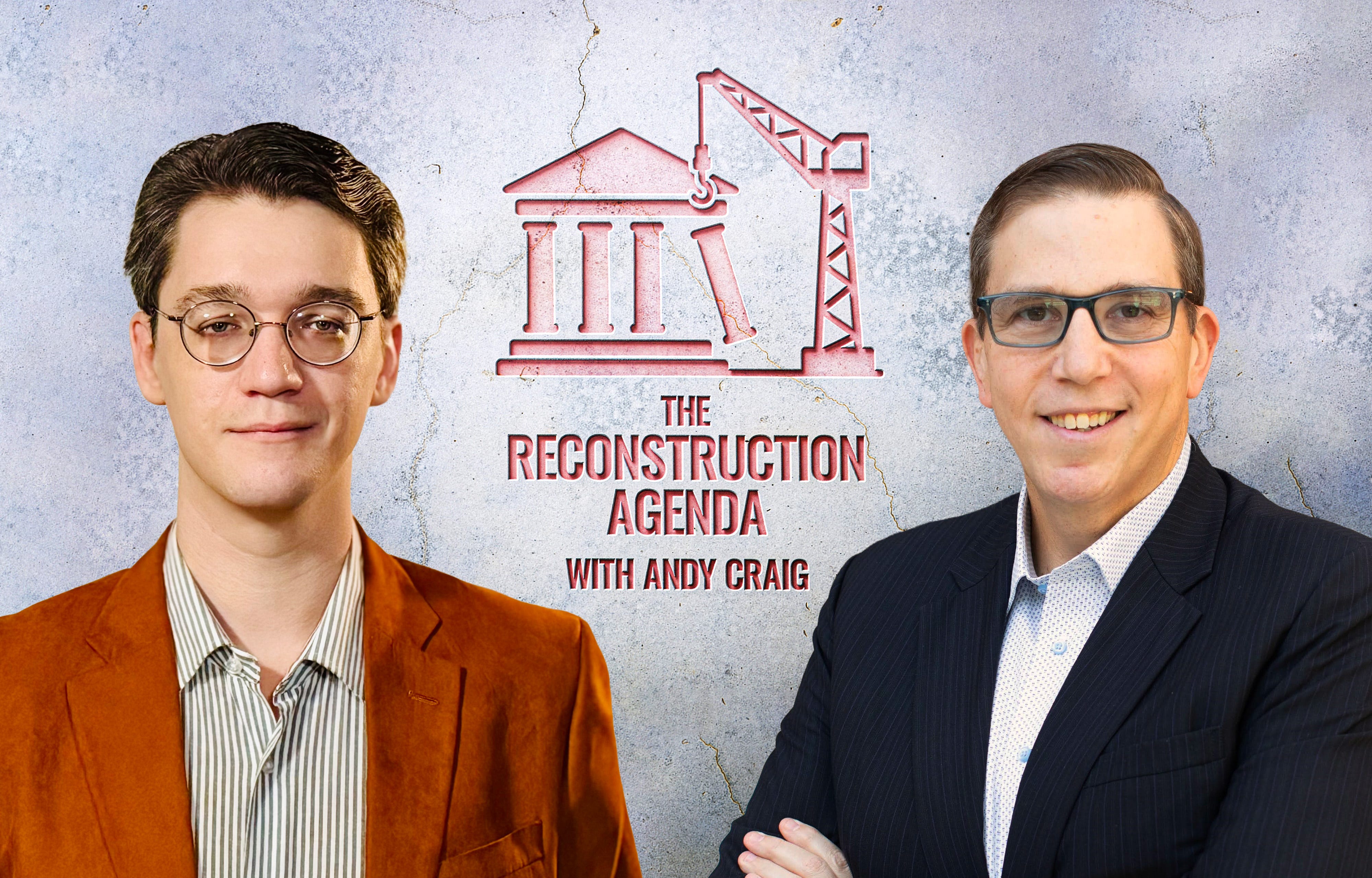
To break down this issue, we’re joined by Steve Vladeck, professor at the Georgetown University Law Center, where he is one of the nation’s leading scholars and commentators on the federal courts, constitutional law, and accountability for government misconduct. He also publishes the excellent blog One First, a wonderful source for analysis of the latest developments at the Supreme Court.
A transcript of today’s podcast appears below. It has been edited for flow and clarity.
Andy Craig: The Supremacy Clause makes federal law the supreme law of the land. How far does that carry in cases like we’ve seen recently with the shootings in Minneapolis, and all the controversies about what ICE and DHS have been up to when a federal officer is alleged to have violated ordinary state criminal law?
Steve Vladeck: So, there’s a series of Supreme Court cases going all the way back to 1890 where the court has found in the Supremacy Clause a sort of qualified immunity from liability for federal officers under state law. We haven’t had a lot of cases in the Supreme Court, but at least in the lower federal courts, the doctrine, the test that’s emerged, is that a federal officer is immune from liability under state law under the Supremacy Clause if they are being prosecuted or sued for conduct they were carrying out in the course of their federal duties. And if the conduct was both necessary to the carrying out of their federal duties and a reasonable application, a reasonable execution of those duties.
So, “necessary and reasonable” is really the standard that the lower federal courts have followed in these cases, which until recently have been pretty few and far between.
Craig: Well, what’s necessary and reasonable is a pretty amorphous standard.
One of the cases that comes to mind that people might have heard of is the Ruby Ridge standoff. A district attorney in Idaho tried to prosecute the FBI sniper who had killed Vicki Weaver and their infant son. The Ninth Circuit allowed that to move forward. But then it was dropped when a new D.A. was elected.
Vladeck: That’s right. It’s a good example of how both procedurally and substantively these cases have worked. So the first thing to say is, were a state to try to prosecute a federal officer, the officer would almost certainly remove that case from state court to federal court. And he or she would be allowed to do so. That changes who the judge is. It changes at least marginally who the jury pool would be. But it doesn’t actually change the law and it doesn’t change who the prosecutors are.
“We are in a moment today where it is harder to sue federal officers for violating our constitutional rights than it’s been at any point in American history.” — Steve Vladeck
In the Ruby Ridge case, the local officials were doing the prosecution, not the federal government. That matters, among other things, because then there’s also no pardon power for the president to use in these cases.
Then what will happen is the officer will say, “Well, I can’t be prosecuted because I have this Supremacy Clause immunity.” And that issue will go up. It’ll be appealed one way or the other before the case can ever get to trial. And, as you say, in the Ruby Ridge case, the Ninth Circuit greenlit the prosecution only to have the case dropped on remand. That’s how these cases have run historically. It’s what I would expect if we saw a criminal prosecution arising out of what’s happened in Minneapolis.
Craig: I want to touch on that federal removal aspect because that’s not a constitutional matter. There’s a federal statute that does that.
Vladeck: That’s right. The statute goes way back to the mid-19th century. The idea is that federal officers, even if they are liable under state law, should still be allowed to have their litigation play out in federal court, if the litigations are rising out of conduct they engaged in while on the job. And if they have some kind of plausible federal defense.
Craig: In practice, is that a huge hurdle? I mean, state courts are generally seen as a little bit more fly-by-the-seat-of-your-pants in criminal cases. Is a federal judge hearing this case necessarily going to be more sympathetic, though, to an ICE agent?
Vladeck: I don’t think so. One of the things that is striking about how things have evolved historically is that, whereas in the 19th century the real concern was a sort of pervasive anti-federal sentiment on state court benches, today you would probably see more diversity. Diversity based upon what state we’re talking about, diversity based upon how those judges were selected—were they elected? were they appointed?—that varies state to state. So I think some of the reasons historically why Congress provided for this removal might be to some degree anachronistic.

But that cuts both ways. It also means that there really probably isn’t that much of a difference one way or the other on the immunity question, between having it litigated in a Minnesota state court and having it litigated in the federal district court in Minneapolis.
Craig: One of the things we’ve seen arising out of the shootings in Minneapolis is not just the question of a potential, eventual prosecution under state law, but also state officials, local prosecutors trying to obtain evidence that the federal government has—the car that Renee Good was in, the physical evidence related to these shootings. DHS basically scooped all that stuff up and ran off with it.
I feel like this is something that maybe comes up in more normal cases when, say, the states and the federal government are both trying to prosecute the same person—when there’s a mass shooter or something like that. How does that work in terms of when the state wants to get evidence that the federal government has? Can it compel the federal government to do that, in the way it could anybody else who has evidence the state wants to get?
Vladeck: The short answer is we’ve never had to get all the way to the limits of that question because, until recently, the norm was cooperation. The norm was that, whether out of professional courtesy or pooling resources or just political expediency, state and federal authorities, even if they weren’t always on the same page, worked together and shared information. They shared evidence, they provided access to whatever they each had in custody and in their possession.
“Until recently, the norm was cooperation. The norm was that, whether out of professional courtesy or pooling resources or just political expediency, state and federal authorities, even if they weren’t always on the same page, worked together and shared information. They shared evidence, they provided access to whatever they each had in custody and in their possession. In that respect, we’re in a bit of uncharted territory here because we really haven’t seen before visible examples of the federal government not just refusing to cooperate, but actually physically preventing local and state investigators from access to the crime scene, from access to some of the witnesses.” — Steve Vladeck
In that respect, we’re in a bit of uncharted territory here because we really haven’t seen before visible examples of the federal government not just refusing to cooperate, but actually physically preventing local and state investigators from access to the crime scene, from access to some of the witnesses.
That’s where we run into this question of what’s known in the courts as the Tuohy process—the idea where, eventually, maybe local and state prosecutors can get a court to order the federal government to cooperate. But it takes time. And one of the things we’re seeing in Congress right now is an effort to actually speed this up by statute, and try to make it so that it’s harder in the future for any federal government to drag its heels in a case like this.
Craig: We’ve talked about this most prominently in the case of a potential homicide or murder prosecution. But in general, states have lots of criminal laws. With what ICE has been doing, there’s a lot of arguable cases of assault, unjustified use of force, the tear gas, all that sort of stuff. Is the legal analysis there pretty much the same, and it’s just a question of the political will is more there when somebody’s dead?
Vladeck: One hundred percent. The Supremacy Clause immunity question is no different in the case of assault than it would be in the case of murder. I think it’s just the politics are different—that, for whatever reason, states are reluctant and recalcitrant to sort of poke the bear and bring these cases. But when you have what happened with Renee Good and when you have what happened with Alex Pretti, the politics really do become very one-sided in favor of pursuing whatever legal avenues are least potentially available.
Craig: So, one thing you mentioned that is certainly part of why this is getting a lot of attention is that Donald Trump can’t pardon them for state crimes. This has come up also recently in Colorado with the case of the election administrator who tampered with the machines because she was pushing conspiracy theories and is currently in state prison. He’s been leaning heavily on pressuring Gov. Jared Polis to try to get him to pardon her.

In one of these cases, you’re an ICE agent or an FBI agent or whatever, you’re the criminal defendant. That’s in your personal capacity. Does the federal government, the Department of Justice, have an actual procedural role to play in that case? Do they come in and act as your defense attorney, in effect? Or do they have any legal tools to directly intervene in the proceedings?
Vladeck: Not to directly intervene. I mean, again, we don’t have a lot of historical precedent here. But the short answer is the Department of Justice is not a criminal defense operation. And so were we to have one of these cases, I don’t doubt for a moment that the officers in question would hire private outside lawyers.
Now, DOJ might help. I mean, it’s not hard for me to imagine DOJ providing access to the officer’s lawyers to whatever they have in their possession. It’s not hard for me to imagine DOJ participating as a friend of the court in one of these cases, and filing briefs that are trying to be sympathetic to the officer’s position.
That has not been the norm historically. Historically, when states have prosecuted federal agents, the Justice Department has largely stayed out of it. But this is a DOJ that doesn’t stay out of things. I think it wouldn’t surprise me at all if we saw some pretty unprecedented involvement in such a case by this Justice Department.
Craig: And one of the things that’s been going on with that is both DOJ and DHS have pretty much preemptively announced, “We’re not even seriously investigating.” Certainly there’s no expectation that there’s going to be any serious consideration of a federal prosecution in any of these cases. Is that something that a potential defendant could point to and say, “Well, look, the federal government looked at this and said there wasn’t a case.” Is that going to be persuasive? Is that something that might kind of cut in their favor?
Vladeck: I don’t know that it makes that big of a deal with the jury or with the trial judge. Optically, I don’t doubt that that will be part of the story. It wouldn’t even surprise me if we saw some kind of ginned up non-prosecution memo from DOJ about why they weren’t prosecuting that would magically make its way into the hands of these defendants if these cases go that far. But the legal questions for the judge and the factual questions for the jury really are not going to turn on a discretionary decision to not prosecute by the Department of Justice.
“Historically, when states have prosecuted federal agents, the Justice Department has largely stayed out of it. But this is a DOJ that doesn’t stay out of things.” — Steve Vladeck
The question’s going to be: Does the defendant officer have Supremacy Clause immunity? That will be up to the judge. And then, if not, what are the actual questions put to the jury about whether the officer acted reasonably, about whether he was under threat, about whether the force was disproportionate? DOJ not prosecuting is not going to affect the answers to those questions anywhere except maybe the court of public opinion. And even there I don’t know.
It really does seem to me that DOJ has shredded so much of its credibility over the last 12 ½ months, that the only folks that’s going to persuade are those who think that nothing wrong happened in the first place
Craig: When these cases are being brought, the standard you mentioned is that a case like this has to have been necessary and reasonable. Now, obviously, when they’re in the course and scope of their duties as law enforcement officers, they inherently have to use force. That’s kind of what they’re there to do, even legitimately when they’re doing their job. They have to arrest people. They’re using the coercive power of the government. To what degree do the relevant state laws, or also the federal doctrine, police that boundary between what was, beyond a reasonable doubt, unreasonable?
Vladeck: So, there’s a fair amount of case law under the Fourth Amendment because you often see claims for excessive force against law enforcement officers—where the claim is that the excessive force was not just a tort, but was actually a violation of the Fourth Amendment because it was an unreasonable search or seizure, usually a seizure. I would expect in one of these cases for the Supreme Court’s excessive force jurisprudence to play some role here. The officer will say, “Under the court’s jurisprudence, I was allowed to exercise this amount of force.”

This is why, though, for example, I think the Alex Pretti case might be more compelling. They’re both compelling, but it’s a more legally difficult battle for the officer to wage on immunity than the Renee Good case. Because in the Good case, you at least have the specter of the threat posed by a moving car. Folks have seen the video, and everyone’s going to say, “Well, but the officer put himself in harm’s way, and the shot that actually killed her was probably fired when the car was already passed him.” Those are all true. But I think that’s the sort of question, that’s the kind of debate, that will present itself on the excessive force issue, if there’s a prosecution of the folks who shot and killed Renee Good, that I’m not sure we would see in the Pretti case.
In the Pretti case, the video is so unambiguously clear that he had been disarmed and that he was being restrained on the ground before any shots were fired. But I think that’s how that analysis would probably unfold if we get that far.
Craig: One consideration is eventually this administration won’t be in power anymore. There are lots of federal laws that could potentially apply here. Things like deprivation of rights, and just the applicable federal homicide statutes when they have the necessary hook, which I assume they would here. Is that right that a federal prosecution would, in theory, be able to cover and reach simple homicide?
Vladeck: Maybe. The problem is that Congress doesn’t have general regulatory authority over America. These shootings did not happen on federal property. I think the state prosecutions are the far more easy answer here. There are certainly some federal charges that would be available.
I think the murder question’s a little harder because of the narrowness of the federal homicide statute. But if a future president wanted to throw the book at these folks, I think he or she could find ways to do so. Of course, then the problem is that President Trump might pardon them. And a pardon cannot wipe the slate clean for state criminal prosecutions. It could, and indeed would, for any future federal prosecutions.
Craig: And that would be preemptive because, as we’ve seen, presidents don’t have to wait until somebody is convicted or even charged before swooping in with a pardon.
Vladeck: Indeed, and unlike some of the other controversies surrounding President Trump’s efforts to use the pardon power, here at least he’d be pardoning stuff that already happened. So it would be preemptive in the sense that it would be before the charges were brought, but at least it would be pardoning conduct that already took place as opposed to a get-out-of-jail-free card.
Craig: One of the other angles that’s come up on this is ... I mentioned charges other than murder. And obviously the two shootings in Minneapolis are front and center. But there’s been a lot of interest in reporting what’s going on in ICE custody in these immigration detention centers in terms of inhumane treatment or worse. This has been the whole fight with members of Congress trying to get in there to conduct oversight. If the states have applicable laws for that kind of scenario in terms of assault, or torture potentially, would the necessary and reasonable analysis be more difficult there—because inherently you’re detaining somebody, you’re in a federal institution, you’re in federal custody—or is it possible that those circumstances could rise to the level of state crimes?
Vladeck: The short answer is both. I think it’s obviously possible that especially egregious behavior in those detention facilities could rise to the level of assault under state law, could rise to the level of other crimes under state law. But yes, if you start from the proposition that the government has the legal authority to detain at least some of these folks and that detention implies depriving them of their liberty, I think you’re starting with a heavy thumb on the scale against a criminal prosecution.
“What’s really missing here is a robust federal damages regime. That would go such a long way toward not needing states to be the line of last defense. … Part of what I find so frustrating is that there are a lot of folks who have been pointing out for 10, 15, 20 years now that between Congress not providing such a remedy by statute, and the Supreme Court really taking a whole bunch of bites out of the judge-made remedy called Bivens that had been in place since the 1970s, that we’ve lived in a time, for most of the last few decades, where there’s no meaningful damages remedy when federal officers violate our constitutional rights. And I think what’s happening with ICE, whether in Minnesota or in Illinois or in Texas or everywhere, is the best evidence we should ever need for why that kind of remedial scheme is long overdue.” — Steve Vladeck
What this really all gets to, and the ambiguities that would be inherent in even a criminal prosecution in the Good and Pretti cases, is that what’s really missing here is a robust federal damages regime. That would go such a long way toward not needing states to be the line of last defense here. It would go a long way toward creating more of the kinds of deterrent that everyone would be invested in, that federal officers should be incentivized to not violate our constitutional rights.
That’s why part of what I find so frustrating is that there are a lot of folks who have been pointing out for 10, 15, 20 years now that between Congress not providing such a remedy by statute, and the Supreme Court really taking a whole bunch of bites out of the judge-made remedy called Bivens that had been in place since the 1970s, that we’ve lived in a time, for most of the last few decades, where there’s no meaningful damages remedy when federal officers violate our constitutional rights. And I think what’s happening with ICE, whether in Minnesota or in Illinois or in Texas or everywhere, is the best evidence we should ever need for why that kind of remedial scheme is long overdue.
Craig: That is Section 1983. So, there’s the federal law that allows you to sue state and local officials. If a local cop violates your rights, you can go into federal court. There has been some talk recently in Congress of extending that to include federal officers by simply inserting the words “or the United States” in that statute. But unpack a little bit what the Supreme Court did with Bivens and how that has gotten narrowed down to the point where it’s effectively impossible for you to go sue, civilly, federal officers and agents for violating your rights.
Vladeck: The model for most of American history was that if you wanted to sue a federal officer, you would actually bring a state tort claim. For example, if an officer busted into your house without a warrant, you would bring a trespass claim. The officer would say, “You can’t sue me in trespass, I’m a federal officer.” The response would be, “You have no federal defense because you violated my constitutional rights.” By the 1960s, it had become pretty clear that that was not an adequate remedy.

First, you had all these immunity questions, very much like the ones we’ve just been talking about. Second, you also had the Supreme Court recognizing a whole bunch of new constitutional rights that didn’t have great tort analogs. So trespass works pretty well for the Fourth Amendment, but what about equal protection? And what about free speech? Those don’t have great tort claims at the bottom of them. So the Supreme Court in 1971, in this case called Bivens, say there are going to be some circumstances where federal courts can just provide damages directly, where the victim of a violation of the federal Constitution can walk into a federal court and sue directly under whatever provision was violated.
In Bivens, it was the Fourth Amendment. This was not that controversial at the time. It was widely followed for about 10 to 15 years. And it actually opened up the door to lots of opportunities to hold federal officers liable when they violated the Constitution.
They would still be entitled to qualified immunity, to official immunity. So the violations would have to be egregious for the plaintiff to actually collect. But Bivens at least provided what the lawyers would call a cause of action. Bivens opened the courthouse doors.
Starting in the mid-1980s, but really accelerating in the 2000s, the Supreme Court started retrenching Bivens—finding new excuses to not extend it into new contexts, and then increasingly even taking it away from the context in which it had been recognized. I actually argued one of the more recent Bivens cases; I represented the petitioner in Hernandez v. Mesa, which was a case the court heard in 2019 about the fatal cross-border shooting by a Border Patrol agent of a 15-year-old unarmed Mexican national.
We argued in that case, if his parents can’t sue the officer for violating his rights, assuming his rights were violated, they have no remedy. And there’d be no deterrent for Border Patrol to use excessive force all up and down the border. In a 5-4 ruling, the Supreme Court still said, “Well, no remedy.” That’s where we are. If anything, there’s been two decisions by the Supreme Court since then that have made Bivens even narrower.
“This is a court that is very, very sympathetic to the executive branch in ways that I think are deeply problematic. On the flip side, this is also a court that, at least at various points, has claimed to care deeply about federalism and about the historical structural role that states did and could play in holding the federal government accountable. It’s interesting to wonder if someone like Justice Neil Gorsuch, who really claims to be an originalist, would actually find a bit of tension between what might be sympathy to the executive branch in these cases and a real belief that states have a role to play.” — Steve Vladeck
So the result is that it’s not like we’re just back to the pre-1970 regime where we’re relying on state tort law. While all that was happening, Congress actually made those state tort claims harder to bring. We are in a moment today where it is harder to sue federal officers for violating our constitutional rights than it’s been at any point in American history. Congress’s refusal to deal with that was a big problem in 2020 in the middle of the George Floyd protests, but of course all that political energy fell away. Now it’s really rearing its head as a huge gap in our legal system.
Craig: That touches on the Supreme Court, which is central to your beat. You mentioned there haven’t been a lot of these criminal cases involving the Supremacy Clause analysis that have reached the Supreme Court, but things have not gone terribly well on the civil accountability side. I know it’s always dangerous to read the tea leaves at the Supreme Court. But do you have any thoughts on, is it likely that this bounces up to the Supreme Court if there’s one of these prosecutions, and how is the Court going to look at that? Or is it possible that they’re going to say: “This law is pretty well-settled—we have all these circuit court precedents, go play it out”?
Vladeck: This is not a Supreme Court that is shy. So whenever the question is, “Do I think the Supreme Court would step in to fill-in-the-blank?”, my answer is almost always yes. But especially a question like this. It’s hard to imagine, if one of these prosecutions is brought, that there wouldn’t be a concerted effort to have the Supreme Court step in pretty early.
One caveat is that Minnesota happens to be in what is really one of the most conservative federal appeals courts in the country, the Eighth Circuit, which is headquartered in St. Louis, but which also covers Minneapolis, St. Paul, the whole state of Minnesota. So it’s very possible that you could see a district court denying a motion to dismiss, saying, “Yes, this prosecution can go forward.” And then the federal appeals court saying, “Actually, no, it can’t.” At which point it would be the state asking the Supreme Court to step in as opposed to the federal officer.

I still think, whoever it is, whether it’s the officer asking the court to stop the prosecution or the state asking the court to revive it, that it would be very hard for the Supreme Court to stay out of that. As for what happens then, it is really hard to say.
This is a court that is very, very sympathetic to the executive branch in ways that I think are deeply problematic and I’ve written about ad nauseam. On the flip side, this is also a court that, at least at various points, has claimed to care deeply about federalism and about the historical structural role that states did and could play in holding the federal government accountable. It’s interesting to wonder if someone like Justice Neil Gorsuch, who really claims to be an originalist, would actually find a bit of tension between what might be sympathy to the executive branch in these cases and a real belief that states have a role to play.
That’s why I think it would be very hard to handicap. A lot would depend on how the case got to the court, how strong the evidence was and, what, if any, findings the district court had made in denying immunity. Against that backdrop, I think that will have a lot to say about what this court would do.
Craig: And it does relate to the kind of scrambled politics of the situation because, historically, certainly for justices like Gorsuch, this is kind of a federalist, states’ rights, 10th Amendment thing. That’s all very conservative coded usually. And federal supremacy in most historical cases has been something more on the progressive end. So you kind of have a little bit of an inversion of that in both directions.
“I think we should all be comfortable with the idea that there should be robust remedies for the federal government violating the Constitution no matter who’s in the White House when it happens.” — Steve Vladeck
Is there a concern, particularly if you’re district attorney in Minneapolis or Philadelphia or any of these places that have been talking about of pushing in this direction, that there might be a kind of turnabout when there’s a future Democratic administration and Texas wants to prosecute a federal agent enforcing civil rights? I mean, who knows what circumstance might arise, but you can imagine the political valence being reversed. Is that something we have to be cautious of?
Vladeck: Cautious, I think, is the right word. Yes, we should always be mindful that what’s good for the goose is good for the gander. It’s right for folks to be a little cautious about just throwing open the door to state liability. This is part of why I really think the better solution in the long term is a comprehensive, robust federal remedial scheme, both on the damages and on the criminal side.
But I also think that the test for Supremacy Clause immunity, assuming it doesn’t get changed, during this litigation is one that we should be able to live with regardless of our politics. That a federal officer who is violating state law because those violations are necessary to carry out their duties, whether it’s to enforce a court order in a 1960s era desegregation case, or otherwise carry out federal law, is going to win that case. And that’s as it should be.
We’ve already seen efforts by red and blue states alike to push the envelope and the courts sometimes letting them and sometimes not. I guess I’m saying this is one of those contexts where I’m not as worried about the flip side, because if there really were federal officers in the future Democratic administration who were routinely violating state criminal statutes without justification, fine. Let the states prosecute them.
The case I brought, the Bivens case, Hernandez v. Mesa, the facts of that case came during the Obama administration. And so I think we should all be comfortable with the idea that there should be robust remedies for the federal government violating the Constitution no matter who’s in the White House when it happens.
Craig: You spoke a little bit about the statutory fixes for Bivens and civil litigation. Obviously, there’s a pretty good chance that there’s going to be a flip in Congress in terms of party control and that at some point down the line there’ll be a Democratic trifecta. On the criminal side, you mentioned that there’s this federal removal statute. But are there any other statutory things Congress could do to clarify, in both directions, when it is permissible and when it’s not?
Because, for the most part now, we’re flying on judicial rulings and precedents based on this one sentence in the Constitution. Are there any statutory reforms in that vein that could be worth pursuing?
Vladeck: I think Congress certainly could try to give content to Supremacy Clause immunity. Congress can’t change the meaning of the Constitution, but there are lots of examples of Congress fleshing it out in ways that courts have relied upon. So that could be one, but I think it’s probably also more on the procedural front.

I think Congress can and should create a procedure for more effective information sharing between state and federal prosecutors in these cases. I think Congress could and should make it clear that state criminal laws generally do apply to federal officers when they’re in this course and scope of their duties. The Supreme Court has said that anyway, but Congress could say they agree.
There are lots of things I think around the margins Congress could do to make these cases more viable when they ought to be viable. But I still think, and I realize I’m a broken record, that the biggest thing Congress can do to reduce the incidence of these cases is to provide other meaningful accountability mechanisms. Both so that there are easier ways to hold officers accountable when they break the law, and so that there are more powerful incentives existing on the front end that will actually hopefully lead them to think twice before doing so.
Craig: When we’re looking at that civil liability and accountability damages regime, obviously there’s the cause of action problem, which is kind of the biggest one. But are there other procedural steps? I have in mind … there’s been a lot of push for anti-SLAPP laws in the First Amendment context, including for a federal anti-SLAPP law, regarding defamation. That has a lot of kind of procedural tricks in it to make it easier for people vindicating their rights. Are there things like that, aside from just establishing that there’s not sovereign immunity here?
Vladeck: There are a lot of things. The question is how much political capital is there in Congress to really do this? So a statute could, among other things, lower the pleading threshold that the Supreme Court has articulated in the Twombly and Iqbal cases, so that you don’t have to prove your case at the pleading stage. A statute could provide for attorney’s fees if you succeed in your claim, which is what’s already true for [Section] 1983, but not true for a lot of other federal statutes. The statute could tweak qualified immunity to make it harder for officers to actually have immunity in cases in which it’s hard to defend their conduct objectively.
So, if the question is what’s my wish list, it’s a long list. But my real concern is the perfect being the enemy of the good here. And if there’s only enough political capital to do one thing, I think it has to be a cause of action first.
Craig: That makes a lot of sense. Thanks for joining us. Here at The UnPopulist we’ll continue to cover this, because there can be no meaningful reconstruction without accountability. Be sure to subscribe, and we’ll see you next time.

© The UnPopulist, 2026
Follow us on Bluesky, Threads, YouTube, TikTok, Facebook, Instagram, and X.
We welcome your reactions and replies. Please adhere to our comments policy.


