


A foundational element of our legal system is that our courts recognize, as Chief Justice John Marshall wrote in Marbury v. Madison, that “where there is a legal right, there is also a legal remedy ... whenever that right is invaded.” This legal principle was supposed to ensure, among other things, that individuals could fight back, receive compensation, and discourage government abuses whenever a government agent or agency had violated their rights.
As profound as Marshall’s words sound on paper, today they ring hollow for victims of constitutional abuses and other wrongdoing by employees of the federal government. Consider the shooting deaths of Renee Good and Alex Pretti in Minneapolis at the hands of immigration enforcement agents. Even if thorough investigations show the agents to have been at fault, any lawsuits by Good’s or Pretti’s families against the agents or the government they work for will likely underscore a depressing reality: Congress and our courts have made it virtually impossible for Americans to hold federal officials and agencies legally responsible for harms they cause through negligence or abuse of power.
In fact, state and local government officials are more vulnerable to citizens’ lawsuits, despite enjoying dubiously broad immunity from those suits. These officials are also more vulnerable to criminal prosecutions. When George Floyd was killed by Minneapolis policeman Derek Chauvin, for example, the Minnesota Attorney General’s Office quickly and successfully brought charges against him. The same attorney general’s office, however, would have a much harder time bringing charges against Jonathan Ross, the immigration agent who shot Renee Good, because the U.S. Constitution’s “supremacy clause” typically shields federal officials from being prosecuted under state law. President Donald Trump’s attorney general also seems unlikely to bring charges against the agents enforcing the president’s own immigrant policies—a conflict of interest that would occur to some extent under any president.
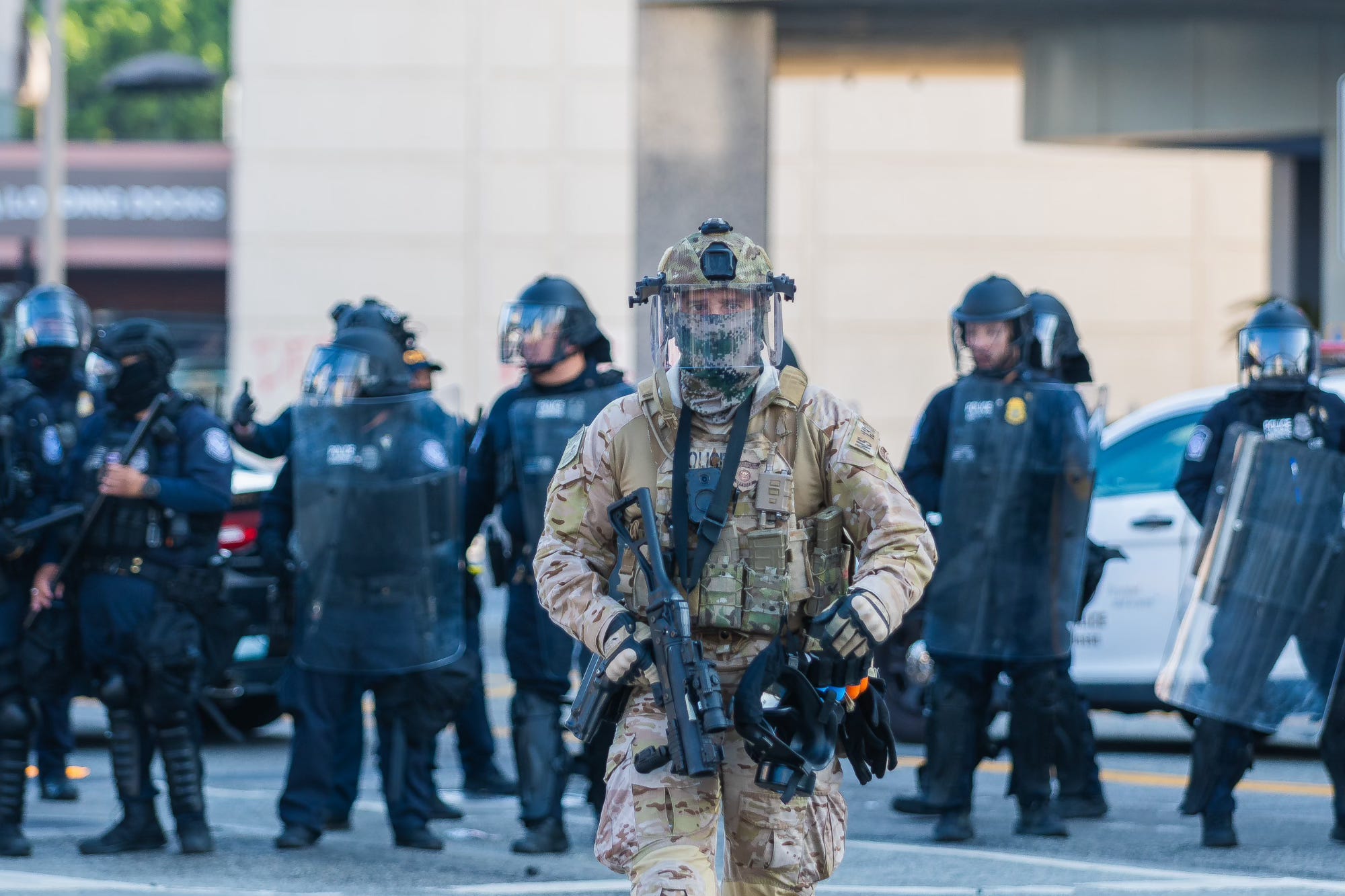
Indeed, concerns about holding federal officers legally accountable have become more pressing as federal immigration agents pursue the White House’s 3,000-person-a-day arrest quotas and repeatedly assault both Americans and immigrants in the process. It’s thus vital to understand the decay in our system of legal accountability for federal officials and to reverse it before trust between the federal government and its citizens breaks down completely.
One way to restore trust would be to remove the barriers to individuals’ ability to receive compensation in court for unjust harms inflicted on them by those agents. (Although rolling back obstacles to criminal prosecutions of federal agents is extremely important as well, we don’t delve into that remedy here.)
Keys That Don’t Open the Courthouse Door
Individuals seeking accountability in the courts for wrongful acts by federal officers face serious challenges. Under current law, they are, in effect, trying to unlock the courthouse door with one of four different legal keys that are either broken or don’t fit.

The first two of these keys are supposed to open the door to suits seeking compensation from federal employees or agencies for violations of “tort” laws—i.e., laws to remedy injuries from someone else’s negligent or intentional acts. The other two keys are supposed to open the courthouse doors for violations of people’s rights under the Unites States Constitution. Note that constitutional violations frequently overlap with tort law—for example, an excessive use of force under the Fourth Amendment may also amount to the tort of “battery.” With that said, let’s look at each possible key in turn.
The Toothless FTCA Key
The first is the “FTCA key.” It’s molded from the Federal Tort Claims Act, which Congress first passed in 1946 in the wake of a U.S. military plane’s flying into the Empire State Building. Under the FTCA, plaintiffs can sue the federal government for torts committed by federal employees, and the case is tried under the tort laws of the state where the violation occurred.
In its early years, the FTCA did give victims of federal harms useful ways to seek compensation in court. Today, by contrast, the federal courts’ interpretation has led to the act’s various exceptions swallowing the rule.
For example, one exception that Congress included in the FTCA precluded lawsuits against federal employees who’d been engaged in “the exercise or performance [of] … a discretionary function or duty” required by their agency or supervisor. This provision was meant to prevent plaintiffs from using courts to rewrite government policies they disagreed with. Over the years, though, courts came to apply the discretionary-function exception to virtually every act by a government official that conceivably involved some sort of judgment or choice. Such a vague conception inevitably included just about everything an official might do, transforming the discretionary-function exception into an impenetrable shield protecting the federal government from accountability for harms caused by those they chose to hire, train, and supervise.
In effect, the FTCA key is now missing its teeth.
The Broken State Tort Law Key
The second key is the “state tort law key.” Historically, people whose rights were violated by federal officers could seek redress in state courts under state tort law. If a customs agent, for example, entered your land or boarded your ship without permission, it was your birthright as an American to haul him into court and sue him for violating your rights, bringing a claim for trespass. The official would typically respond that he had acted pursuant to a law that authorized his actions. You would then counter that the law was unconstitutional or that the official had acted outside the bounds of that law. If you had the better argument, you could win compensation from the trespassing officer, and your victory would make federal officials more circumspect about respecting people’s rights in the future.
But in 1998, Congress passed a watershed amendment to the FTCA that derailed this state tort-law process. The amendment, known as the Westfall Act, stipulated that plaintiffs who sued the United States in federal court under the FTCA were automatically prohibited from filing tort lawsuits in state or federal court against the federal employees themselves.

This revision thus removed a traditional and vigorous protection victims had long enjoyed for gaining legal redress from federal officials: state tort lawsuits. Moreover, the Westfall Act effectively channeled federal-harms lawsuits away from state courts and federal officials and pointed them toward federal courts and their federal government employer. This shift diluted the deterrent effect of the suits, since the U.S. government now bore the cost of losing the suit, rather than the employee.
Regardless, with the advent of the Westfall Act, the state tort law key was broken.
Section 1983: The Wrong Key
The third key is the “Section 1983 key.” Unlike the first two keys, which opened up courthouse doors to lawsuits for torts, this key opens them up to lawsuits for constitutional violations.
Congress passed Section 1983 as part of the Civil Rights Act of 1871, in the wake of the Civil War. It was meant to ensure Southern Blacks weren’t oppressed by racist state and local officials. To that end, Section 1983 gave victims a right to sue in federal courts for violations of their rights under the U.S. Constitution. It applies, however, only to violations of those rights by state and local officials—not federal. As a result, it excludes federal officials from its provisions against abuses of power.
When Section 1983 was enacted, Congress saw no need to include federal officials among those whom victims of constitutional violations could sue under federal law. Whereas state officials who oppressed Southern Blacks often received preferential treatment in state courts, federal officials were unlikely to enjoy the same partiality. If anything, Southern judges and juries in the postwar era had little love for the federal government and provided a friendly forum to those mistreated by its employees. Moreover, federal officials could still be sued in state courts under traditional tort law.
But as discussed above, Congress gutted this traditional legal check on federal officials with the 1988 Westfall Act, generally barring tort lawsuits against federal officials in state courts. Abruptly, the omission of federal officers from Section 1983 went from trivial to titanic. It created a dual system of accountability, with state and local officials being legally liable for constitutional harms to individuals when federal officials weren’t. Now, even when public officials act under both state and federal law at the same time—for example, when they’re cross-deputized as state and federal officers on a task force—courts generally treat them as acting under federal authority alone, immunizing them from Section 1983 lawsuits.
Of course, just because a state or local official can be sued under Section 1983 doesn’t mean plaintiffs will have it easy. Having opened the courthouse door, they still must overcome other barriers inside, such as the judicial doctrine of “qualified immunity”—a broad protection against lawsuits that federal courts grant public officials and that is notoriously difficult to surmount. But at least with the Section 1983 key, plaintiffs can open the courthouse door and begin the process of proving their case against a state or local official—something they cannot do if the official who harmed them happened to work for the federal government. With federal officials, the Section 1983 key just doesn’t work.
The Stubby Bivens Key
The fourth and final courthouse key that victims might try in order to redress abuse by federal officials is the “Bivens” key. The Supreme Court cut this key in 1972 with its decision in Bivens v. Six Unknown Named Agents of the Federal Bureau of Narcotics. As the court made clear, the Bivens ruling was meant to provide a federal analog to Section 1983. The court thus allowed citizens to sue federal officials for violations of their rights directly under the U.S. Constitution, a legal remedy that supplemented Americans’ then-existing ability to sue federal officials under tort laws in state courts.
As a result, for the 16 years between 1972 and 1988 (when the Westfall Act was passed), plaintiffs could reliably sue federal officials in both state and federal courts—the former under state tort law, and the latter under the Constitution via Bivens. But right around the time the Westfall Act took away Americans’ ability to sue federal officials under state tort law, the Supreme Court, lead in its efforts by the textualist Justice Antonin Scalia, began chipping away at Bivens. To Scalia, the Supreme Court’s summarily granting rights to sue under the Constitution smacked of judicial overreach, and the court came to regard expansions of Bivens-style rights as an increasingly “disfavored judicial activity.” In Scalia’s view, if plaintiffs wanted to sue federal officials under U.S. constitutional law, they should lobby Congress to amend Section 1983 to provide them with an explicit right to do so. Thus, since 2017, in cases like Ziglar v. Abbasi,Hernadez v. Mesa, and Egbert v. Boule, the Court has so severely limited the circumstances in which Bivens applies that at this point, scholars and judges alike doubt that Bivens lets anyone through the courthouse door. In short, the Bivenskey has been worn down to a stub.

This leads to a final piece of synergistic damage from the Westfall Act and the Supreme Court’s strangling of Bivens. As noted earlier, the Westfall Act foreclosed tort lawsuits against federal officials in state courts if the plaintiffs were also suing under the FTCA, but it also included something of an exception to this: Congress still permitted suits against federal officials in state courts if the suit was “brought for a violation of the Constitution of the United States.”
On its face, this language would appear to explicitly grant individuals permission to bring constitutional claims against federal officers in state courts. Sadly, the Supreme Court has so far held only that this wording permits Bivens lawsuits in state courts. Interestingly, however, the court has said nothing about other possible grounds to sue under this Westfall language. Thus, with Bivens now practically useless to would-be litigants, federal courts treat Westfall’s one potentially powerful provision for constitutional-rights lawsuits as nothing but a dead letter. The courts effectively preclude claims that Congress never meant to strip away from victims of abuse by federal officers.
Reconstructing Legal Protections Against Federal Abuse
Unfortunately, then, holding federal officials accountable for unconstitutional acts is now more difficult than ever, even as the need for accountability is particularly acute, with thousands of federal agents deployed in American cities. The good news is that these stresses on the rule of law may pave a new path to accountability. There are several opportunities for reform through both the U.S. political and judicial branches.
Congress Should Amend Section 1983
The most straightforward reform is, as Justice Scalia counseled, for Congress to amend Section 1983—the post–Civil War statute—to include federal officials. Right now, the statute applies to only state and local officials—or as Section 1983 puts it, those acting “under color of any statute, ordinance, regulation, custom, or usage, of any State or Territory or the District of Columbia” (emphasis added). If Congress simply inserted the words “of the United States or” before the italicized text, federal officials would then be included among those whom people could sue for violations of their constitutional rights. This would treat federal officials like all other public officials, ensure they are not above the law, and give victims of federal misconduct a shot at compensation for the harms they’ve suffered.
Last November, Georgia Democrat Rep. Hank Johnson proposed just such an amendment to Section 1983 and dubbed it The Bivens Act. Lawmakers should pass it. True, qualified immunity would still be waiting inside the courthouse door to make these lawsuits difficult, but at least they would not be impossible.
The State Should Pass “Section 1983” Analogs
As discussed earlier, although the Westfall Act limited tort lawsuits it specifically allowed individuals to sue federal officials in state court whenever the suit was “brought for a violation of the Constitution of the United States.” Regrettably, as also mentioned above, the Supreme Court has said only that this provision for constitutional suits in state courts is an acknowledgement that plaintiffs can present Bivens claims—claims the Supreme Court has aggressively whittled down to the vanishing point.

But nothing in the Westfall Act’s text limits these constitutional lawsuits to Bivens claims. Moreover, the Supreme Court did not say that Westfall’s language excluded traditional suits under state law for violations of the United States Constitution.
Thus, to give force to the Westfall Act’s original language, states should pass statutes of their own that mimic the language of Section 1983 and add federal officials to those liable for failures to respect citizens’ constitutional rights. These laws are called “converse 1983s” because in contrast to Section 1983, which was enacted by the federal government to protect U.S. residents from abuses by state and local officials, converse 1983s are enacted by state governments to protect state residents from abuses by federal officials.
Four states—California, Maine, Massachusetts, and New Jersey—already have converse 1983s that explicitly provide plaintiffs the ability to sue under state law for any local, state, or federal official’s violations of their constitutional rights. Illinois passed a variation of the law last fall. New York, Maryland, Virginia, Colorado, Oregon, Rhode Island, Washington, Wisconsin, Minnesota, and California (trying to improve on its original effort) are considering converse 1983s as well. Other states should follow suit.
This should not be a partisan issue. Arkansas would undoubtedly like to empower state residents when their homes are raided by ATF officials. Wyoming undoubtedly would like to do the same when Bureau of Land Management agents trespass on their residents’ land. By passing converse-1983 statutes, red states and blue states alike can protect their residents’ rights.
The Supreme Court Should Rein in the FTCA’s “Discretionary-Function” Exception
The FTCA’s effectiveness is inherently limited. As the Supreme Court explained back in the 1980s, “the Bivens remedy [against individual federal agents] is more effective than the FTCA remedy [against federal agencies].”
But Bivens-style individual liability is unlikely to regain the Supreme Court’s favor anytime soon. In contrast, the conservative textualists on the bench should have no trouble joining their liberal colleagues to once again make the FTCA an effective remedy for federal officials’ violations of people’s civil rights by reining in the judiciary’s broad readings of the FTCA’s discretionary-function exception. These readings end up shielding far too many inappropriate actions by federal officials. The Supreme Court should make clear that the discretionary-function exception does not protect unconstitutional conduct. Once federal judges know this, the FTCA can once again provide victims a realistic route to relief in court.
Reinforcing Rights with Remedies
As inherently optimistic public-interest lawyers, we hold out hope that 20 years from now someone will read this piece as an anachronistic account of how things used to be, not a warning of worse things to come. But America is under a stress test. Our laws regarding abuses by federal officials represent fundamental weaknesses in our system of government, and the Renee Good and Alex Pretti incidents, among many others, show what can happen when these weaknesses aren’t addressed.
By recognizing these vulnerabilities in our system, we can rectify them in Congress and the courts. We must try to once again buttress our rights with remedies, lest we become, contra John Marshall, a government not of laws, but of men.

© The UnPopulist, 2026
Follow us on Bluesky, Threads, YouTube, TikTok, Facebook, Instagram, and X.
We welcome your reactions and replies. Please adhere to our comments policy.


off topic but i had no clue a B-25 crashed into the Empire State Building in 1945, i thought that was joke when i read it.
Thanks for this excellent piece. The government needs to understand that if there aren't legal remedies to government abuses, there will inevitably be extra-legal remedies performed by a populace determined to re-establish justice.