


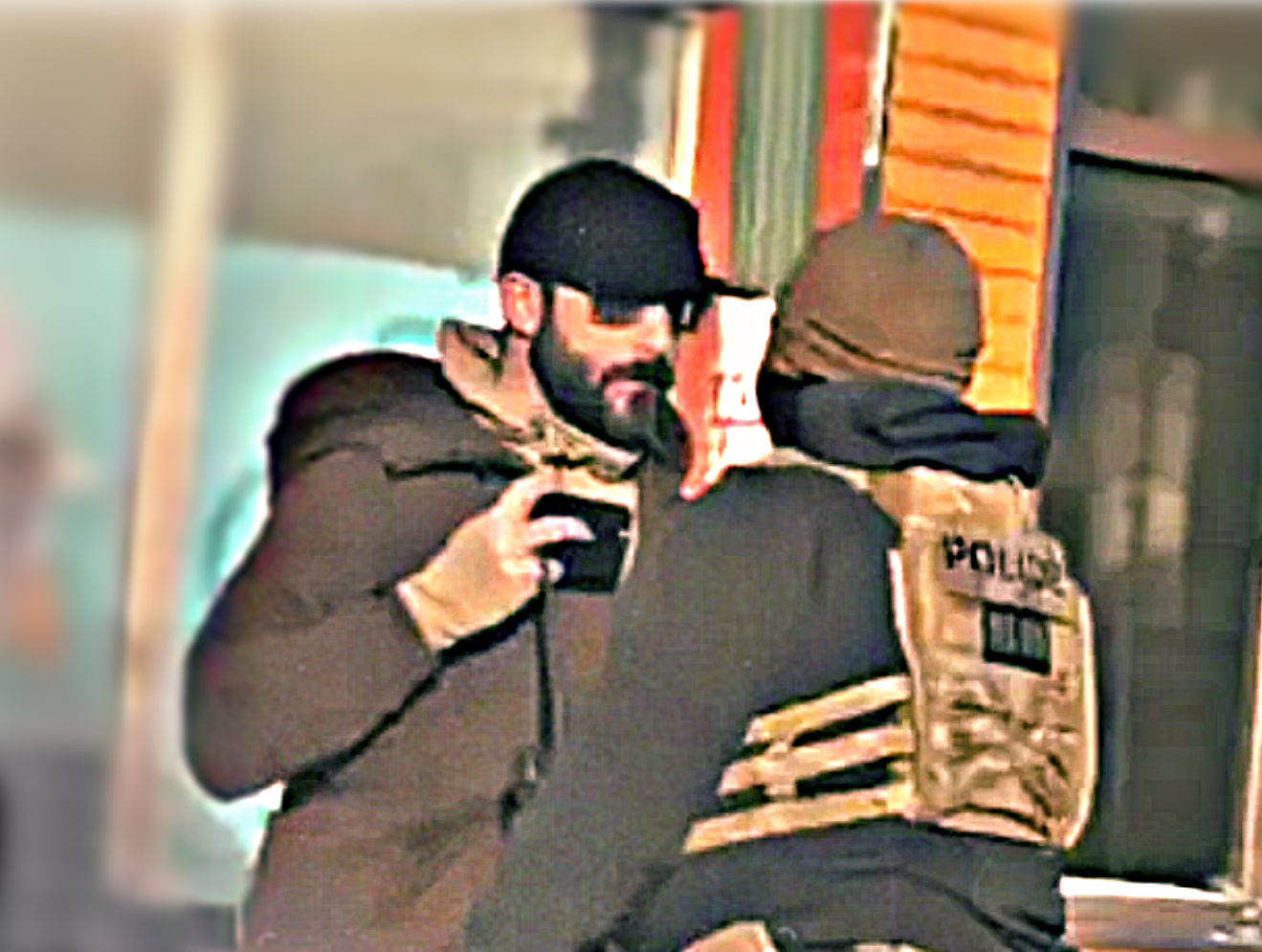
By the time the sun set yesterday, Minneapolis had become a laboratory for a new kind of American power. The death of Alex Pretti—a 37-year-old ICU nurse who spent his nights caring for veterans at the local VA hospital—was not merely a tactical error or an isolated use of excessive police force. He was shot and killed in broad daylight by federal Border Patrol agents while filming them with his phone, an act of documentation that the state immediately reframed as an act of war.
Within hours, the highest levels of the government had reflexively defamed him, branding a man who had been helping a fallen bystander as a violent domestic terrorist. Pretti was the third person shot by this federal apparatus in as many weeks, falling just over a mile from where Renee Good was killed earlier in the month. His death marks a threshold: the moment when the state stopped pretending to enforce the law and began using its agents to execute its dissidents with absolute, publicized impunity.
While agents of the state engage in brazen extrajudicial killings, the highest levels of government lecture us from their microphones that these are law enforcement agents protecting American communities. It does not seem to matter to them that we can see the killings with our own eyes, from multiple angles, in near-real-time. They insist that the killers are the good guys, that they are public servants and they are owed respect and deference. Such claims are not credible to those who have seen video of the killings, and Americans should decline to participate in this fantasy.
Trump’s Propaganda Machine: Locked and Loaded for Lies
Pretti was the third person shot in three weeks by a federal apparatus that has descended upon the city with the weight, the weaponry, and the psychological posture of an occupation force. While bystander video shows Pretti being tackled and stripped of a holstered firearm before being shot while clutching nothing but a glowing cell phone, the official response from the highest levels of the Trump administration was immediate and reflexive defamation. They branded him a man seeking to kill “law enforcement” and justified the killing in the same strident, absolute terms they used to erase the humanity of Renee Good weeks prior.

This is the hallmark of a regime that does not investigate its violence, but celebrates it. By reflexively defending these shooters before the blood is dry, the administration is signaling a new American reality: that its agents may now kill with impunity, and that the state will have their back.
This pattern of postmortem character assassination functions as a foundational tactic of modern autocracy. In a functioning democracy, a state-involved killing triggers a legal pause—a moment of forensic neutrality where the law determines if the use of force was justified. In a regime state, this pause is nonexistent. It is replaced by a reflexive defense, a linguistic firewall designed to insulate agents from judicial scrutiny or public outcry. We saw this first with Renee Good. Immediately following her death, the administration’s media satellites saturated the digital ecosystem with defamatory claims about her, signaling to the public that her killing was justified before a single forensic report could be filed.
But in Good’s instance, the state’s propaganda machine did not kick into action till after the video had been viewed by millions and sent shock waves around the country. When Pretti’s turn came, the machine was locked and loaded to discharge before the video of his violent death was widely circulated, a blatant effort to bias the interpretation of the facts on the ground before they were even known. The man, whom his parents described as a “kind-hearted soul who cared deeply for his friends, family, and veterans,” was depicted, even before an investigation was launched, as an armed and violent individual who forced an encounter with the agents by pointing his gun at them. In truth, Pretti had rushed to assist a woman whom an ICE agent had forcefully shoved on the icy road, his licensed gun still safely in the holster. His last words before a gaggle of agents started viciously beating him and shot him, “Are you okay?”
This strategy achieves two objectives: it shields the shooters from the moral intuition of the citizenry, and it warns potential dissidents that the state’s power extends beyond the act of killing to the destruction of the victim’s memory. The regime does not merely take a life; it liquidates a legacy, ensuring the victim becomes a villain, even in the grave.
The choice of Minneapolis as the site for this surge is no accident of geography or crime statistics. It is a calculated strike against a center of political resistance, utilizing what authoritarian scholars call an administrative pretext. For months leading up to the violence, the regime’s media satellites saturated the airwaves with viral videos and reports alleging widespread “daycare fraud” within the Somali community. The narrative was designed to pathologize an entire immigrant population as a drain on the American treasury and a nest of systemic criminality. This was the softening of the target. By framing the Somali community through the lens of financial fraud, the regime created a justification for a massive, multi-agency federal presence that bypasses the traditional barriers of domestic policing.
The Dual ‘Justice’ of the Dual State
This represents the emergence of the Dual State in its most predatory form. The concept of the Dual State, first articulated by the jurist Ernst Fraenkel, one of the few Jews in Germany who was allowed to temporarily practice law during a ban on Jewish lawyers due to his status as a World War I veteran, describes a system where two parallel governmental structures inhabit the same body. On one side is the Normative State—the administrative body that handles the routine, non-political business of a nation through predictable laws and courtrooms. This is the state that still processes your taxes, paves your roads, and maintains the rituals of an election. It exists to provide a veneer of stability and normalcy that keeps the economy moving and majority of the population quiet.

But coexisting within that shell is the Prerogative State, a domain of absolute executive power that operates with unlimited arbitrariness, unchecked by any legal guarantee. The Prerogative State does not ask for permission; it acts. It identifies “enemies of the state” and treats them as if they exist outside the protection of the law entirely. In this sense it is different from, say, the Iranian Mullahcracy where the Normative State has collapsed into the Prerogative State and everyone who is not in the state is an enemy of the state.
The brilliance of this dualism is its utility in concealment. The regime can point to the Normative State to prove it is still a democracy, while using the Prerogative State to crush resistance. In Minneapolis, this duality was weaponized through the use of a mundane administrative audit as a Trojan horse for a paramilitary siege. The presence of a vocal, high-profile congresswoman from the district, who has long served as a focal point for the American ruler’s animosity, provided the political motive; the daycare allegations provided the bureaucratic cover.
This is how the modern autocrat operates: they do not declare war on a city; they announce an audit and send in the gunmen to protect the auditors. By the time the legal system of the Normative State can even begin to question the validity of the surge, the Prerogative State has already achieved its objective: the physical intimidation of a community and the extrajudicial removal of its dissidents.
The true nature of this intervention was laid bare in a letter from Attorney General Pam Bondi to state officials, obtained and released by Sen. Chris Murphy, a Connecticut Democrat. This document is not a legal brief; it is a treaty of surrender. It lists three non-negotiable demands that dismantle Minnesota’s sovereign authority to protect the privacy and safety of its residents, using the presence of federal paramilitaries as the unspoken leverage.
Trump: Enemy of the ‘State’
First, Bondi demanded that Minnesota allow the Civil Rights Division of the DOJ unfettered access to its voter registries—a move Murphy characterized as a blatant attempt to manipulate the electoral landscape of a key swing state. Second, the letter required the state to turn over its entire database of Medicaid and food-assistance recipients, including SNAP data, under the guise of investigating “fraud.” Third, it demands the formal abolition of Minnesota’s sanctuary policies, insisting that local police be subsumed into the federal enforcement apparatus.

This is federal hostage-taking.
By making the cessation of paramilitary violence contingent on the surrender of the ballot box and the private records of the vulnerable, the regime reveals that the Minneapolis surge was never about public safety. It was a maneuver designed to achieve through coercion what could not be won through democratic persuasion or in a court of law.
Targeting the home state of Tim Walz, a Democratic vice-presidential candidate, to extract voter data is a deliberate signal that no political rival is beyond the reach of the regime’s stick. This represents the total subversion of federalism—the final collapse of the Normative State’s ability to act as a buffer between the individual and the central executive. When the federal government uses its monopoly on violence to demand the keys to local administrative data, the American Republic has ceased to function in that jurisdiction. What remains is the Prerogative State in its purest form: a system where “law” is merely the dictated terms of an occupying power, exercised through the immediate, vertical command of the ruler.
This hidden engine of executive violence is powered by an ICE and Border Patrol apparatus that has been transformed by billions in new funding and a hiring spree specifically designed to attract ideological loyalists. This shift in the psychology of these enforcers is the most dangerous development of all. By advertising for agents in venues that cater exclusively to the American ruler’s base, the regime has bypassed the traditional civil-service ethos of protection and service in favor of a warrior mentality. These recruits are not taught to be neutral enforcers of the law; they are trained to see themselves as the vanguard of a civilization under siege. When an agent enters a neighborhood in Minneapolis with this psychological conditioning, they do not see a community; they see a battlefield.
This intentional radicalization of ICE and related agencies ensures that when an agent pulls the trigger, they do so with a sense of moral authority that transcends the Constitution. They believe they are not just following orders, but fulfilling a higher, nationalist mission. This is how a professional law enforcement agency becomes a Praetorian Guard.
An internal Department of Homeland Security memo that recently came to light concluded, after rejecting existing guidance and practices, that agents may use administrative warrants issued by DHS itself—unsigned by any judge—to enter private homes. By blocking local police from crime scenes and shielding shooters from municipal investigation, the administration has created a force that answers only to the ruler, moving through our streets as the blunt end of a stick wielded for political intimidation.
We have crossed a terrible threshold. Those of us who have studied and fought authoritarian regimes abroad—from Saddam Hussein’s Iraq to Vladimir Putin’s Russia to Maduro’s Venezuela—know the importance of the fictions they maintain. These regimes always keep their courts, their ceremonial elections, and their heavy leather-bound law books. They need the lie of legitimacy to sustain their supporters and to provide the collaborative class—the journalists and lawyers—with a reason to keep participating.
In Minneapolis, the mask has slipped. When a government kills dissidents and signals that the killers are beyond the reach of the law, legitimacy is no longer a property of the system. It is a hollow performance staged for a shrinking audience. The notion that these masked enforcers are legitimate law enforcement is a fiction. They are paramilitary operatives. They are thugs in the service of a regime.
The Linguistic Front
Linguistic secession is no longer a matter of rhetorical preference; it is a moral and political necessity. Authoritarianism survives on the oxygen of recognition, requiring that we continue to use the honorifics and vocabulary of the old democracy to mask the reality of the new autocracy. To continue calling the shooters in Minneapolis “law enforcement officers” is not a professional courtesy; it is an act of collaboration that validates the lie that power still flows from the consent of the governed. Every time we use the state’s preferred titles, we surrender a piece of the reality we inhabit. We must instead strip the regime of the linguistic cover that allows it to operate under the guise of the law.

The task of righting America’s ship of state is monumental, but begin it we must. To use words that carry moral weight, like “law” or “justice,” in the context of extrajudicial killings and paramilitary coercion is to poison the concepts themselves. We cannot effectively fight the authoritarian cancer that has overtaken our beloved nation unless we first refuse to participate in the charade.
Until the rule of law is restored to the United States, the government in Washington is not a democratic authority, but a regime of force. The time has come for our words to reflect this new, terrifying, and shameful reality.

© The UnPopulist, 2026
Follow us on Bluesky, Threads, YouTube, TikTok, Facebook, Instagram, and X.
We welcome your reactions and replies. Please adhere to our comments policy.

START RIGHT NOW"
If Trump can rename cabinet positions, so can we. The Department of Homeland Security is now the Department of Domestic Warfare. After all, he told us, "The enemy is within."
Ernst Fraenkel's "Dual State: A Contribution to the Theory of Dictatorship" (1941) provided a vital part of the answer to the riddle of "how has this happened", asked by those who retroactively looked for indicators. But he was perhaps the only one to suggest that the operation of the legal system is an indicator.