


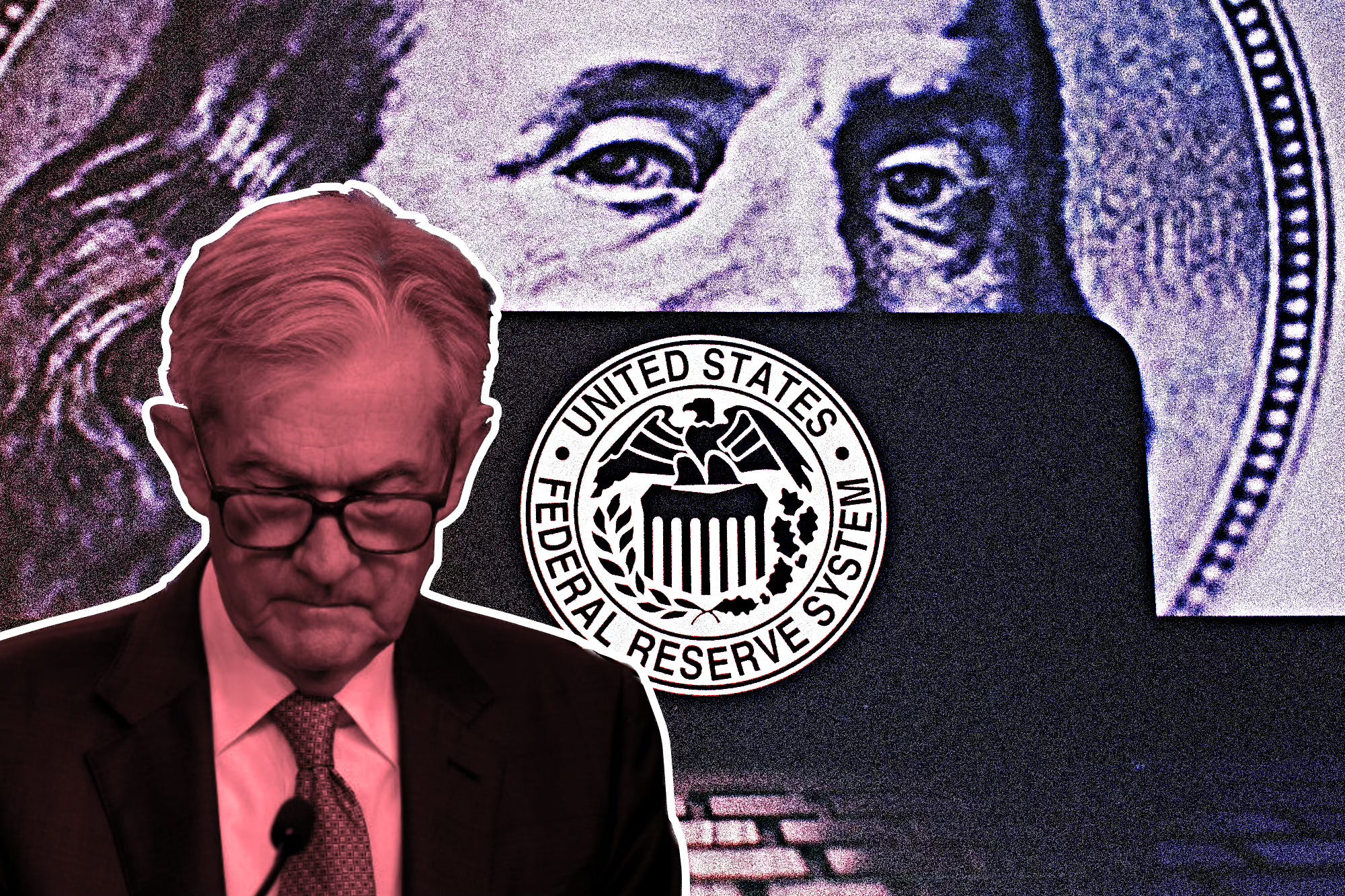
If Donald Trump has a singular talent, it is exceeding our worst fears. During his first term, he tried to coerce the Federal Reserve to cut interest rates to “ZERO, or less,” denouncing Chair Jerome Powell as a “bonehead” for not cooperating. In his second term, he has escalated the assault—moving to evict Lisa Cook, a Fed governor, threatening to fire Powell, and personally visit the Fed to grouse about cost overruns in a renovation of its headquarters.
Trump’s Assault on Fed Independence
None of these bent Powell to his will. But on Friday, the Justice Department presented the Fed with grand jury subpoenas as part of a criminal investigation of the chair over his congressional testimony about the renovation.
Other presidents have tried to influence monetary policy through pleas or complaints. Lyndon Johnson even shoved one Fed chair, William McChesney Martin, while bellowing, “Boys are dying in Vietnam, and Bill Martin doesn’t care!” But even LBJ never dared to confront the head of the central bank with possible prison time.
It would not be accurate to say that Powell has the patience of a saint; in reality, aspiring saints might pray to attain Powell’s patience. Temperamentally, he’s about as volatile as a giant panda. He has endured endless denunciations by Trump with placid equanimity. But on Sunday evening, the Federal Reserve released a video of him letting the nation know that his tolerance for being bullied had run out.
“The threat of criminal charges is a consequence of the Federal Reserve setting interest rates based on our best assessment of what will serve the public, rather than following the preferences of the president,” he said. “This is about whether the Fed will be able to continue to set interest rates based on evidence and economic conditions—or whether instead monetary policy will be directed by political pressure or intimidation.”
Trump thinks he should possess absolute power and behaves as though he actually does—deporting migrants without due process, sending Marines into Los Angeles and hordes of immigration agents into blue cities, refusing to spend funds appropriated by Congress, closing down agencies established by law, sinking alleged drug boats on the high seas, and launching strikes on Venezuela and abducting President Nicolás Maduro. Asked by reporters if there are any limits on his power in international affairs, Trump replied: “My own morality. My own mind. It’s the only thing that can stop me.”

The same applies to domestic policy. After ordering an end to congestion pricing in Manhattan, he posted on Truth Social: “CONGESTION PRICING IS DEAD. Manhattan, and all of New York, is SAVED. LONG LIVE THE KING!”
But his attempts to force the Fed to cut interest rates as far as he wants have run up against the immovable object of Powell and his fellow Fed governors. During the 2024 campaign, Trump said that, as president, he “should have at least [a] say in there. Yeah, I feel that strongly.” But Powell and his colleagues didn’t sign up to swallow their convictions or surrender the central bank’s independence.
Their statutory obligation is to manage monetary policy to achieve maximum employment and stable prices. Inflation over the past year has been 2.7%, well above the 2% level that they aim for. The Fed’s refusal to abandon that mission and slash interest rates as much as Trump would like has driven him crazy.
Powell has learned the lessons of history even if Trump hasn’t. President Richard Nixon prevailed on Fed Chair Arthur Burns to cut interest rates to give growth a boost before the 1972 election, fueling a surge of inflation that bedeviled the economy for the next decade. It took Fed Chair Paul Volcker to reassert the central bank’s independence, boosting interest rates and curbing monetary growth. He stood firm despite the deep recession his policies produced—and the era of price stability and prosperity that followed vindicated not only his approach but confirmed the importance of an independent Fed.
Stacking the Deck at the Fed
Trump has left no doubt he wants obedient servants at the central bank. “I want my new Fed Chairman to lower Interest Rates if the Market is doing well, not destroy the Market for no reason whatsoever,” the president posted on Truth Social. “Anybody that disagrees with me will never be the Fed Chairman!” Either the next chair will carry out Trump’s orders, or he will face additional abuse—and invite criminal prosecution.
The president managed to install one eager accomplice at the Fed: Stephen Miran, chosen to fill the vacancy left when Adriana Kugler resigned in September. That appointment was notable, and not in a good way, because Miran chose to keep his job as chairman of the president’s Council of Economic Advisers, merely taking a leave until his Fed term ends on Jan. 31. That arrangement obviously compromises his independence as a Fed governor, because he’s not likely to want to displease the president he will be serving directly after his stay ends. Miran was the only governor to vote for a half-point reduction in the federal funds rate at their December meeting. But now he says he favors a 1.5% point cut.

The meddling president hoped to get another appointment by firing Cook on the dubious claim that she committed mortgage fraud. But the Supreme Court allowed her to stay in her job while it considers the legality of her removal.
So Trump, out of options, apparently decided to use the same one he has deployed against other perceived enemies, including former FBI director James Comey, New York Attorney General Letitia James, and former Special Counsel Jack Smith. It may not succeed in court, but it advances Trump’s purposes by promising misery, uncertainty, and massive expense for Powell while deterring his successor from resisting presidential demands.
The Renovation Pretext
The administration had previously used the renovation cost as an excuse to attack the Fed. In July, budget director Russell Vought wrote Powell to accuse him of “an ostentatious overhaul.” National Economic Director Kevin Hassett, who reportedly is in line to succeed Powell, chimed in: “The bottom line is that this is the most expensive project in D.C. history. So the Fed has a lot to answer for.” As I recently noted for The UnPopulist, Hassett has shown his willingness to endorse Trump’s views even when they are entirely devoid of merit.
For them and the Justice Department to express alarm about an increase in the cost of the renovations is rich, coming under a president whose plan for a new East Wing of the White House, by his own admission, quickly doubled, from $200 million to $400 million. The Fed project has grown from $1.9 to $2.5 billion since 2023. Why? “Higher-than-expected groundwater lurked beneath the site, situated around former wetlands, and needed to be drained,” The Wall Street Journal reported. “There was also asbestos, and toxic contamination in the soil. All of that, combined with rising costs of materials following pandemic shortages and inflation, pushed up the cost of the renovations.”

Trump denied knowing anything about the Powell investigation, and it may be that he didn’t order it—just as Henry II didn’t demand the murder of Thomas Becket when he fumed, “Will no one rid me of this turbulent priest?” A shamelessly sycophantic attorney general like Pam Bondi would hardly need an explicit request to go after those who incur Trump’s wrath. The most valuable courtiers, after all, are those who understand what the king wants without being told and strive to do it at all costs.
Republicans For Fed Independence Are Almost an Extinct Species
But Trump’s effort may finally establish a limit to what congressional Republicans will accept from an out-of-control executive. French Hill, the Republican head of the House Banking Committee, came to Powell’s defense. “The Federal Reserve is led by strong, capable individuals appointed by President Trump,” he said, “and this action could undermine this and future Administrations’ ability to make sound monetary policy decisions.” Sen. Thom Tillis of North Carolina, a member of the Banking Committee, pushed back even harder: “I will oppose the confirmation of any nominee for the Fed—including the upcoming Fed Chair vacancy—until this legal matter is fully resolved.” Sen. Lisa Murkowski of Alaska, who voted against Miran’s confirmation, sided with Tillis. It may be that a few other GOP senators, recognizing the danger to the economy and their own financial portfolios if the Fed is emasculated, will follow their lead.
There are also those who want to appease Trump. Assuming Powell survives this investigation, he could stay on as a Fed governor after his term as chair ends in May—depriving the president of a chance to appoint a submissive functionary. “A senior GOP lawmaker, who spoke with administration officials Monday, said some Republican lawmakers plan to propose to the Trump team a deal with Powell: He leaves, and the case will be dropped,” The Wall Street Journal reported. That idea is perfectly in keeping with the usual reflexive cowardice of congressional Republicans.
Giving Trump a win would be damaging to the economy, by greatly eroding confidence that the Fed will be able and willing to contain inflation. Cutting interest rates sharply before the Fed has clearly won the price battle is a formula for a return to the high inflation of 2021 and 2022. Even Trump adviser Stephen Moore acknowledged, “This feud between Powell and the White House is, obviously, not good for markets.”

But the broader danger is far greater. Congress and the Supreme Court have largely declined to interfere with Trump’s destructive crusade, making the Fed one of the few centers of power to push back. The move against Powell is part of the administration’s grand strategy of persecuting anyone who might oppose it—from the second most powerful official in Washington to nonviolent protesters in Minneapolis.
Trump wants every American to fear the consequences of challenging him. The hope is that Powell and the Fed can survive Trump’s assault, and that Congress or the Supreme Court will finally put limits on his reckless use of power. If not, we will all have reason to be very afraid.

© The UnPopulist, 2026
Follow us on Bluesky, Threads, YouTube, TikTok, Facebook, Instagram, and X.
We welcome your reactions and replies. Please adhere to our comments policy.

Steve, your subtitle sounds too eerily similar to those of Holocaust survivor Louise Joskowitz who died last week at age 100 and who, in 1995, spoke of her 1943 Auschwitz experiences in a video I recently watched. Of the camp commander - who would order beatings and killings "for no reason" -- Louise said, "He was the king of the universe ... and he could do whatever he wanted." Chilling.
the destruction of trust is one hallmark of tyranny. If you can't trust the government, if your neighbors turn on you, if co-workers are complicit, if you cannot even trust your own children, how does one even survive? Anger and dejection ensue and are surmounted by subjugation and compliance. Tyrant Trump is winning and only We The People can now halt his advance toward conquest and subjugation of the American People.