


The United States military captured Venezuelan president Nicolás Maduro, and while many reactions focus on Maduro himself, that’s mostly beside the point. His government is repressive and illegitimate, having stolen Venezuela’s most recent election in 2024, but there are numerous bad governments in the world. The most important question before forcibly removing a foreign head of state is if it will make things better. On every stated and possible U.S. goal, this will more likely make things worse.
Botching Post-Maduro Venezuela
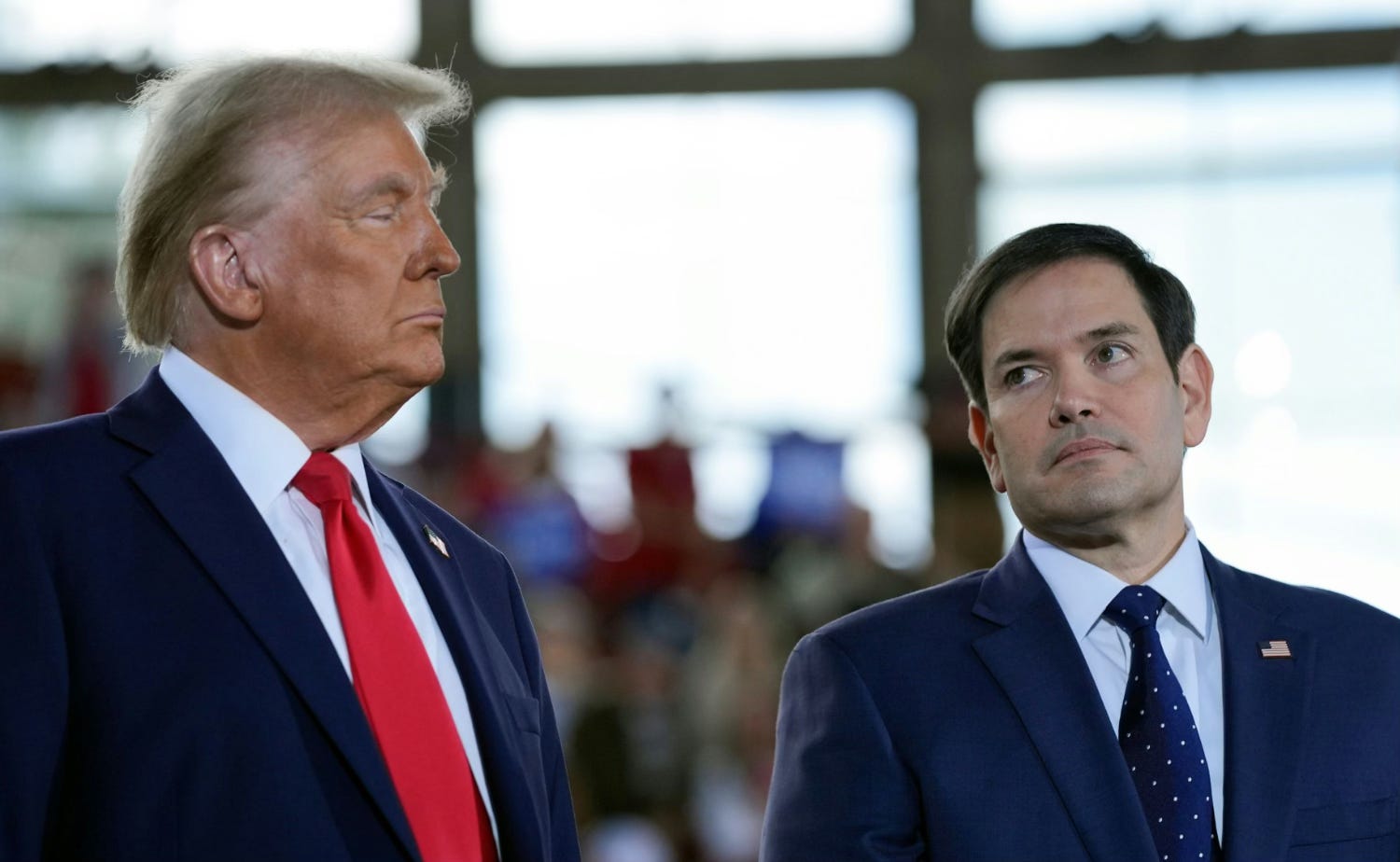
It’s unclear that removing Maduro means the regime will actually change. A state is a lot more than one person, and the rest of the Venezuelan government appears intact. The general who has led the armed forces since 2014 and deepened the Maduro regime’s control, Defense Minister Vladimir Padrino López, is still there. So is the powerful Interior Minister Diosdado Cabello, who helped Maduro’s predecessor, Hugo Chávez, thwart an attempted 2002 coup and subsequently consolidate power. Maduro’s vice president, Delcy Rodríguez, has been sworn in as president, and U.S. President Donald Trump said Secretary of State Marco Rubio spoke to her and “she’s essentially willing to do what we think is necessary.” But Rodríguez has publicly denounced the U.S. attack, and even if that’s for show and she supports U.S. efforts—Rodríguez has been under sanctions by the U.S., so that’s a big “if”—it’s hard to see how she could successfully do what the U.S. wants without setting off a civil conflict with Cabello, Padrino, and others.
Trump announced that the U.S. will “run the country,” except there’s no apparent plan to do that. American military operations in and around Venezuela have been airstrikes and now a special operations raid. There’s no U.S. or allied ground force to even try to assume control. In Trump’s first term, the U.S. ran a war game ousting Maduro, and no matter how it happened—coup, popular uprising, or U.S. military intervention—the result was chaos and violence, with rival factions vying for power.
As Francis Fukuyama argues, conditions in Venezuela are riper for democracy than 2001 Afghanistan or 2003 Iraq, having seen real elections and peaceful transitions of power in the second half of the 20th century. But democratization is impossible without security.

Opposition politicians María Corina Machado and Edmundo González might have popular legitimacy, since they won the recent election Maduro stole, but Trump has already ruled out backing them, saying that Machado “is a very nice woman, but she doesn’t have the respect.” Maduro regime figures, many of them corrupt, would have no place in a democratic Venezuela, and would fight to prevent it, possibly via a violent insurgency. While Trump has suggested that the U.S. might launch additional military action, there’s no discernible planning for the sort of sustained military commitment, including likely U.S. casualties, that could ensure the stability needed for elections and a democratic transition to take place.
That means the likely result of removing Maduro is either continued but somewhat destabilized authoritarianism under mostly the same people, or chaotic instability that undermines democratization or any of the Trump administration’s stated goals.
The first scenario is already transpiring and the second could well follow; the two are not mutually exclusive. The Guardian reports that Rodríguez has already called in private armed militias to patrol streets, operate checkpoints and check people’s phones in a crackdown to consolidate authority after the attack on Caracas:
Paramilitary groups known as colectivos criss-crossed the capital with motorbikes and assault rifles on Tuesday in a show of force to stifle any dissent or perception of a power vacuum.
The patrols stopped and searched cars and demanded access to people’s phones to check their contacts, messages and social media posts in a stark demonstration to the population that the regime remained in charge despite the abduction of president Nicolás Maduro.
Anyone who was suspected of supporting Saturday’s US raid was liable for arrest, said Mirelvis Escalona, 40, a resident in the western Caracas neighbourhood of Catia. “There’s fear. There are armed civilians here. You never know what might happen, they might attack people.”
Oily Miscalculations
The U.S. has sanctioned Venezuelan leaders for human rights violations for most of the 21st century, but the Trump administration has shown little concern for human rights or Venezuelans. A different authoritarian or a power vacuum won’t improve conditions for the Venezuelan people.
Trump administration officials’ frequently stated concerns about Venezuela are drug trafficking and migration. But war typically causes more people to flee, not stay. And the destabilization of regime decapitation usually creates more space for drug traffickers, terrorists, and other nonstate actors to operate, not less.

In a press conference announcing Maduro’s capture, the U.S. president emphasized oil more than anything else. Trump absurdly claimed that Venezuela’s natural resources were stolen from the U.S.—apparently referring to Venezuela nationalizing its oil industry in 1976—and said American oil companies would now “go in, spend billions of dollars, fix the badly broken infrastructure, the oil infrastructure, and start making money for the country.” The president has announced that Venezuela has agreed to “turn over” 30 million to 50 million barrels of oil, and the revenue will reportedly go into offshore accounts rather than the U.S. Treasury. Subsequently, the U.S. seized two sanctioned tankers, including a Russian-flagged oil tanker that was in the Atlantic.
But what is the point of behaving like high-tech pirates beyond theatrics?
Venezuelan oil is dirtier than what U.S. refineries typically handle, and they’re already operating near capacity from oil drilled in North America, so forcing more exports to the U.S. makes no sense. Getting Venezuela’s oil industry up to U.S. standards could take more than $100 billion, and even then drilling Venezuela’s sour crude wouldn’t be profitable unless oil is at least $65-$70 per barrel, rather than the current $59. Energy companies are so reluctant to get involved that the Trump administration is attempting to use threats to incentivize them. And even if U.S. companies wanted to develop Venezuelan oil infrastructure, that would take years of sustained operations, which is difficult-to-impossible with a hostile local government or the instability of a security vacuum. Forcibly taking another country’s natural resources is blatantly illegal under international law, and the U.S. military providing the security to do it would cost more than any oil profits Trump-friendly companies can extract.
The last time the U.S. initiated a regime change war was 2003 against Saddam Hussein in Iraq. American forces played a role in ousting Libya’s Muammar Gaddafi in 2011, but a civil conflict was already underway, and European NATO members were the main impetus for intervention. With Maduro in Venezuela, as with Hussein in Iraq, American forces destabilized a problematic but relatively stable situation, even though the country had not attacked the U.S., nor harbored terrorists who did.
World on Edge
The U.S. invasion of Iraq had congressional authorization, public support in America, international support from over 40 countries, and more than 150,000 U.S. troops—along with thousands from allies such as the U.K., Australia, and Poland—to occupy and stabilize the country after removing the ruler. And even with all that, ousting Hussein set off an insurgency and an ethnoreligious civil war, gave rise to ISIS, and increased Iran’s regional power.
The U.S. attack on Venezuela has no defensible legal rationale, no international coalition, and no occupation force to manage the situation. With the exception of Israel, it has elicited widespread concern around the world, which is no doubt muted given Trump’s volatility and trigger happiness with retaliatory tariffs.

While Latin America is different from the Middle East, this isn’t a Cold War coup, or a focused operation to remove a military dictator who had old U.S. ties, like Noriega in Panama. Venezuela is larger, Maduro has been in power for longer, his Bolivarian movement is more populist, and more entrenched.
Though American forces kidnapped its leader, the Venezuelan government is standing, and probably won’t let the U.S. run the country or control the oil industry. The capture of Maduro is likely the start of American intervention in Venezuela, not the end.
The broad impact will be destabilization, with uncontrollable consequences for the region and the world. The U.S. removing Maduro won’t give international aggressors the idea to target foreign heads of state—Russia has been trying (and failing) to kill Ukrainian president Volodymyr Zelenskyy for years—but the military action, along with imperialist threats against Greenland and others, shows that the U.S. under Trump supports aggression rather than opposes it, creating more cracks in what used to be the U.S.-led liberal world order.

© The UnPopulist, 2026
Follow us on Bluesky, Threads, YouTube, TikTok, Facebook, Instagram, and X.
We welcome your reactions and replies. Please adhere to our comments policy.

Trump is a person with mental disorders. He is not a rational thinking person who exams all the situation first before executing an invasion and kidnapping and takeover of a country. Additionally, as we all know, he has surrounded himself with like minded people, who always support his impulses. Now that he has done this, the consequences will be seen and will probably be pretty disastrous. God help the next administration in cleaning up this mess, along with all the rest of the messes he has made.
Actually there is one upside. Paul Singer, a one million dollar contributor to Trump's inauguration is purchasing Citgo's US refineries for $5.9 Billion dollars. $5.7 Billion of that price is being paid to Citgo investors who held debt upon which the Venezuelan government defaulted. It appears that the book value and refining capacity is valued at $200 million dollars. Citgo's US refineries can process 800,000 barrels per day. The Crack Spread for gasoline in January 2026 is expected to be $14 / barrel. In March it will be $25 / barrel. That means that revenues will be $11 million dollars to $20 million dollars per day. Operating at full capacity, the investment will pay back the value of the tangible assets and refining capacity to Singer in 10 days. This is Russian scale malfeasance.