


For liberals, the major political upheavals of the past decade—the emergence and success of Donald Trump and his MAGA movement in the United States; the continued rise of various forms of electorally viable right-wing populist and nationalist movements around the world—can be explained by rising frustration with the political establishment, growing economic anxieties and distress, and backlash to certain forms of cultural change. But liberals are clear that these are all issues that can—and must—be addressed within a liberal-democratic system.
Postliberals certainly agree that serious political, economic, and cultural missteps have happened under liberal regimes. But their critique runs much deeper than that. They believe liberalism itself is fatally flawed. Although postliberals come in many varieties, a common thread is that liberalism is intrinsically defective—that it inexorably leads to social atomization, cultural degradation, and oppression and inequality.
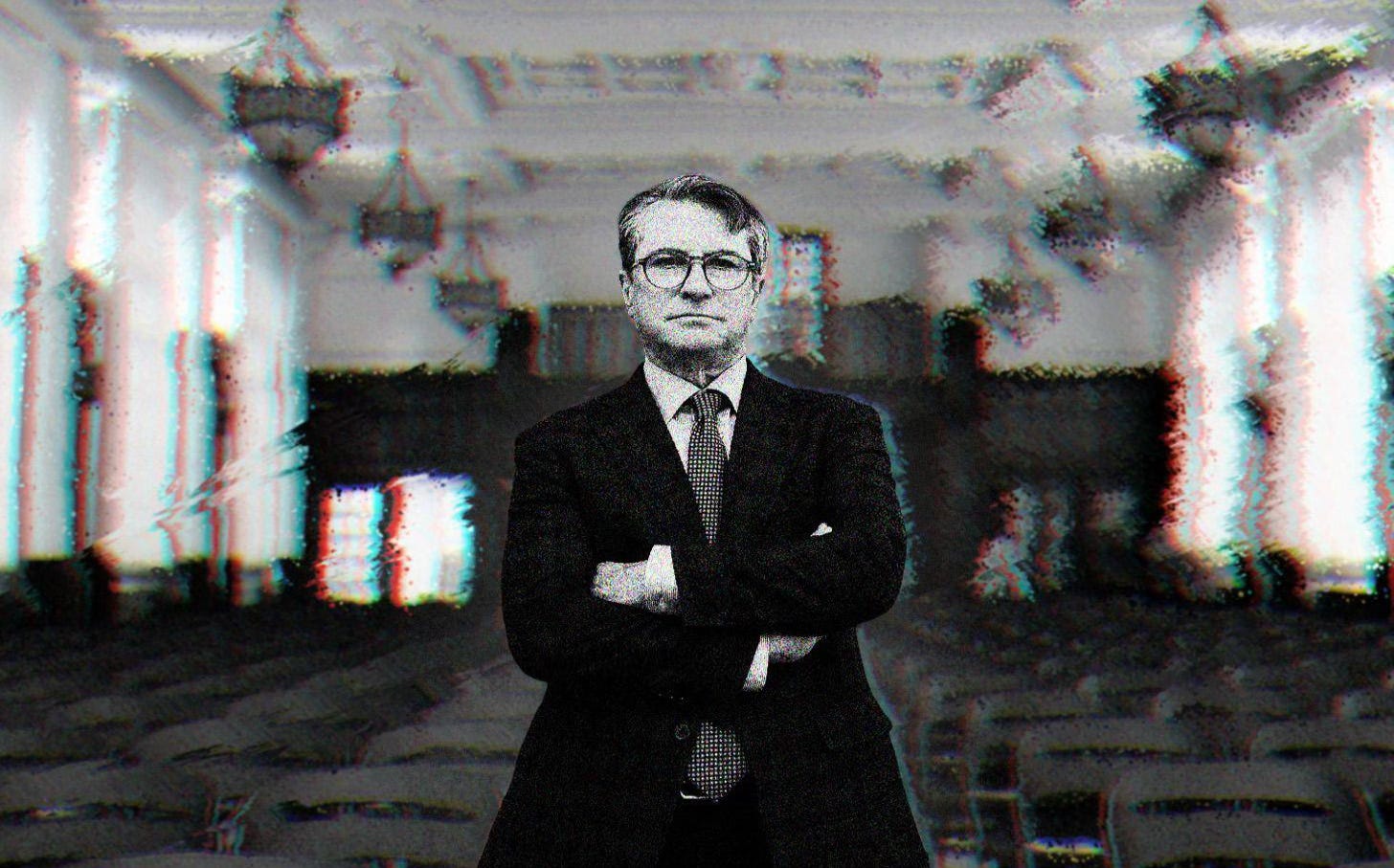
Perhaps the best known purveyor of this view is Notre Dame political theorist Patrick Deneen, whose books Why Liberalism Failed and Regime Change: Toward a Postliberal Future attempt to make the case that liberalism is structurally deficient and that an alternative political system—a postliberal system—must take its place.
Deneen’s analysis suffers from three basic problems: he misrepresents liberalism’s fundamental principles; he presents a warped history of liberalism that dismisses its achievements and exaggerates its weaknesses; and he offers nothing in place of the liberal-democratic framework he wants to destroy.
Misunderstanding Liberalism
Deneen’s contemptuous assessment of liberalism relies on a deep misunderstanding—such as when he describes it as a “totalizing” system that seeks to “radically redefine human nature” and crush any political or cultural resistance. But this description is an inversion of the liberal project, which serves as the strongest bulwark against ideologies that treat human beings as malleable raw material to achieve some radical end—like a communist utopia, a totalitarian ethnostate, or an otherworldly paradise.

Liberal institutions are built on the realities of human nature: “What is government itself,” James Madison wrote in Federalist No. 51, “but the greatest of all reflections on human nature?” Madison’s acknowledgment of the darker aspects of human nature informed the architecture of the most successful governing document from a liberal perspective that the world has ever seen: the U.S. Constitution. It’s what led him to argue that, “Ambition must be made to counteract ambition” in the form of separated powers that check and balance each other.
As Deneen sees it, liberalism is “more insidious” than fascism and communism because it hides its “intention of shaping the souls under its rule.” He argues that liberalism was the “first political architecture that proposed transforming all aspects of human life to conform to a preconceived political plan.” In fact, liberalism exists to peacefully manage conflict between many competing political plans. It allows people under it to hold whatever views they want—Marxism, libertarianism, evangelicalism, atheism—so long as they observe the rule of law and refrain from forcing their views on others.
Deneen argues that one of liberalism’s core “anthropological assumptions” is the “human separation from and opposition to nature.” But the major Enlightenment philosophers who fashioned the foundations of liberal thought held the opposite view—they grounded liberal rights and duties in human nature. John Locke (one of Deneen’s liberal bogeymen) argued that the right to life, liberty, and property is based on natural law. The Declaration of Independence begins with a Lockean affirmation of natural rights.
According to Deneen, liberal societies express no “gratitude to the past.” But the U.S. is the world’s most powerful liberal state, and the embrace of history is a core element of its civic and legal culture. American law is largely built upon precedent, and it is grounded in the Constitution—a document for which most Americans have almost religious reverence.
Deneen also argues that liberals feel no “obligations to the future.” The American Founders carefully built a political system around robust checks and balances, the rule of law, and the consent of the governed—a system that has lasted for a quarter of a millennium. However, the Founders also recognized that they couldn’t account for every future challenge and development, which is why they created a highly adaptable system capable of self-correcting and accommodating the diverse and evolving views of American citizens. As Thomas Jefferson explained in an 1816 letter:
I am certainly not an advocate for frequent and untried changes in laws and constitutions. … But I know also, that laws and institutions must go hand in hand with the progress of the human mind. As that becomes more developed, more enlightened, as new discoveries are made, new truths disclosed, and manners and opinions change with the change of circumstances, institutions must advance also, and keep pace with the times. We might as well require a man to wear still the coat which fitted him when a boy, as civilized society to remain ever under the regimen of their barbarous ancestors.
Those words are etched into stone at the Jefferson Memorial in Washington, D.C., and they serve as a double rejoinder to Deneen. Jefferson recognized that the American system would outlive him and serve future generations whose “manners and opinions” may not reflect his own. His sense of obligation to the future was central to his understanding of the role of American government. However, Jefferson also captured a significant aspect of the American civic ethos when he said he is “not an advocate for frequent and untried changes in laws and constitutions.” The U.S. Constitution remains the bedrock of American democracy, despite centuries of social, economic, and technological progress that the Founders couldn’t have imagined.
Denying Liberal Progress
Deneen also ignores or distorts the remarkable historic achievements of liberalism to prop up a flimsy narrative of liberal failure and collapse. He reduces the extraordinary scientific advancements enabled by the liberal principles of open inquiry and free expression to a record of pollution, resource depletion, and social fragmentation.

According to Deneen, the Green Revolution—a period of industrial-scale agricultural innovation in the 20th century which has prevented billions of people from starving to death—is merely a source of topsoil corrosion and groundwater pollution. He describes the liberation of women from the drudgery of household work as shunting them into the “workforce of market capitalism,” which he contends is no improvement. Deneen declares that the spread of liberal market reforms around the world—which enabled billions of people to escape extreme poverty over just a few decades and has led to unprecedented prosperity in the developed world—has destroyed traditional communities built around local production and consumption.
Deneen’s bleak and deflationary account of the past two and a half centuries of human progress is an attempt to doctor the historic record and replace it with a narrative of inexorable civilizational decline under liberalism. Similar accounts are at the heart of the postliberal project, which claims to offer an alternative to the alleged failures of liberal society. This alternative is a return to various forms of traditionalism, such as small agrarian communities in which most people share the same beliefs and cultural practices.
Deneen and other postliberals don’t have any social or political innovations to offer—they just want to rebuild a preliberal world of deference to arbitrary authority in which older ways and dogmas predominate. But imposing this homogenized traditionalism across the country would require political and social coercion on a scale that the U.S. has never seen.
Postliberals have been emboldened by Trump’s electoral victories, which they present as a populist revolt against liberalism. But when it comes to political action, the postliberal critique falls apart—many of its suggestions for political mobilization are still reliant upon the freedom, rights, and governance structure provided by liberalism. As Harvard law professor Adrian Vermeule put it in a sympathetic review of Why Liberalism Failed: “At the stage of diagnosis, Deneen is masterful; at the stage of prescription, he relapses into liberalism.” While Deneen “plumps for a vague communitarian localism”—a sort of self-imposed exile of postliberals—Vermeule recommends that “nonliberal actors strategically locate themselves within liberal institutions and work to undo the liberalism of the state from within.” Deneen took up this challenge in Regime Change, which he believes can be met through the “displacement of [the liberal] elite with a different one informed by a common-good conservative ethos.”
But Deneen’s argument is unworthy of the grand self-designation of “postliberal.” He offers no replacement for liberalism other than bromides about cultivating an “aristopopulist” elite focused on the “common good.” His plan for “regime change” is a fuzzy set of proposals for developing a “mixed constitution” in which each social class “should have the capacity and … the incentive not only to ‘check’ its opposite, but to improve and elevate it.”

Despite the book’s advertising as a radical proposal for moving the world into a postliberal age, the “regime change” Deneen calls for is a marginal shift in the governing ethos of liberal states. Even Vermeule, who talks a big game about his determination to “co-opt and transform the decaying regime from within its own core,” offers nothing in the way of a proposed course of action. He says postliberals must “occupy the commanding heights of the administrative state” where they will have a “great deal of discretion to further human dignity and the common good,” but advances no ideas for how this discretion will be exercised legally or politically.
The Alternative to Liberalism is Authoritarianism
There’s a simple reason for the huge disconnect between the intensity and scale of the postliberal critique and the modesty of the postliberal political program: There are no postliberal thinkers who have the courage to explicitly advocate a true realization of their regime, which would overthrow the U.S. Constitution in favor of a reversion to an atavistic and coercive form of communitarianism that would inevitably require the repression of most citizens of liberal democracies.
Liberalism is the only system that has proven capable of managing diversity of thought, belief, and practice on a national scale. The effort to force 340 million diverse Americans to accept a narrow, postliberal-approved definition of the “common good” would be terrifyingly oppressive if it wasn’t fundamentally unworkable.
The real threat posed by the postliberal movement, then, isn’t the possibility that postliberalism will be institutionalized in any coherent or sustainable way. It’s that the postliberals are contributing to an atmosphere of illiberalism in the United States and other Western democracies. They are exacerbating the crisis of institutional trust that led to the rise of illiberal authoritarians like Trump. They are rationalizing the authoritarian attacks on liberal norms and institutions. They are attempting to intellectualize a fundamentally anti-intellectual movement. Even if postliberal thinkers sometimes manage to squeak out some criticism of Trump, the core of their political project is the destruction of liberal norms and institutions—the most powerful guardrails against authoritarianism in the U.S. and any liberal democracy.
If postliberals really want to instantiate their values, they will have to do so the old-fashioned way: through political action within the legal and institutional confines of the liberal state. They’re welcome to indulge their fantasies of postliberal regime change, but they will likely have a difficult time advocating for this project in the aftermath of the Trump era.

Deneen claims that he is no supporter of Trump, but neither is he interested in expending any political energy resisting the worst excesses of the Trump administration and populist authoritarianism in general. This isn’t a surprise, as his political project is far more aligned with MAGA illiberalism than with the liberalism that Trump is working tirelessly to destroy. It’s no wonder that Vice President JD Vance has cited Deneen as an influence.
The postliberals who have attached their carts to the rampaging horses of Trumpism have done so because they hope to build a new society and political system out of the wreckage when Trump is done. But this is a dangerous illusion—postliberals are contributing to a purely negative political movement that has no ambition beyond the personal enrichment and power of a single demagogue and his corrupt family. Even postliberals who occasionally offer mild criticism of Trumpism will soon discover that their project has been permanently tarnished by its association with the most anti-democratic and destructive American political movement since the Civil War.
After Trump, the postliberals may find that their fellow citizens remember quite well who stood up for American democracy when it was in danger of self-immolation and who fanned the flames to pursue their own political and cultural agendas.

© The UnPopulist, 2025
Follow us on Bluesky, Threads, YouTube, TikTok, Facebook, Instagram, and X.
We welcome your reactions and replies. Please adhere to our comments policy.

Every one of Deneen’s tired, weak ideas was identified and dispatched by Stephen Holmes in the brilliant _Anatomy of Antiliberalism,_ years before Deneen even imagined he had an idea. https://www.hup.harvard.edu/books/9780674031852
One of the unintended, but inevitable, consequences of capitalism is the dissolution of hierarchies and traditions. And once dissolved they cannot be restored in any organic sense. The Humpty Dumpty syndrome. Deneen like those of his fellow travelers have some great restoration project in mind but meanwhile the god of economic destruction and creation dances on as it wills. The world we live in has more to do with amoral markets than any sort of morality. Appeals to authoritarianism will not solve anything. One of the features of most authoritarian governments is the thriving "black and grey" markets that meet consumer demands.
So like all reactionaries like Deneen they are prioritizing a fantasy of bringing back a golden age of hierarchies and traditions that never really existed outside of a cinema. But they earn a good living when people buy their books, ask them to speak at conferences and share their "perspective" (opinions informed or not) as paid pundits.
My suggestion for Deneen is some deep meditation on Spinoza and the stoics who came before him. There are human hierarchies and traditions that are deeper than his Pre-enlightenment wet dream. The perennial drive for individual and collective freedom is one of those traditions. Hierarchies are a systematic prioritization of interests and liberalism clearly has its own hierarchy of values that encourage human flourishing.