


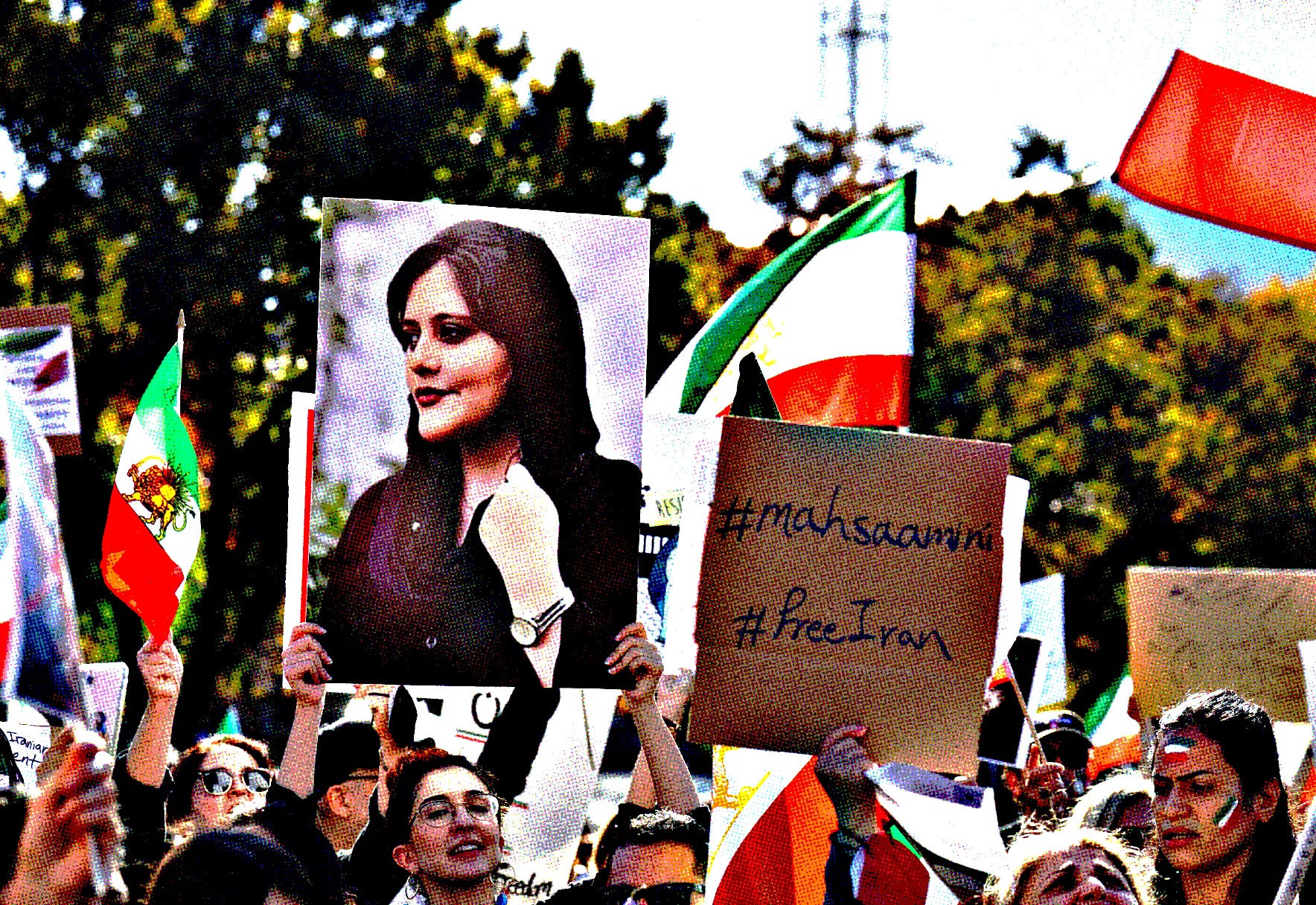
I fled Iran at 18 under the most desperate of circumstances, making a bargain with a human trafficker who secretly abused me for years in exchange for a visa that kept me out of Iran. My birth country was made so inhospitable that to return was to face death. Last week, when I heard that Ali Khamenei, Iran’s Supreme Leader, had been killed in a U.S.-Israeli airstrike, I felt ... thankful. My thanks mostly went not to the military operation that ended his life but to the millions of young Iranians who had prepared the ground for his regime’s demise long before the first bomb fell.
The United States and its allies will claim credit for decapitating the Islamic Republic. But what that narrative obscures is that the regime’s moral foundation had already been weakened—not by Washington, but by ordinary Iranians, most of them young, many of them women, who took heroic risks with almost no support from the outside world. It is because of them that I believe lasting change can come to Iran.
Understanding why requires going back further than last week’s strikes.
Revolutionary Stirrings
We have been told for decades that Iran’s people—especially its young—do not want the theocracy that was imposed on them in 1979. Christopher Hitchens, asked about Iran’s future in 2009, confidently predicted that the mullahs had “by accident brought about a generation that doesn’t like them—in particular among the females,” and that the era of clerical rule was effectively over. That was 17 years ago.
Hitchens was onto something. There is something about growing up under the censorial rule of a dictator that sets young people on a path of radicalization—and that’s certainly what happened with Iranian youth, myself included. It could be a cassette tape, a burned CD, or a VPN-enabled internet connection that shows you the world beyond your borders—and the contrast between what you see and the suffocating poverty and restriction at home makes you furious. The regime uses the pejorative “Westoxification” to cast this phenomenon in a negative light. But it’s a sentiment that has helped animate the 1999 student uprising and the 2009 Green Movement. It was also the common bond between me and my closest friends.

And yet Hitchens’ prophecy failed to fully materialize—the regime endured. Time after time, the righteous rage of Iranian youth settled into resignation.
That’s because political Islam itself remained largely unchallenged. Iranians criticized the government—the “Republic” part of the Islamic Republic. But the “Islamic” part—the theocrat’s absolute authority—stayed largely sacrosanct, at least among the middle class where I lived. I remember the shock on my parents’ faces when a foreign opposition broadcaster referred to Khamenei as “Mr.” rather than “Ayatollah.” I remember protesters in 2009 vehemently denying that their movement was “anti-Islam” when the regime tried to cast them as such. The regime was able to claim the moral high ground over the 2009 protesters because it branded itself the vanguard of religion and morality.
Even the foreign opposition media, in those years, was not seriously talking about breaking the Islamic framework. The youth channeled their energy into reforms within theocracy: they celebrated Hassan Rouhani’s election, cheered the Joint Comprehensive Plan of Action (JCPOA), and dreamed of liberalization from within. An upheaval of the theocratic system itself did not seem realistic.
That is not to say that all young Iranians were accepting of Islam and its forced practice in Iran. Many, especially in Tehran, were privately living a secular life. But even in private, where the Guidance Patrol, Iran’s religious police force, wasn’t looking, they refrained from breaking religious mandates in front of others out of respect and filial piety.
Then, everything changed during the 2022 Mahsa Amini protests.
A Moral Revolution in the Making
The transformation began, of all places, with a single Facebook post. In 2014, exiled Iranian journalist Masih Alinejad shared a photograph of herself dancing unveiled in London, writing about her longing to feel the wind in her hair on Iranian streets. When thousands of women responded, sharing their own longings, she created a crowdsourced page called “My Stealthy Freedoms.” Within a year, it had gained a million followers. As a result, thousands of young women were morally empowered to voice their opposition to mandatory hijab laws.
The movement remained an online phenomenon until December 2017, when a young woman named Vida Movahed stepped onto a utility box on one of Tehran’s busiest streets, removed her white headscarf, and waved it on a stick like a flag. Someone captured the image before the Guidance Patrol arrested her.
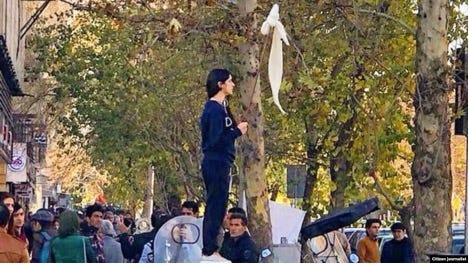
What made the photograph resonate so widely was what it disproved: the regime had long justified mandatory hijab as protection for women from male aggression. She removed her headscarf in front of hundreds of men. No one touched her. The only ones who did were the regime’s own agents. Movahed was detained for a month; after a second protest the year after, she was sentenced to a year in prison. Many other women also took up the cause. They became known as the Girls of Revolution Street, and with each act of defiance, the regime’s justifications grew harder to sustain.
When I visited Iran for the last time in 2019, I saw something I hadn’t seen before: female friends who had always worn the hijab out of fear were quietly removing it in shopping malls and on street corners where the morality police were absent. Something had shifted in the social calculus of risk.
What Mahsa Amini’s Death Unleashed
Then, in September 2022, Mahsa Amini—22 years old—was arrested by the Guidance Patrol for allegedly wearing her hijab improperly. She died in police custody.
What erupted was unlike anything in the Islamic Republic’s history—young people, who were sympathetic to the anti-mandatory hijab movement, gained considerable moral confidence. Previous protests had challenged the government’s policies or its candidates. In the 2022 uprising, young Iranians challenged something deeper: the right of the Islamic state to impose religious dress on women at all. It was the first time in contemporary Iranian history that a core tenet of the country’s enforced religious identity was openly and unapologetically contested in the streets.

Initially, older generations were skeptical. Rebelliousness is a familiar phase for Iranian youth, and many parents, including my own mother, dismissed it. “I’ve been there myself. You’ll grow up and learn one day,” she would tell me whenever I challenged the regime’s rationales. This time was different. Instead of arguing in private, young Iranians took to the streets and faced bullets for their convictions.
The images from those early days show almost exclusively young people. They burned their headscarves. They danced. They faced a crackdown of characteristic barbarism. The case of Nika Shakarami, a 16-year-old girl who vanished from a protest and was found nine days later—with leaked Islamic Revolutionary Guard Corps documents obtained by the BBC indicating she had been tortured and sexually assaulted by security forces—is merely one of thousands of horrific examples.
Photographs circulated of young women crammed into police vans, gasping for air, while the vehicle’s rear panels were adorned with the calligraphed religious motto: “I salute you, Hossein.” That juxtaposition—innocent girls dragged into darkness beneath the name of a revered Shia saint—shattered something in many devout Iranians that had never been broken before.
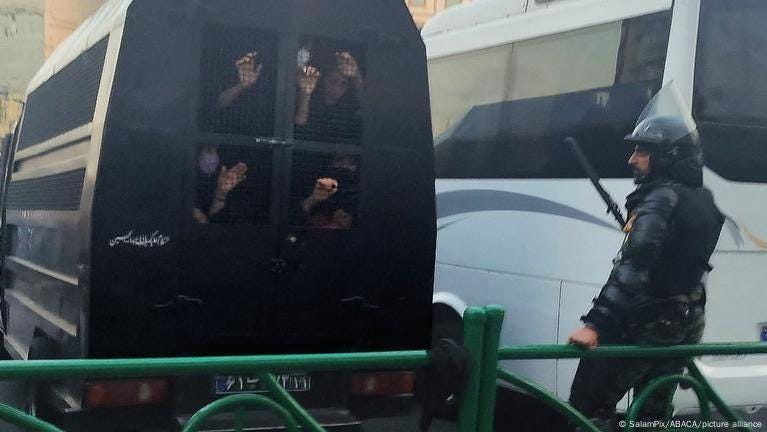
The images produced a profound disgust among many who saw themselves religious. Seeing their faith weaponized to justify horrific oppression caused an astonishing number of previously devout people to denounce political Islam. Many—my cousins, aunts, parents—renounced Islam entirely. My own grandfather is a striking example. He once volunteered to enforce mandatory hijab and harassed female strangers for wearing jeans; today, he denies ever having supported the regime and actively protects women if anyone dares question their attire.
The result was a seismic transformation—a moral divorce from political Islam. According to people I’ve spoken to, each from different areas of Iran, the majority of women are no longer wearing hijab on the streets. And when the Guidance Patrol tries to arrest them, bystanders intervene. Dating outside of marriage is now commonplace. Women have gained considerable independence. The women I talked to tell me that, despite the regime’s presence, they feel safer on the streets now than they did before 2022, when mandatory hijab was observed.
With political Islam discredited, Khamenei’s image fell from heavenly father to tyrant. He became the subject of jokes. The framework that had shielded him from criticism for decades had collapsed under the weight of what had been done in its name. The most recent protests, which began over rising prices, had already become protests about ending the regime itself.
What is remarkable is that this entire transformation happened with almost no support from the West.
A Generation That Didn’t Wait for Washington’s Help
The Amini uprising began under the Biden administration, which offered no meaningful aid to the protesters. Congress passed the MAHSA Act, though after two years’ delay and in a significantly weakened form, but the protesters themselves received no serious support. The Iranian youth who cracked the moral foundations of a 40-year theocracy did so largely on their own, against unprecedented regime brutality, while the international community looked on.

If the current American campaign is broadly supported by many Iranians, and if there is any hope for regime change without a full-scale military occupation, it is because of the brave young Iranians who, through their noble fight for freedom, dismantled the ideological scaffolding of the Islamic Republic before a single American bomb fell. Previous generations of Iranian protesters couldn’t achieve that. This one did.
It is too early to say whether the American campaign will be judged a geopolitical success or a costly error, or whether it produces genuine freedom or simply a new form of authoritarian instability.
What I am certain of is this: If Iran does emerge with something resembling genuine freedom—if the Islamic Republic’s collapse leads somewhere better than to another tyranny—the lion’s share of the credit will not belong to any outside force. It will belong to the heroic young Iranians who changed their country despite decades of cynical indifference from the world. Today’s bombs might finish the job, but our hope—and gratitude—is reserved for the freedom-loving Iranians who did the real work.

© The UnPopulist, 2026
Follow us on Bluesky, Threads, YouTube, TikTok, Facebook, Instagram, and X.
We welcome your reactions and replies. Please adhere to our comments policy.

Thanks for this summary. Interesting. I’m hoping for the best…
The younger generation can play a powerful role in shaping the future of any country, especially during times of major political change. I was also reading about broader public information and came across https://decaturcountypropertyappraiser.org along the way, Whatever happens next, it will be interesting to see how these events continue to unfold. What stands out here is the determination and courage being shown by Iran’s youth.