


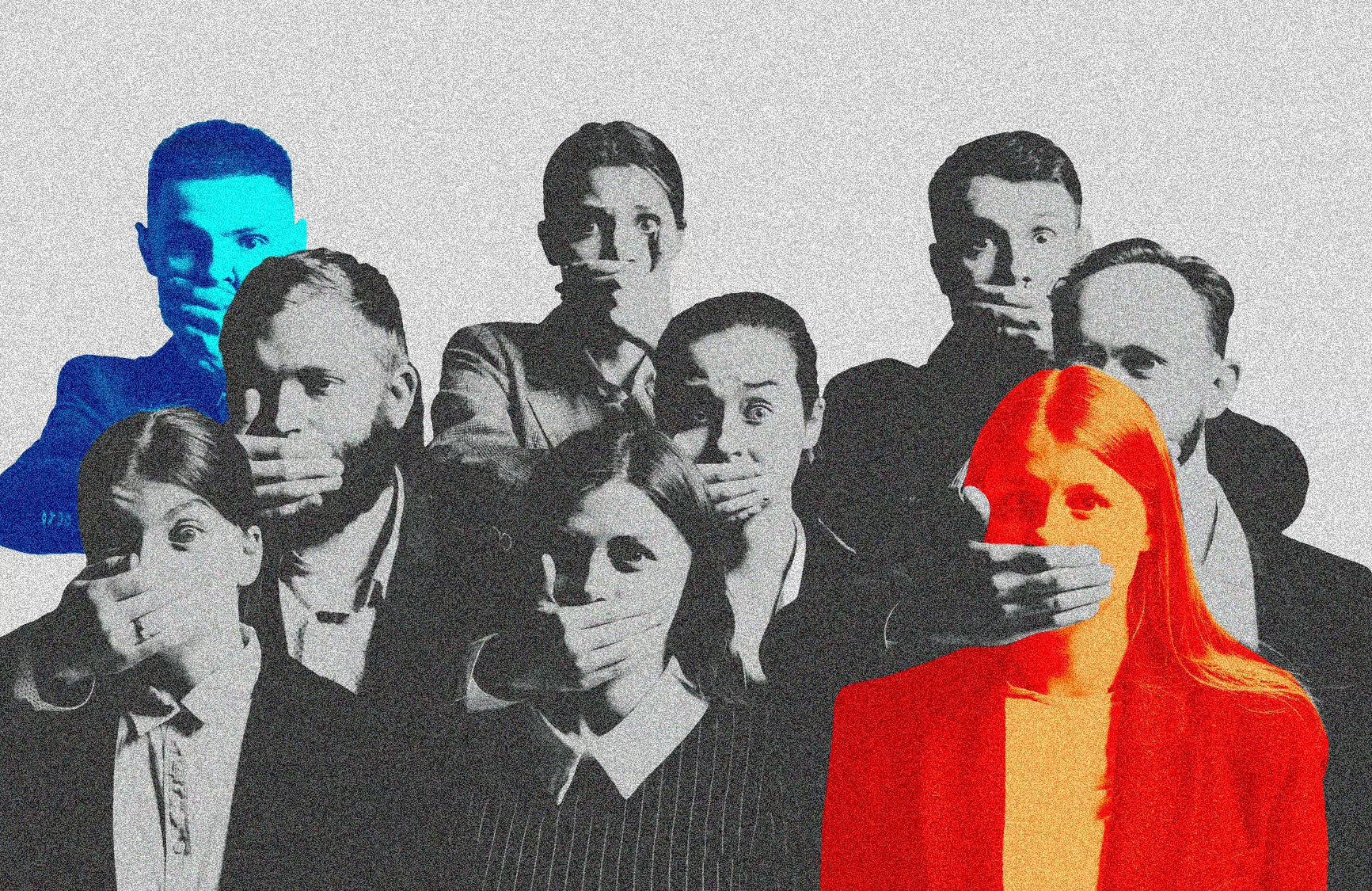
It’s been a banner year for state-sponsored censorship in the name of “free speech.” Just before Christmas, U.S. Secretary of State Marco Rubio announced sanctions against two British and three European anti-disinformation campaigners, including the heads of the Center for Countering Digital Hate (CCDH) and the Global Disinformation Index (GDI). One of their big mistakes was telling the truth about Elon Musk’s adventures in social media. Both have supplied valuable data about the rise of disinformation and racist, antisemitic, and extremist content, including incitement to violence, on X, in violation of its own policies, since Musk took over.
Musk had previously called for the GDI to be shut down. He also tried unsuccessfully to sue the CCDH last year, branding it a “criminal organization.” But he clearly has a friend in Rubio’s boss, Donald Trump, who along with his mouthpieces openly denies facts he doesn’t like.
The sanctions, announced by Rubio, also target former E.U. Commissioner Thierry Breton, considered the “mastermind” behind the Digital Services Act (DSA), which seeks to counteract online hate and disinformation, as well as the distribution of dangerous or counterfeit goods. That legislation allowed the E.U. to impose a multimillion-dollar fine on X for breaching various obligations, including exhibiting a lack of transparency in its advertising repository (the mechanism that allows researchers to detect scams, fake ads, and coordinated influence campaigns), and to penalize other American tech companies, including Apple and Meta, for breaking digital antitrust rules. Musk responded with a vituperation campaign targeting the E.U., the DSA, and Breton specifically.
As with any regulatory framework, some individuals may try to exploit this law to censor or oppose ideological viewpoints they dislike; Breton himself tangled with Musk in the past over a planned livestream interview with Trump. But as German Foreign Minister Johann Wadephul has pointed out, the law to which the Trump administration objects simply applies to online speech the rules that are already in place for off-line speech. These guidelines were passed democratically by the E.U. and represent the will of the European people.
Redefining ‘American Speech’
Rubio has recast Breton’s initiatives to counter online disinformation and hate as “organized efforts to coerce American platforms to censor, demonetize, and suppress American viewpoints they oppose.” The reference to “American viewpoints” here is telling. Does this mean that censorship is just fine if it involves non-American viewpoints? And what, exactly, are “American viewpoints” supposed to be? For an administration obsessed with determining who counts as a “real” American, the idea here is that “American viewpoints” are the ones that faithfully peddle MAGA propaganda.

“If you spend your career fomenting censorship of American speech, you’re unwelcome on American soil,” wrote Sarah Rogers, a State Department official, in an X post. Once again: “American speech” here apparently means the speech favored by the present administration. The CCDH, whose leader has been singled out for a ban, has criticized X for reinstating thousands of previously banned accounts run by neo-Nazis, white supremacists, conspiracy superspreaders, and misogynists such as Andrew Tate, known for posting extreme misogynistic videos. But this appears to be the kind of speech Rogers and her colleagues in the Trump White House care most about protecting.
It is also telling that the administration’s concern with “free speech” apparently does not apply to Russian officials. Many American social media platforms—including Musk’s own X, Facebook, and Instagram—are banned in Russia, but no visas appear to have been denied by this administration on that account. Maybe that’s because Russia and America under Trump share a common interest in bolstering Europe’s far right and undermining European democracy. Indeed, in the weeks before the recent State Department announcement in support of American hate speech, Rogers met with representatives of AfD, the far-right party in Germany, whose leadership has been accused of gathering information and cultivating links with the Kremlin. This tracks with Trump’s growing profile as a kind of global illiberal-in-chief; his administration’s willingness to, as H. David Baer put it, “export American resources to assist the electoral prospects of ideologically like-minded world leaders” has not gone unnoticed.
The State Department, in Orwellian fashion, pretends that this exercise in intimidation is all about free speech. In fact, the administration is weaponizing bogus free speech claims against free speech itself, both in American and in Europe. To frame the issue here as merely an infringement of the speech rights of a few individuals is to underestimate the gravity of this administration’s assault on the truth.

The attack on the watchdogs who would dare hold Musk, among others, accountable should be seen in the context of a vicious and systematic attempt to corrupt public discourse in the U.S. at multiple levels, whether through federal power or a right-wing information ecosystem that now exists to amplify MAGA propaganda.
CBS and the Erosion of Journalistic Independence
The latest outrage comes on the heels of CBS pulling the 60 Minutes report on El Salvador’s Centro de Confinamiento del Terrorismo (CECOT) prison. The program, which was aired briefly on a Canadian TV app, documents the brutal treatment, torture, and life-threatening conditions that met detainees who were sent there in shackles after being picked up by ICE on American soil. Apart from immigration and traffic violations, according to an analysis by Bloomberg News, about 90% of the detainees could not be connected to any U.S. or international criminal records.
CBS, like all networks, picks and chooses what it airs, and its decision to pull the program is not a violation of its own free speech rights. What this event illustrates, however, is that the Trump administration, in collusion with MAGA-friendly media oligarchs like CBS boss David Ellison and his father Larry, who brought in Bari Weiss to run CBS News, has derailed the network’s journalistic mission. Pulling the 60 Minutes segment isn’t attacking free speech directly, but it is a signal that CBS will seek regime approval of its investigative efforts before it runs them. We have now seen the same pattern at work in the administration’s use of federal funding to coerce universities to adopt regime-friendly policies. The installation of a “bias monitor” at CBS fits clearly within this pattern of degradation. This is classic commissar-style authoritarianism, and it should shock anyone who has lived through any period of the Cold War.

The point of the First Amendment is not merely to allow individuals the right to express opinions, however odious or pleasing. It is also to promote a public discourse grounded on truth. Our Founders understood that lies and propaganda are the great enemies of democracy and that those in power might attempt to subvert the truth in order to maintain their privilege. Their intention was to create and protect a public forum where it is possible to speak truth to power. This is precisely what this administration and its oligarchic allies intend to destroy by installing media loyalists in key positions to either advance its line or do damage control on its behalf.
The Administration’s Assault on Truth-Telling
Even as it is hectoring Europeans about free speech, the administration encourages the suppression of viewpoints in the U.S. that express opinions hostile to the administration.
Lauren Vaughn, a 37-year-old Christian who worked as kindergarten assistant in South Carolina, was fired after reposting the late Charlie Kirk’s quote about the inevitability of gun death, followed by her own words: “Thoughts and prayers.” She claimed her words were sincere but was fired anyway. Vaughn was among the estimated 600-plus Americans who lost their jobs as a consequence of critiquing Kirk’s work and viewpoints, many of them targeted by MAGA influencers and others.
The move to suppress any kind of speech that showed Kirk in a less-than-saintly light, without regard to its truth, may have originated in the grief and outrage of the MAGA base. But it was quickly picked up and manipulated by representatives of the administration. JD Vance, for example, actively encouraged Americans to report those who “celebrate” Kirk’s death to employers and other authorities, and demanded that they be fired from their jobs. Republicans in Congress also dropped any pretense of caring about the First Amendment. South Carolina Rep. Nancy Mace urged the Department of Education to “cut off every dime to any school or university” that failed to retaliate against employees whose comments or posts “make light of the horrific assassination of Charlie.” These threats from the administration and congressional Republicans, in many cases not formal orders or laws, were clearly aimed to suppress any speech about Kirk they didn’t like.

They weren’t the only ones targeted:
At least five probationary employees of the Environmental Protection Agency were fired after signing an open letter warning that the agency was placing American health in danger by abandoning the use of scientific findings to create regulations.
The Trump-appointed president of the Kennedy Center threatened the jazz artist Chuck Redd with a $1 million dollar lawsuit for cancelling an annual free Christmas performance after Trump added his name to the building. (Since the Kennedy Center concert was free, the Kennedy Center did not lose money on the cancellation, so for now the grounds for the lawsuit are unclear.)
Trump has targeted multiple law firms that offer legal assistance to those who take positions opposed his agenda.
The federal government under Trump now issues speech codes. It threatens schools, universities, and private organizations with spurious but costly lawsuits if they fail to change their language related to environmental policies as well as equity, diversity, and inclusion initiatives. It files lawsuits against domestic and foreign media—the BBC, for seeking to “fully mislead its viewers” by “maliciously” splicing together two separate parts of one of Trump’s speeches, and The New York Times for seeking to “defame and disparage” the president. These, among many other lawsuits, seem intended to extort and intimidate. The administration has banned, restricted, or flagged hundreds of words and simple phrases in websites and other documents put out by federal agencies, such as “accessible,” “emissions,” “Native American,” “climate science,” “water quality,” and “woman.”
When speech is reserved for those with the power to silence and suppress, it is no longer free—and neither are we.

© The UnPopulist, 2025
Follow us on Bluesky, Threads, YouTube, TikTok, Facebook, Instagram, and X.
We welcome your reactions and replies. Please adhere to our comments policy.

Imran Ahmed of the CCDH is a modern day Anthony Comstock, and I have no respect for him whatsoever. By pushing years-long deplatforming campaigns, he has helped normalize censorial attitudes and ironically set the stage for his own persecution.
It would be helpful to review the methodology for differentiating hate and defamatory speech from constitutionally protected speech, and discuss how European countries and the US have historically drawn the line differently. And therefore have the right to regulate online speech differently. This is how to elucidate how the Trump administration is violating those principles.