


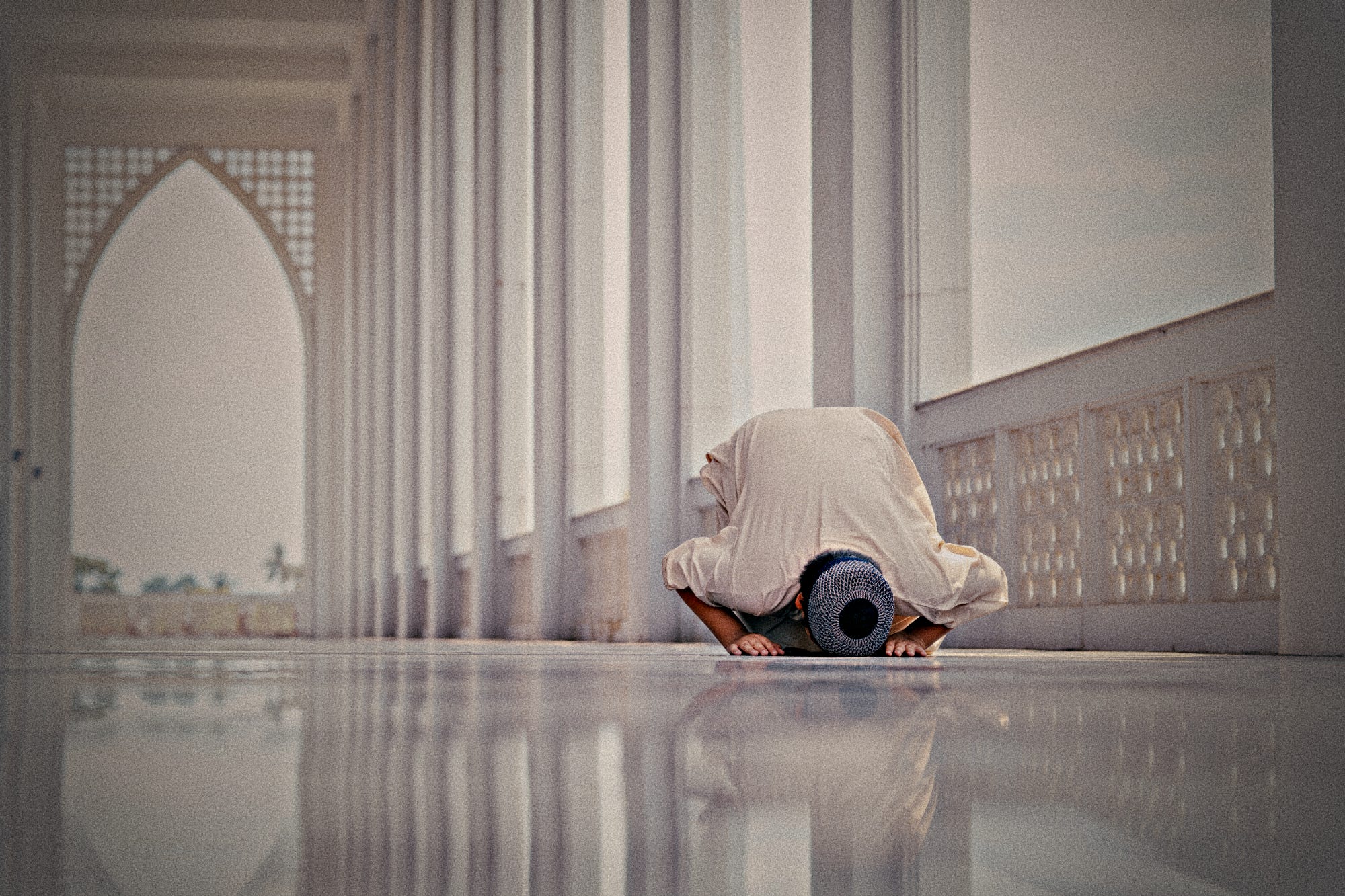
A widespread and persistent mistake is the tendency, in much of Western public discourse, to conflate Islam with its most militant manifestations and to conceive of it as inherently violent. For its two billion followers, however, Islam is a source of spiritual sustenance and moral guidance, and I count myself proudly among them.
A critical distinction is therefore needed: Islam, the faith tradition, is categorically different than “Political Islam” or “Islamism,” which is fundamentally a political project. But opposing one does not mean opposing the other. In fact, we Muslims should be leading the charge against attempts to flatten our faith into a political agenda.
The Problem With Political Islam
Political Islam, whose violent factions bear no true relation to the religion or to the vast majority of its adherents, rejects the core liberal principle that governments ought to promote the welfare of all citizens equally. In this respect, it shares much with populism and various strands of ethnonationalism. These movements determine a “true people”—defined by ethnicity, or adherence to a specific ideology or dogma—and treat those who fall outside that definition as second-class citizens at best and targets of active repression at worst.
In political Islam, the “true people” are those who conform to the specific doctrine promoted by the political-religious leader. The goal is domination, not pluralism.

Political Islam finds its most fertile ground in autocracies, where faith becomes a powerful mobilizing tool. As Amal Chandra observes in The UnPopulist, illiberal regimes and movements around the world have figured out that co-opting the sphere of the sacred is among the most effective tools of political consolidation available to them. Doing so involves taking a faith’s deepest promises about redemption and turning them into political currency. In political Islam, its leaders promise the marginalized masses earthly redemption through religious governance: a just state, a moral society, an end to corruption.
It is an endlessly renewable excuse for bad governance. Everywhere political Islam has held state power—from Iran to Afghanistan—the flourishing it promised has failed to materialize. The message is seductive to the poor and disenchanted across much of the Arab world, but it is designed for control, not flourishing, and leaves little room for reform.
Although formally restricted in many Muslim-majority states, Islamist organizations remain the largest cross-border underground movement in the world, likely commanding the support of a substantial segment of the population across several Arab countries—as Egypt’s 2012 elections demonstrated, when Islamist parties collectively captured roughly 70% of parliamentary seats, and the Muslim Brotherhood’s candidate narrowly won the presidency. They promote distinct symbols—the veil, the men’s beard—as markers of shared identity. They vote collectively when operating within democratic systems and, when it serves their objectives, resort to violence under the banner of defending Islam.
One of Islam’s most valuable democratic principles—“their affairs are decided by consultation among themselves” (Quran 42:38)—is abandoned when a supreme guide claims divine legitimacy and channels it into personal authority. Political Islamists are less interested in Islam itself than in enforcing their own political power. They impose strict social regulations and assert that these rules constitute adherence to Islam, keeping society narrow-minded and easier to control.

Contra the Islamists—as well as Christian nationalists and anyone committed to fusing religion and state power—the liberal principle of the separation of church and state isn’t ultimately aimed at suppressing the “church” part of that equation. Rather, it protects a proper understanding of each.
Religion, at its core, concerns the relationship between God and the individual. Yet it remains highly vulnerable to exploitation by leaders who want to give their grab for power a religious cover. Islamists claim that Islam needs political power to be lived fully—Egypt’s Muslim Brotherhood made this explicit with their famous slogan, “Islam is the Solution.” This is false: believers fulfill their spiritual obligations—prayer, fasting, charity, devotion—even under the most authoritarian Muslim regimes, without the state’s assistance. If anything, it is the liberal principle of religious freedom, not Islamists taking over the state, that best protects a Muslim’s ability to live out the faith.
Two Wrong Answers
Yet Western responses to political Islam have largely failed to grasp even this basic distinction—that the problem is political, not religious. Right-wing critics of political Islam often portray it as something fundamentally alien—a pathology of backward societies best treated by restricting immigration or making Western life inhospitable to Muslims. That approach gets the diagnosis wrong, and in doing so, makes the problem harder to address. The liberal critique understands political Islam as one manifestation of a broader human tendency to organize politics around “us versus them.” Western societies are by no means immune to this tendency. The antithesis of political Islam is not nativist hostility to Muslims but pluralist liberalism, sustained by robust institutions and the rule of law.

Understanding this matters for correcting two errors that distort Western discourse about Islamist violence. The first is the right-wing error: treating Islamist violence as essential and inevitable, as though it flows naturally from Islam itself or from some inherent disposition of people in Muslim-majority societies. This is wrong on both empirical and ethical grounds. The second is a characteristic error of the political left: romanticizing political Islam as an authentic liberation movement—the voice of the oppressed pushing back against Western imperialism. This, too, is dangerously wrong. Political Islam is not a grassroots uprising; it is a cynical political project that exploits genuine grievances in order to consolidate the power of self-appointed religious leaders. Its violence is not resistance; it is a tool of domination.
Both errors have real costs, and the price is paid in repeat cycles of the same vicious dynamic: Arab rulers allow—and at times quietly encourage—Islamist violence to persist, because its existence justifies the domestic repression they wish to conduct anyway. That repression, in turn, radicalizes a new generation of Islamists, who seek revenge against civilian populations—by “otherizing” them, generating fresh justifications for renewed crackdown. The pattern has played out across Algeria, Sudan, my own Egypt, and elsewhere. It serves authoritarian governments and Islamist organizations alike, and it victimizes ordinary people in both Muslim-majority countries and, when exiled Islamists are hosted abroad as convenient tools of foreign policy, in the Western nations that imagine they are managing the problem.
Toward Separation
The case for separating religious and political authority is not a Western imposition on Islam—it has roots in Islamic thought itself, and it is one that Muslim reformers and scholars have been making from within the tradition for generations. What is needed is for that internal argument to find broader political expression.
Formal legal reforms are not sufficient on their own. Investment in genuine democracy and meaningful education can help foster norms of liberal pluralism. Anti-corruption and good-governance measures can increase public confidence in the capacity of a secular state to improve people’s lives, reducing the appeal of movements that promise divine solutions to political failures.

The critique of political Islamism made here is not the province of outside observers hostile to Islam. It is, in fact, the argument that defenders of Islam itself should be most eager to make. Political Islamism has done more to tarnish the religion in the eyes of the world than any external critic ever could. It exploits the faith of the poor, distorts Islamic doctrine, and subordinates genuine religious devotion to the ambitions of self-appointed leaders. The separation of religion and political power would not diminish Islam. It would liberate it from political appropriation.
Until that separation takes hold, political Islam will remain an inconvenient companion—indispensable to autocrats, instrumentalized by foreign powers, and ultimately detrimental to the religion in whose name it claims to act.

© The UnPopulist, 2026
Follow us on Bluesky, Threads, YouTube, TikTok, Facebook, Instagram, and X.
We welcome your reactions and replies. Please adhere to our comments policy.

This is an intelligent and important distinction between Islam as a faith and political Islam as a domination project. But I think the article remains too theoretical about the Islam most societies are actually dealing with today.
It is certainly possible that Islam contains pluralist and liberal traditions, just as Christianity and Judaism do. But politically, people judge civilizations partly by the institutional forms they repeatedly produce in practice, not only by their highest internal aspirations.
The real question is not whether Islam can support pluralism in theory. The real question is why pluralist interpretations have remained comparatively weak institutionally across much of the Muslim world while Islamist, authoritarian, or communal forms remain far more politically powerful.
That does not justify anti-Muslim essentialism. But neither can the sociological reality simply be dismissed as misunderstanding or Western prejudice.
The challenge is not theoretical compatibility with pluralism. The challenge is building durable institutions that actually sustain it. If Islam has it takes to live peacefully in the modern world, let it show it rather than talk about it.
I understand the distinction between Islam and political Islam that the author posits. But if it is to be anything more than wishful thinking, I think it requires more than is articulated here. What’s missing for me is the underlying, and unsupported, assumption of a “fundamentally liberal” theology. By way of example, but not with modern politics, we could go back to the Spanish Inquisition. I expect few would argue that the Inquisition was not a Politicized Christianity that betrayed a fundamentally different theology. Bur was Christianity at the time fundamentally liberal? Perhaps. But it might depend on what you mean by that. What does it mean to be “fundamentally liberal”? I see little evidence for it from what I know of Islam. And the author’s passing reference to Quran 42:38–which strikes me as much tribal as it does democratic—is not exactly an endorsement of the Enlightenment. [Nor do the Quran's provisions about women and Jews strike me as fundamentally liberal; but I am in no position to make an educated assessment. That is why I ask.] But if it is to be taken seriously as a bedrock democratic principle, perhaps the author could point to some real world examples of such democracy in action, or other liberal principles like women and minority rights (many of which were frankly also late to the game in Western civilization, but they did arrive; their late arrival raises the same question: what does it mean to be fundamentally liberal?).