


Seventy years ago, Hungarians rose against Soviet occupation, tore down a statue of Stalin, and freed themselves—however briefly—until the Soviet tanks returned to crush the uprising. When the Red Army returned, nearly a quarter of a million people fled the country. The hole protesters cut in the center of the Hungarian flag—excising the communist coat of arms—became the image of a nation that had learned, at great cost, what it meant to have its sovereignty sold.
Fidesz, Prime Minister Viktor Orbán’s party and Hungary’s governing force since 2010, had spent 16 years curating that memory—making March 15, Hungary’s national holiday, Orbán’s personal stage, and the language of sovereignty his personal property. Péter Magyar had once been a true believer: as a boy, he put a photo of Orbán on his bedroom wall after Hungary’s first democratic elections in 1990 brought Fidesz into parliament.
Magyar went on to become a government insider, serving on the boards of state companies while his then-wife Judit Varga rose to become Orbán’s justice minister. He broke publicly with the system in February 2024 after a presidential pardon scandal—Varga was forced to resign over her role in pardoning a man convicted of covering up child sexual abuse. Magyar then turned his rupture into a political movement expressly dedicated to ousting his former hero and Fidesz from office. He arrived at every rally holding a Hungarian flag, an argument conducted without words: the country belonged to its people, not its government. Yesterday, he won a resounding victory.
The Battle for Hungary
On Friday, two days before the election, more than 100,000 people filled Heroes’ Square for a seven-hour concert, many waving Hungarian flags with the hole cut in the middle—the 1956 symbol, reclaimed. Magyar had already packed the same square on March 15 while Orbán’s events drew crowds elsewhere. He reminded the audience of Orbán’s own words from 1989—“That politician who demanded Russian troops should leave Hungary now is the most loyal ally of the Kremlin.” The crowd chanted “Ruszkik haza”—Russians, go home!
Hungarians gave Magyar’s Tisza a two-thirds constitutional supermajority, 138 seats in Hungary’s 199-seat National Assembly that Magyar accurately called the largest mandate any Hungarian party has ever received in the democratic era.
Tisza’s slogan was “Most vagy soha”—Now or Never—drawn from Sándor Petőfi’s revolutionary poem of 1848. Independent polling, attacked throughout the campaign by government pollsters as “abusing” public opinion research and carrying out “foreign assignments,” proved not merely correct but slightly conservative on Tisza’s chances. That Orbán conceded quickly will be taken by some as evidence that the threat was always overstated. The structural record suggests otherwise. The margin was, in the end, simply too large for even a rigged system to absorb.
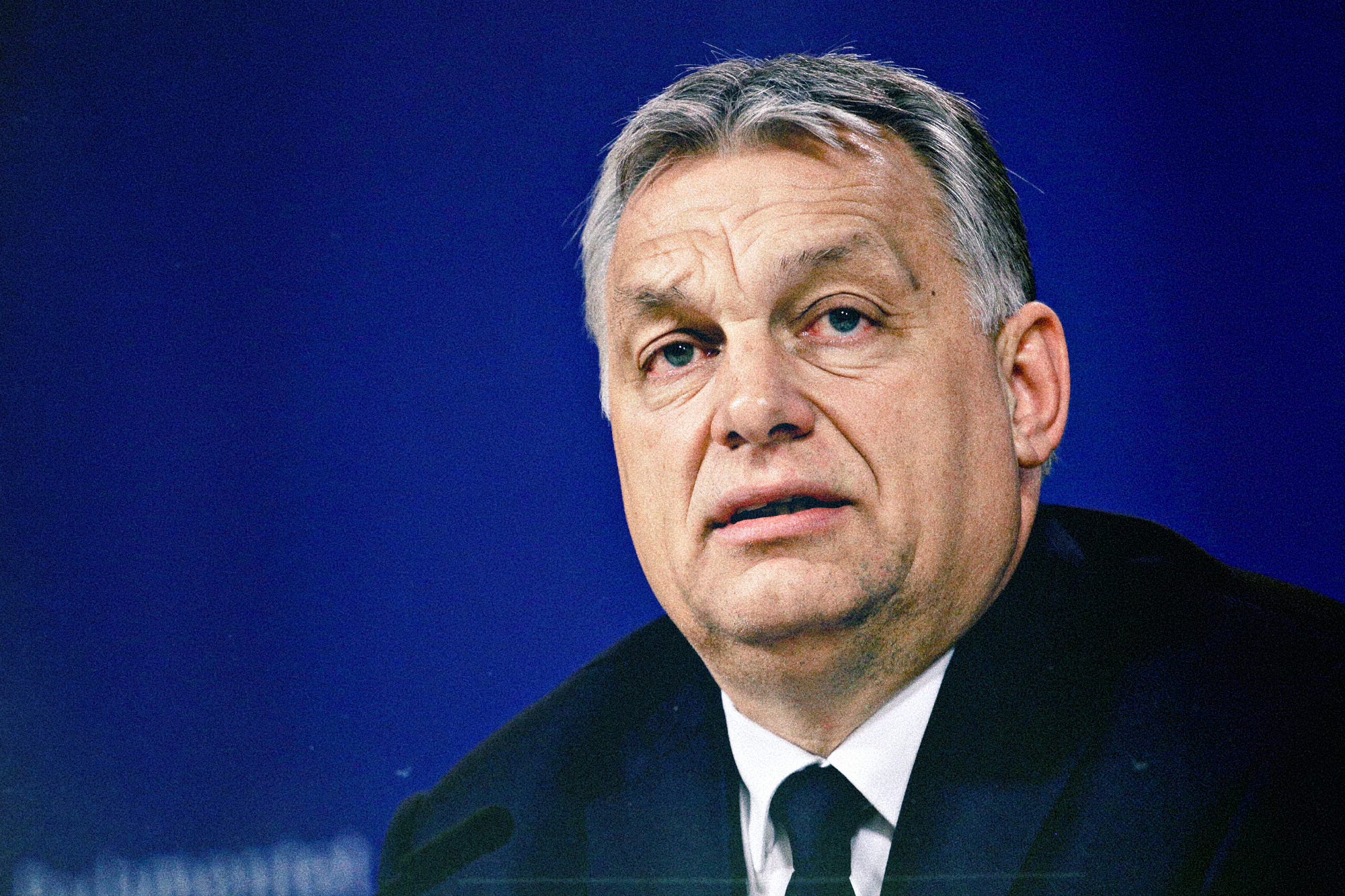
Orbán accepted the result, calling it “painful but clear.” But he did not step down as Fidesz leader. The neo-fascist Our Homeland Movement, whose MPs approvingly unveiled a bust of Miklós Horthy—Hungary’s wartime regent and Hitler’s ally—in their parliamentary offices, is likely to once again clear the 5% threshold that’ll give it a presence in parliament. This is a reminder that forces Orbán cultivated do not automatically vanish with his defeat.
Standing before thousands on the banks of the Danube, Magyar quoted John F. Kennedy. Addressing Fidesz voters directly, Magyar expressed that the victory belonged not only to Tisza voters but to every Hungarian. He thanked the young people who had driven the campaign, and older voters who turned out for change despite everything they had been told to fear. The crowd chanted “Európa”; for a country that had spent 16 years being told by its own government that Brussels was the enemy, that the EU was a colonial imposition, and that Hungary’s sovereignty depended on resistance to the West, the chant was anything but incidental.

Magyar’s first trip as prime minister-elect would be to Warsaw, followed by Vienna, and then Brussels. He has stated that Hungary would be a strong member of the EU and NATO and the last stop is meant to underscore that. The military, the secret services, and the police would work for Hungarians. Corruption would have consequences. Leaders of captured state agencies should consider their positions. In other words, this was not simply an election, it was a mandate for regime change. The two-thirds supermajority—the same constitutional weapon Orbán had wielded since 2010 to rewrite Hungary’s basic laws, pack its courts, and redesign its electoral system—now belongs to Magyar. With this advantage in parliament, his government can amend the constitution, reverse Orbán-era legislation, and begin the work of institutional restoration that a simple majority could not. It is, in the most literal sense, the key to the system Orbán built to be unbreakable. The only barrier to overturning Orbán’s repressive edifice is Magyar’s own steadfastness—his ability to stay the course.
Throughout the campaign, Magyar had told crowds across the country: “Hungarian history is not written in Washington, not in Brussels, not in Kyiv, not in Moscow, and not in Serbia—but instead in Hungary. Hungarian history is written by Hungarians.” The quote, circulated widely in a campaign video, sounds simple. But in context it was a surgical strike. Orbán—a man who had spent 16 years telling Hungarians their sovereignty was under threat from Brussels, Soros, migrants, Ukraine—had, according to a leaked phone call, assured Russian President Vladimir Putin: “In any matter where I can be of assistance, I am at your service.” In that conversation, Orbán even invoked a Hungarian fable about a mouse that frees a lion caught in a net, which reportedly made Putin laugh. The man who had built a political career on the language of Hungarian sovereignty was, in a private call with Moscow, auditioning for the role of the mouse.
Too Big to Rig
Magyar’s victory was not supposed to be possible. Orbán was not supposed to lose his grip on power. How, exactly, did Orbán fail to steal the election?
The structural advantages were real and formidable. The gerrymandered electoral map had delivered Fidesz 135 seats on 54% of the vote in 2022. Campaign spending limits had been abolished. Fidesz and its proxies outspent Tisza 11 to 1 on advertising. A documentary released weeks before the election estimated that up to 500,000 votes could be influenced through coordinated vote-buying schemes—Átlátszó, one of the few independent publications that survived, documented more than 11 tons of food distributed to communities through Fidesz-linked organizations in the days before the vote, and 444.hu, another digital publication, on election day filmed supermarket gift cards given to Roma voters who voted for Fidesz and withheld from those who did not. Russian intelligence ran active interference operations across social media—the same disinformation playbook deployed against elections in Moldova, Germany, Romania, and the United States. The Washington Post reported that Russian intelligence had drawn up a plan called “the Gamechanger”—a staged assassination attempt on Orbán designed to move the election away from economics and toward security.

Part of the answer is that the EU held its ground. The €19 billion in frozen funds—suspended over rule-of-law violations—became a material argument that Orbán’s system carried a direct cost for ordinary Hungarians. Hungary had entered a technical recession in late 2024. GDP growth in 2025 was 0.4%. Household purchasing power stood at 70% of the EU average. Lőrinc Mészáros—the former gas fitter from Orbán’s hometown who became Hungary’s richest man and credited his fortune to “God, luck, and Viktor Orbán”—had a private zoo with zebras while pensioners waited years for routine medical examinations. The EU’s institutional pressure had not, on its own, changed the government. But it had made the cost of the government legible.
What Fear Runs On
But the larger answer, put simply, is bravery. Autocracy runs on fear—on the assumption that enough people, confronted with sufficient consequences, will decide that compliance is safer than truth. What dismantled Orbán’s operation was the accumulation of individual decisions to the contrary.
The investigative journalist Szabolcs Panyi of Direkt36 and VSquare spent months documenting Russian interference, revealing that Foreign Minister Péter Szijjártó had been briefing Sergei Lavrov, his Russian counterpart, on confidential EU meetings in real time. The government filed espionage charges against Panyi and had the Sovereignty Protection Office smear him publicly. Panyi, previously targeted with Pegasus spyware in 2021, kept reporting. When Serbia announced explosives near the TurkStream pipeline six days before the vote, it was Panyi who immediately identified it as a likely staged provocation—an assessment security experts widely shared.
Direkt36’s separate investigation into the intelligence operation targeting Tisza—what Magyar quickly dubbed “Hungary’s Watergate”—only reached the public because Captain Bence Szabó, the cybercrime investigator sent by Orbán to execute the raids on fabricated charges, concluded the operation was corrupt and blew the whistle on the government instead, his 90-minute interview garnering 2.6 million views the day his home was searched.
Another hero, Captain Szilveszter Pálinkás—the former public face of Hungary’s military recruitment campaign whose face had been on government billboards—gave his own interview to Telex describing collapsing morale, political interference, and allegation that Orbán’s son had pushed for a deployment of Hungarian soldiers to Chad, which was accused of fueling migration, while telling officers to expect 50% casualties.
These were not random acts of conscience. They were what happens when an authoritarian system reaches a critical mass of internal contradiction—when the people operating it begin to understand that they are not serving just governance but are instruments of a political party. The system did not simply fall apart because it was attacked from outside. It fell because people inside it, seeing it clearly, chose to say so.

The 2026 U.S. midterms will be fought on familiar terrain—one side outgunned on spending, a media landscape tilted against independent journalism, electoral maps drawn to discount votes. The lesson from Budapest is not to match the machine. It is to show up anyway, name what is happening, and trust that enough people will decide that fear isn’t worth it.
What comes next for Hungary will not be easy. In the run-up to the election, I warned that even a Tisza supermajority has to grapple with a state that was deliberately built to resist reform from within—loyalist judges, captured regulators, a media infrastructure that does not dissolve because its patron lost an election. Orbán has not left the stage; he still leads Fidesz, now the biggest opposition party. He is not without tools. The outgoing parliament retains its two-thirds majority for several weeks yet, long enough to entrench loyalists deeper into the courts and constitutional oversight mechanisms that a new government cannot easily dislodge. Beyond Hungary’s borders, the nationalist leaders in Moscow and Washington who backed Orbán openly have strong incentives to see the Magyar government fail—and the means to make its path harder. Seventy years ago, Hungary’s moment of liberation lasted 12 days before the tanks returned. What matters now is that this time, they don’t.
By 5 p.m., two hours before polls closed, Hungary had already broken every turnout record in its post-communist history. Magyar was right. The election was decided—by Hungarians.

© The UnPopulist, 2026
Follow us on Bluesky, Threads, YouTube, TikTok, Facebook, Instagram, and X.
We welcome your reactions and replies. Please adhere to our comments policy.

A good rundown on how stories like this CAN end.
Apparently enough of the electoral infrastructure was in tact to make democratic decision making possible by the voters. I hope Magyar is serious about reform and turning Hungary back towards the EU and attempting to reintegrate Hungary into the mainstream of European life.
All of the congratulatory statements from world leaders was also reassuring. Although Italian PM Meloni spent an inordinate amount time thanking Orban for his leadership in the world.
Fantastic article — this is exactly the kind of deep, hopeful analysis we need right now. Magyar’s victory is proof that courage is contagious, and that even the most entrenched authoritarian systems can collapse when enough people simply decide they’re no longer afraid.