


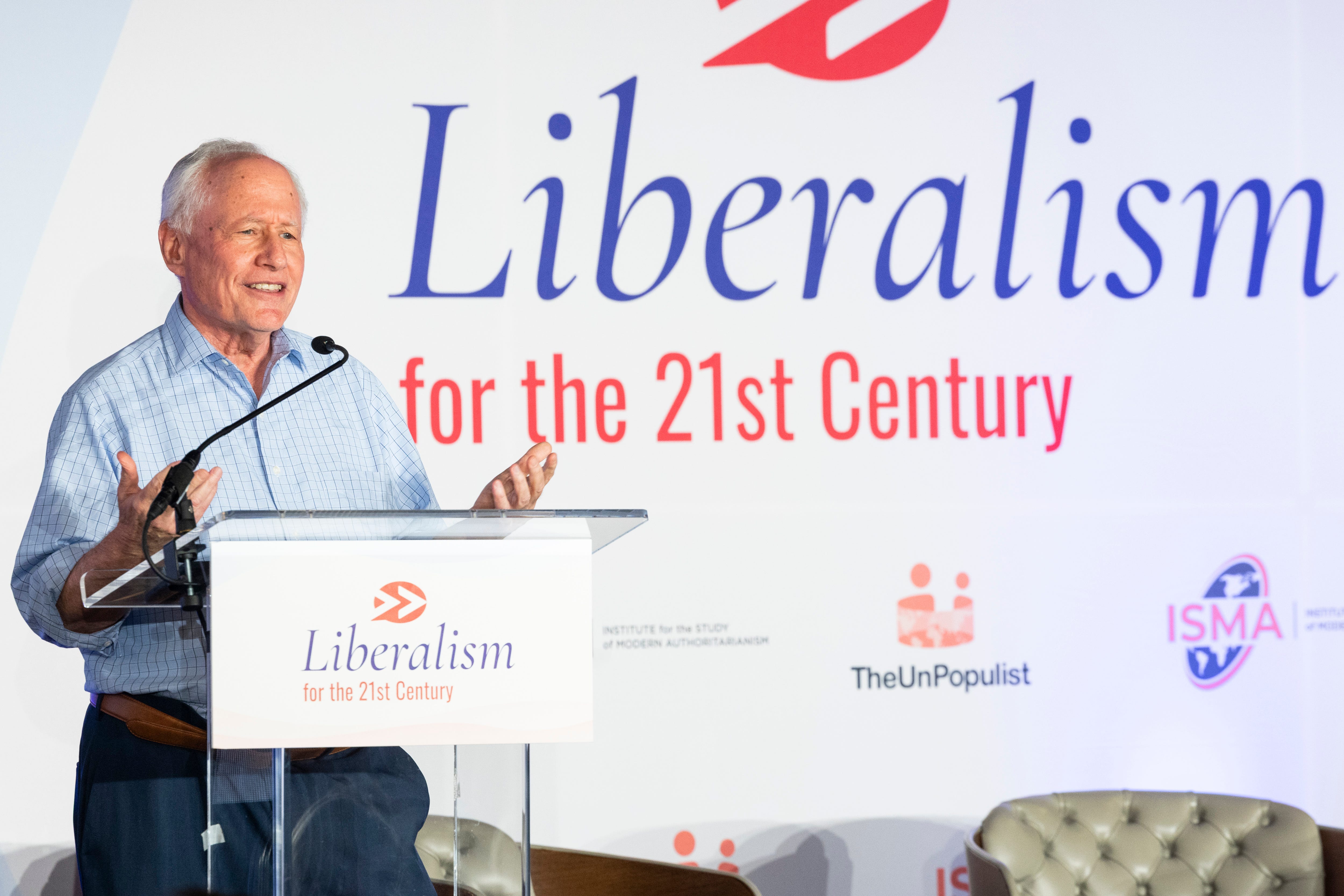
The Institute for the Study of Modern Authoritarianism’s (ISMA) “Liberalism for the 21st Century” conference—or LibCon2026 for short—was a smash success across the board. We’ll post some of the feedback we received soon, but the sold-out event was packed, the energy was electric, the panels substantive and lively, and the coalition we’ve spent three years assembling showed up in force.
In 2024, we set out to build something that didn’t exist yet: a movement of liberals—classical, progressive, disaffected conservatives, and everything in between—agreeing on one thing even amid their differences: that the defining fault line of this era isn’t left versus right but liberal versus illiberal, and that right-wing populist authoritarianism is the problem of our age.
The conference opened with a powerful montage from Landry Ayres—using the soaring rhetoric of leaders past articulating a vision of America that is free, just, equal, welcoming, pluralistic, and rejects hatred and bigotry in all its forms. You’ll want to watch this:
The video was followed by ISMA President Shikha Dalmia’s inspiring opening address, arguing that America needed to save liberal democracy not just for its sake but also for the world’s. An America that turns its back on its own values would be catastrophic for other backsliding democracies. As Dalmia put it:
America, the world’s most successful liberal democracy, provided the yardstick to judge other polities—not because it was the global hegemon, but because it was a global example. It didn’t need nation-building abroad to spread liberal democracy. It just needed to be itself.
In 2024, she called on liberals to set aside their policy quarrels and unite around the values they share. Last year, she asked for moral clarity rather than moral purity, invoking Frederick Douglass’s clear-eyed embrace of an imperfect Lincoln as the model for a coalition that has to trust people it doesn’t always agree with. This year, with the country’s institutions in tatters, she went a step further: authoritarians can destroy institutions, she noted, but they can’t build them—so liberals have to take up that job while the wreckage is still fresh enough to see clearly. That’s this year’s theme, the Reconstruction Agenda, in a nutshell.
The conference opened with two agenda-setting panels: one on the state of authoritarian consolidation in America, moderated by Erica Frantz and featuring Jan-Werner Müller, Adam Serwer, and Francis Fukuyama, and another on building a global liberal coalition, moderated by Robert Guest and featuring Anne Applebaum, Felix Maradiaga, and Bob Rae. Attendees then gathered for the dinner keynote. First, Jen Baca, a former Miss District of Columbia, kicked things off with a glorious rendition of “America the Beautiful.” This was followed by a compelling personal address by Nathan Law, a bona fide liberal hero who spearheaded a protest movement insisting that Hong Kong deserved to govern itself—and was forced by Chinese authorities to give up his home and life there as a result. He remains in exile in the U.K. to this day. He received a standing ovation.
The after-dinner live taping of a joint Zooming In/liberalism.org podcast closed out the night, with Institute for Humane Studies’ Aaron Ross Powell facilitating a wide-ranging discussion between Jamelle Bouie and David French, both columnists at The New York Times, and Harvard’s Danielle Allen. Many of America’s institutions trashed in the last two years need to be reconstructed. But there are others that need to be dismantled for America to make good on its founding promise to deliver justice, liberty, and equality for everyone. That is what the trio took up.
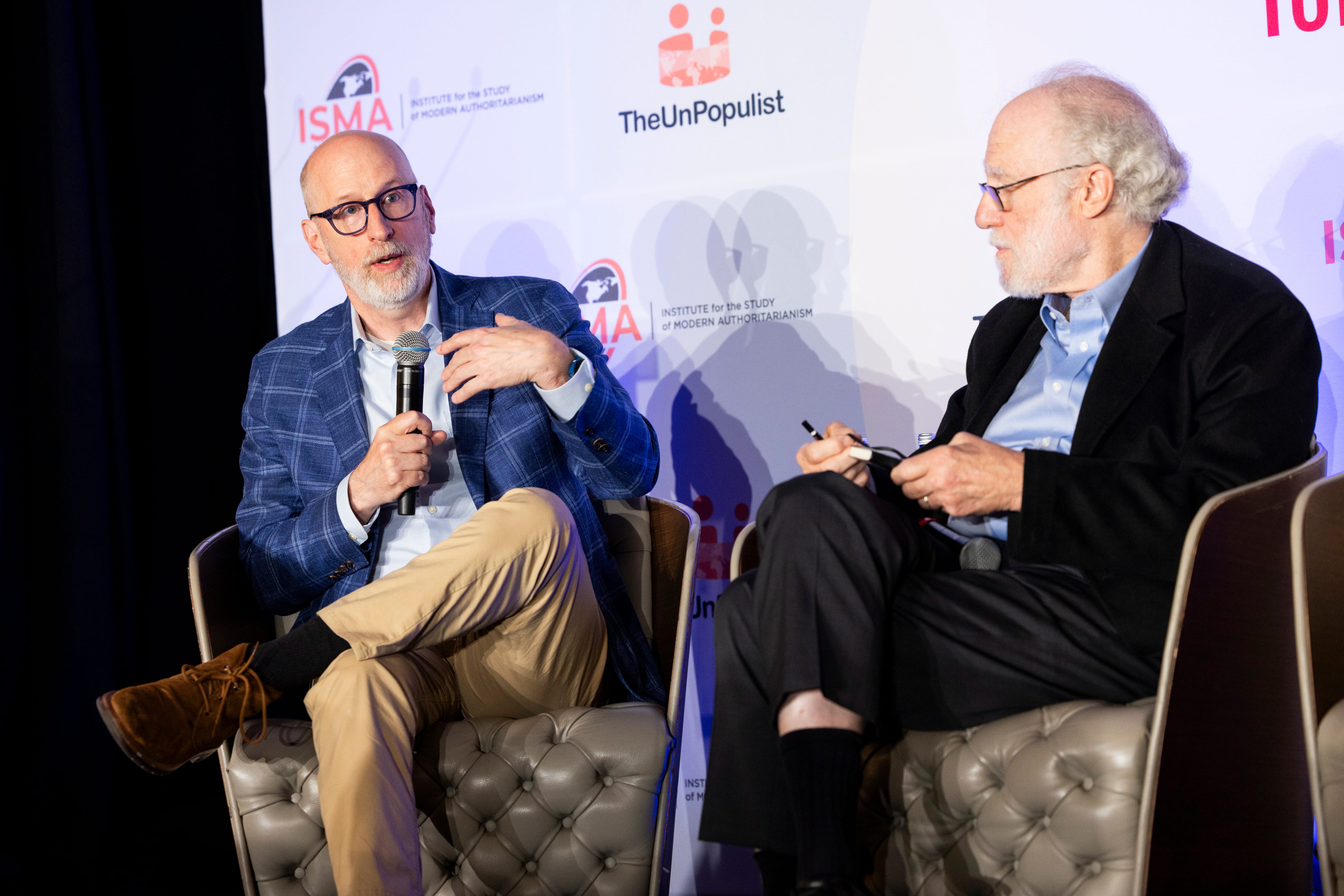
The next day was filled with high moments. “Checking the Imperial Presidency,” moderated by Protect Democracy’s Justin Florence, found more consensus than division. David French, Elizabeth Goitein, and Bob Bauer largely agreed on a specific slate of reforms—narrowing the Insurrection Act and the Vacancies Act, reining in the pardon power, time-limiting emergency powers—that would make it harder for any president to govern by decree. When the question of court packing came up, the panel was unified against it—although it didn’t quite grapple with Andy Craig’s recent proposal in The UnPopulist for a one-time packing by a Democratic president to inject some ideological balance to the court, but then also to tie that packing to a constitutional amendment that would restore the original number of justices, establish fixed terms for them, and allow each president to appoint merely two per term. “Congress and the Courts,” moderated by The Atlantic’s Quinta Jurecic, picked up a related thread, with conservative panelists Gregg T Nunziata of the Society for the Rule of Law and former acting U.S. Attorney General Stuart Gerson broadly aligned with the more center-left Aziz Huq of the University of Chicago Law School on the need for reform, but differing on just how flawed the current Supreme Court really is.
The Gen Z panel was one of the liveliest of the conference. The Bulwark’s Sarah Longwell moderated a spirited conversation with popular streamer Steven “Destiny” Bonnell, Gabe Fleisher, and Rachel Janfaza. Among other things, they discussed whether liberals need to adopt the same combative discourse tactics as their MAGA opponents in order to compete in the new, alternative media landscape.
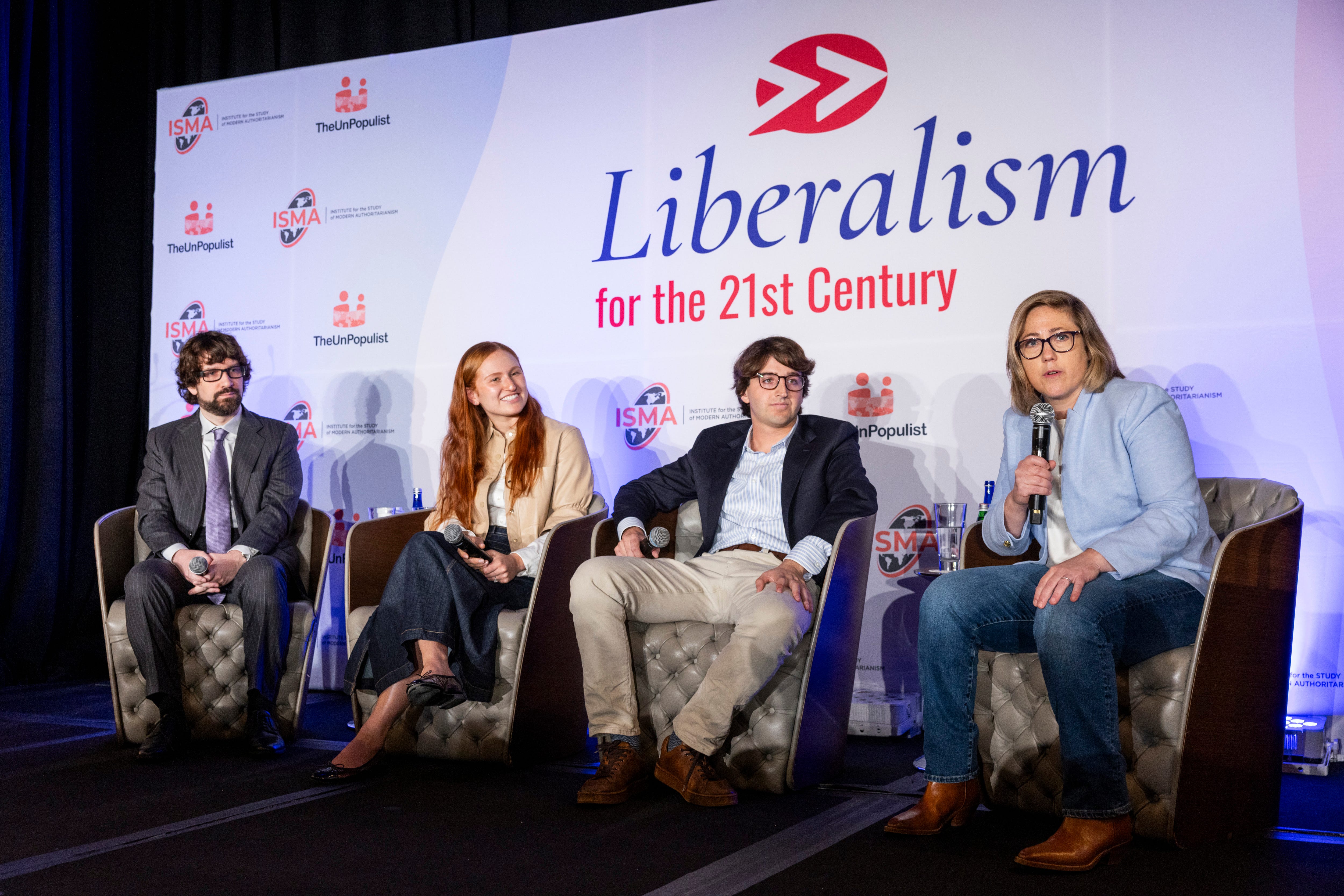
The afternoon breakouts—on immigration, free speech, economic policy, and federalism—were just as substantive, with figures from across the political spectrum like Jonathan Rauch, Kevin Williamson, Walter Olson, Radley Balko, Linda Chavez, Cathy Young, and Mike Masnick. They aired, rather than brushed under the rug, their disagreements—while searching for common ground. Nobel laureate Simon Johnson spoke on how to make prosperity more equally shared. After the breakout sessions, a panel on “Past Liberal Crises and Lessons” brought together historians and political theorists—Manisha Sinha, Jacob T. Levy, Devin Pendas, and former Polish Minister of Justice Adam Bodnar—to discuss the challenges that efforts to rebuild institutions face after institutional collapse. It was a useful corrective to any temptation toward despair: reconstruction has happened before, and the panel was full of hard-won lessons from our own post-Civil War Reconstruction, the one in Germany after World War II, and Poland’s more recent example. Friday’s closing keynote pairing, Ezra Klein and Danielle Allen, then tackled the deceptively hard question “What Is Freedom?” Klein noted that freedom can’t mean simply more choice of consumer goods. It means individuals asserting their agency to regain control over their own time in an attention economy that puts immense pressure on them to surrender it to internet algorithms.
We were overwhelmed by the positive feedback from attendees and speakers, and the recaps already published reveal just how powerfully expansive this coalition really is. Daniel W. Drezner—a left-of-center liberal academic—called the conference urgent and credited it with real, specific consensus; Kevin Williamson, a right-of-center commentator at The Dispatch, who spoke on the breakout panel about federalism, noted in a post yesterday that it was remarkable that people who agree on almost nothing else spent a day and a half arguing on the same side. Different vantage points, same verdict.
That’s the whole point of LibCon, and why it’s the only event of its kind: it’s a nexus for liberals of every stripe, united against the erosion of liberal democratic norms. LibCon’s disagreements feel different from the ones everywhere else because they happen inside a coalition, not across a chasm.
William Kristol, the Bulwark stalwart and ISMA board member, closed us out. He noted that Trump’s authoritarianism was worse than he imagined it would be—but the resistance to it was also stronger than he had imagined it would be, especially from ordinary Americans. Elites, who have so easily bent the knee, are a different story. He closed by reaching back to something that James Carville wrote in 2020, namely, that a country willing to set aside its oldest quarrels and fight together could still go “from its darkest hour to its finest hour”—as it did in the Revolution, the Civil War, the defeat of fascism, Seneca Falls, Stonewall, and Selma. Kristol offered not false comfort, but common cause.

See you next year!
The entire conference will be up on our YouTube account very soon—subscribe so you don’t miss a panel—and we’ll publish everything on our homepage too.

© The UnPopulist, 2026
Follow us on Bluesky, Threads, YouTube, TikTok, Facebook, Instagram, and X.
We welcome your reactions and replies. Please adhere to our comments policy.
Your introductory video is very beautiful. I didn't realize that Lyndon Johnson had that much eloquence and appeal. I'm looking forward to the meeting videos on youtube.
As both the democracy of my own country might (further on -- second order consequence) be threatened by the intentional amplification of Americo-authoritarian ideology in Europe AND it's sovereignty is threatened by (incessantly) stated U.S. aims of territorial expansion in our immediate neighborhood--also by the dismantling of the international rules-based order and the associated whetting of other imperialist appetites (plural)-- ...
... I (for one) very much hope and pray for the revitalized health of your currently distressed democracy.
To quote the bard, Bon Jovi:
"We're living on a prayer"
Keep fighting the good fight!