


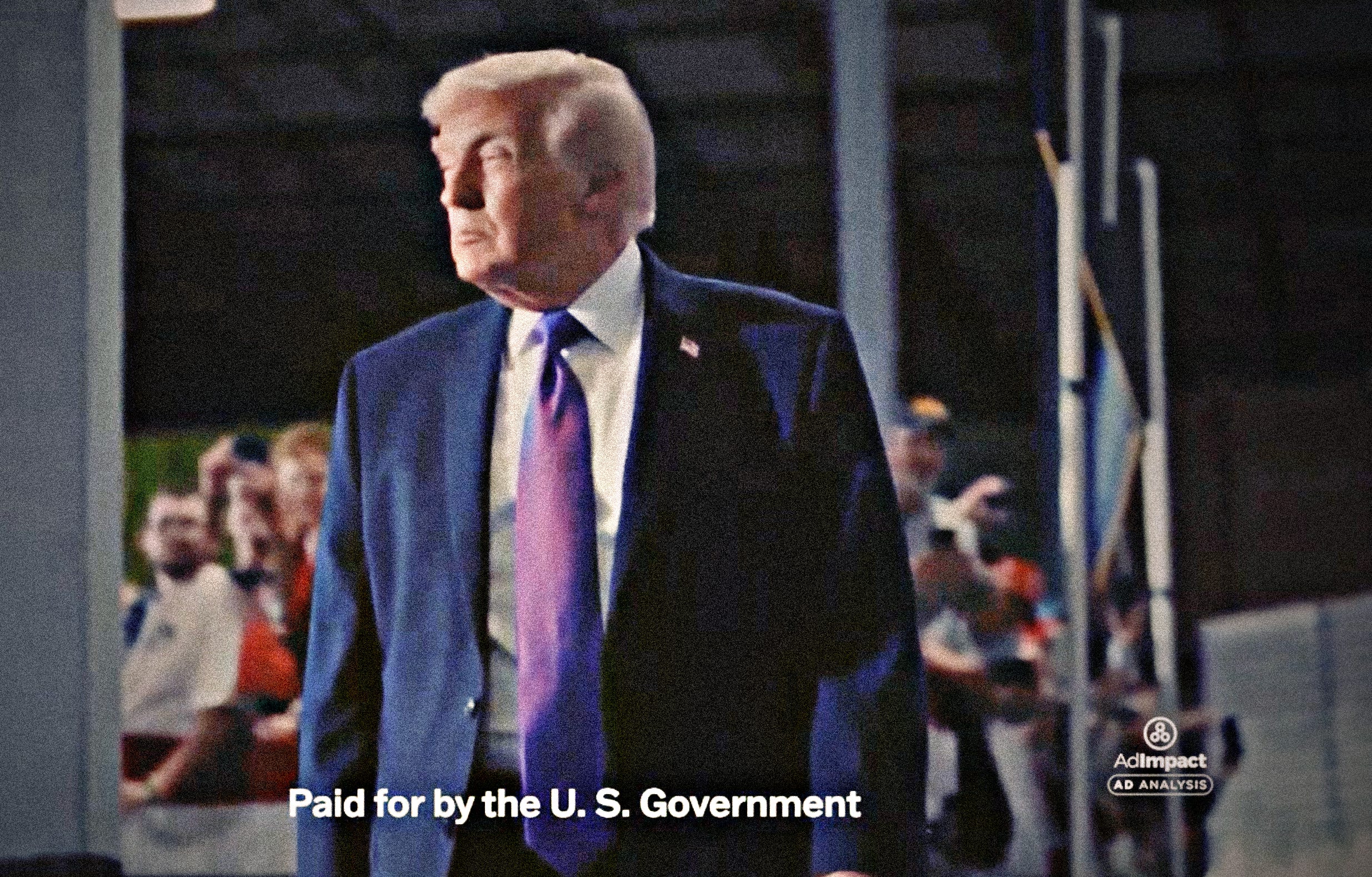
The administration is running a television advertisement in which President Trump says, “Together we will defeat communism, socialism, and Marxism in America.” Government-financed propaganda promoting an unpopular head of state is something one might associate with a communist country. The irony doesn’t end there. The ad’s target is the Democratic Party and its leftward shift, as evidenced by its “democratic socialism” problem. Yet it is Trump himself who has unlocked the door the left has long sought to open: the normalization of government ownership of private companies.
While the government has occasionally taken stakes in private companies, it has generally done so—rightly or wrongly—as a temporary measure to address a perceived emergency. However, never in U.S. history has the executive branch taken ownership stakes in private companies simply because the president wanted his own federal investment portfolio. And this administration has done so without clear legal authority.
As of this writing, the administration has announced deals giving the federal government equity stakes in 34 private companies and counting. Thus, after Trump has spent much of his second term acquiring the means of production, his pitch ahead of the November elections is that he will stop Democrats from … acquiring the means of production?
To be sure, there are anti-market Democrats who have long desired to make government ownership of companies a permanent federal policy tool. Indeed, how they have responded to the administration’s equity deals offers clues about how they may deploy this tool when Republican dominance in Washington ends.
But first, a question: Why is Trump’s unprecedented expansion of the federal government’s ability to directly manipulate economic activity receiving relatively little pushback?
AWOL Opposition
Several reasons help explain the relative lack of attention, let alone resistance, to this potentially monumental expansion of federal power into the economy.
For starters, the pre-2016 GOP is dead. Congressional Republicans could have put an end to the administration’s equity spree at any time. They still can. Up till now, however, the GOP’s response has ranged from feeble “concern” to servile enablement. One can only imagine the outrage and indignation from Republicans if this were occurring under Presidents Obama or Biden. Or “Comrade Kamala.” Republican-friendly media outlets would be in a frenzy, and similarly associated advocacy groups would have launched public campaigns calling on Congress to halt this dangerous threat to American free enterprise.
Next, the administration’s barrage of policy announcements has made it difficult to focus in depth on a specific issue. That’s by design, as Steve Bannon’s infamous “flood the zone” quote reminds us. At the outset of Trump’s second term, the bulk of the attention focused on anticipated items on the administration’s immediate agenda, notably DOGE and tariffs. With Trump’s second-term administration filled with loyalists, his impulsive policy pronouncements have sent officials scurrying to improvise ways to fulfill his half-baked wishes.

Another issue is that the administration’s deals are intentionally opaque and often complex, the policy rationales are inconsistent, and the legal authority to make any of them is unclear. In short, the administration has been making it up as it goes along. Two weeks after retaking office, Trump issued an executive order instructing his administration to draw up a plan for a sovereign wealth fund. A sovereign wealth fund is a government-owned investment fund that buys stocks and other assets to earn returns, often using budget surpluses or proceeds from natural resources. When the White House discovered that creating one would require Congress and deny Trump sole control, the administration embarked on an improvised solution: create an equity portfolio for the boss in which the government obtains ownership of part of a company in exchange for subsidies to it.
More on that later, but well over a year after President Trump embarked on this acquisition spree, the public still knows little about the deals beyond press releases and SEC filings from publicly traded companies. The deals have emerged through different agencies and financing arrangements, with different ownership and control rights. Meanwhile, the administration has yet to publicly release a legal opinion making the case for the myriad statutes it’s cited in announcing the deals. Even the administration’s reasoning for the entire equity endeavor has vacillated between making money for taxpayers and shoring up strategically important industries, with the occasional admission that it’s indeed building a government investment portfolio for the president.
Commandeering the Private Sector
Consider the administration’s “golden share” in U.S. Steel that gives Trump veto authority over key business decisions. Last fall, the White House blocked the company’s plan to stop processing steel slabs at its Granite City, Illinois, plant by threatening to use that power. U.S. Steel had explained that shifting the work to other plants would avoid “extensive cost inefficiencies.” One would think that congressional Republicans would at least express some concern about how a President Alexandria Ocasio-Cortez might use the same authority over an oil company or mine operator to advance her own agenda.

But far from resisting, Republicans are trying to reward the administration’s clear disregard for Congress with after-the-fact legal cover. The House’s Defense Production Act reauthorization bill would put executive branch equity acquisitions on a statutory footing. And the Senate Armed Services Committee’s annual defense bill would expressly authorize the Pentagon’s Office of Strategic Capital to acquire ownership stakes. That’s despite the committee’s own warnings about market distortions and complaints that the Pentagon hasn’t provided the information Congress needs to assess its deals. The GOP is thus moving to supply the authority the administration has claimed to have, which strongly suggests it does not have it.
More Accountability, Less Statism
To their credit, congressional Democrats have demanded answers about the deals. A February letter from House and Senate Democrats sought the administration’s legal justification and warned that the administration was “essentially picking winners and losers,” which may “undermine broader market competition and the development of innovative technologies.” (That is the kind of thing that might have come out of Republican mouths pre-MAGAfication.)
In June, Democrats pressed the White House about reports that presidential adviser Peter Navarro had intervened to secure a Pentagon loan for Vulcan Elements, a company backed by Donald Trump Jr.’s investment firm. A July letter demanded answers from Cantor Fitzgerald, the financial services firm previously led by Commerce Secretary Howard Lutnick and now run by his sons, about conflicts of interest involving the administration’s USA Rare Earth deal. Last week, four Senate Democrats challenged the Pentagon’s authority to take a stake in a shady Venezuelan oil company, demanding the deal’s terms and answers about whether Trump’s family or donors would benefit.

There have been multiple reports that a Democratic majority would be prepared to act on those inquiries. For example, Democratic lawmakers recently told S&P Global that investigating the deals would be a priority if they regain control of either chamber. The committee gavels held by the majority party would let them hold hearings and issue subpoenas without Republican cooperation. In March, Republicans blocked a subpoena to compel Trump Jr. to testify about Vulcan. More recently, Republicans on a House Foreign Affairs subcommittee similarly blocked a subpoena for the administration’s records regarding the Venezuelan oil company deal.
All this is disturbing given that Vulcan was offered $670 million in federal support about three months after 1789 Capital, where Trump Jr. is a partner, invested in it. Navarro reportedly pressured the Pentagon to move the company’s loan request to the front of the line. USA Rare Earth, meanwhile, hired Cantor to arrange the private financing tied to its $1.6 billion federal package. These arrangements have turned political access into a form of capital—exactly as one would expect in authoritarian economies.
There’s plenty to investigate given the administration’s refusal to provide information on deals that stink of corruption and cronyism. Democrats would be performing a public service by aggressively looking into them if they obtain a congressional majority.
However, there’s a significant concern that they’ll make political hay out of the administration’s dubious unilateral approach but then use it to push for Congress to create a formal “investment” fund. Instead of divesting, Congress might consolidate the equity stakes now scattered across federal agencies into a single fund with its own management and investment rules. That would turn Trump’s improvised portfolio into a permanent federal investment operation, much like the sovereign wealth fund he originally wanted.
Democratic Sen. Elizabeth Warren insists, “We need to hose the corruption out.” But she has also endorsed equity stakes as a condition for companies receiving federal subsidies. In 2022, Warren and Sen. Bernie Sanders proposed taking equity or warrants in companies receiving CHIPS assistance. Their amendment wasn’t adopted, but note that their underlying argument—that taxpayers should share in the gains of subsidized companies—is the one that the Trump administration is making to justify its equity deals.

Sanders has since proposed taking a 50% stake in America’s largest artificial intelligence companies through a tax paid in stock, with government voting rights and board representation. He is explicit that he wants those powers used to block corporate decisions he considers harmful and push policies he considers beneficial. In fact, Sanders cited Trump’s executive order for a sovereign wealth fund as justification, which would make it extremely difficult for Republicans to object if his idea gains traction. That’s hardly far-fetched, given that even mainstream Democrats have been flirting with it.
Democratic Socialism
The likeliest outcome, then, is that Democratic-led investigations would expose rank cronyism and improvised dealmaking in this administration. But instead of scrapping Trump’s equity portfolio altogether, Democrats will merely want to put it under more “responsible” management.
Yet a formal investment fund would make it harder for companies that are not receiving government subsidies to compete. They’d have a harder time attracting private capital. Moreover, when a government investment goes sour, policymakers would face pressure to provide additional government privileges to avoid admitting failure. Far from safeguarding American taxpayers, as Trump says he’s doing, this scheme would make them more liable.

Equally bad, companies would still feel pressure to accommodate political demands, particularly when they depend on their government “investor” for future financing or favorable treatment. An explicit threat wouldn’t even be necessary.
Trump’s advertisement promises to defeat communism, socialism, and Marxism in America. But his administration has been busy assembling a federal equity portfolio that even the most leftist flank of the Democratic Party previously could only dream of. Republicans warning that communists are taking over the party might first ask why their own administration is so eager to have the government acquire pieces of private companies. If they don’t want “socialists” to take over the private sector in the future, maybe they should stop enabling the one who sits in the White House right now.

© The UnPopulist, 2026
Follow us on Bluesky, Threads, YouTube, TikTok, Facebook, Instagram, and X.
We welcome your reactions and replies. Please adhere to our comments policy.

"As long as it's my authoritarian/communist/fascist/socialist/totalitarian leader in charge, running the show and taking stakes in public companies, it is a fine and noble endeavor. I approve".
"If it's the other side doing this, then that is evil and they are authoritarian/communist/fascist/socialist totalitarians."