


When the Mexican military killed New Generation Jalisco Cartel leader “El Mencho” on February 22, cartel violence swept across Mexico in retaliation. White House Deputy Chief of Staff Stephen Miller had a ready—and fully predictable—explanation: the migrants are bankrolling it. “Cartel killings, kidnapping, and fentanyl trafficking is financed by the same illegal migrants fraudulently demanding asylum,” he wrote. Miller used the moment to push for still more aggressive immigration restrictions—a harder border, fewer legal pathways, more deportations.
This fits a familiar Miller pattern: take a legitimate public concern, attach it to immigration, and use the resulting anxiety to justify policies whose scope far exceeds what the concern itself would warrant. Americans oppose cartels, so cartels become the justification for a draconian immigration crackdown. That’s the Trump-Miller way.
But even setting aside whether Miller believes a word of it, his underlying claim is wrong on its own terms. When legal pathways to immigration are closed, migrants don’t stop coming—they turn to smugglers. Smugglers must pay cartels to move people through their territory. The more aggressively the United States restricts legal entry and patrols traditional crossing routes, the more dangerous those crossings become, and the more indispensable smugglers—and the cartels behind them—become. The result is a perverse inversion of the stated goal: the harder Trump and Miller push to seal the border, the more they enrich the organizations they claim to be fighting.
Limited Legal Pathways
Most prospective immigrants have no available pathway to legally immigrate to the United States. In 2023, the Cato Institute’s David J. Bier reported that “fewer than 1% of people who want to move permanently to the United States can do so legally.” Since then, the Trump administration has closed off even more legal pathways to immigrate.

The White House paused a humanitarian parole program that had previously permitted Cubans, Haitians, Nicaraguans, and Venezuelans to legally enter and remain in the United States. The administration also canceled all asylum applications made via the CBP One app, and later pivoted toward using the app only to facilitate departure from the country. It imposed a travel ban that suspends entry from about 40 countries, which means that 1 in 5 legal immigrants from abroad are no longer allowed to immigrate. This travel ban even bars some spouses, children, and parents of U.S. citizens and residents from immigrating legally. As immigration economist Michael Clemens explained:
The refugee program has been almost entirely shut down; well in recent years that’s been some eight, nine, 10% of immigration to the US. We’re seeing many steps against international students, which is definitely going to reduce the number of people coming on F-1 and J-1 visas next year, lawful immigrants. We’re seeing people who have parole—which as I mentioned is a reason under law that you are lawfully present in the United States. If you have parole, by definition, you are not unlawfully present—and parole is being eliminated en masse, which turns a person who is lawfully present into a person who is unlawfully present. … We’re talking about mass exclusion.
Legal immigration pathways were already heavily restricted. But now, many of those narrow pathways have been closed entirely.
None of this alters the reality that many people have strong incentives to immigrate to the United States, even when legal pathways are unavailable. Many migrants flee horrific violence. Others seek economic opportunities. Clemens and fellow economists Claudio Montenegro and Lant Pritchett find that many workers around the world can drastically increase their wages by moving to the United States. Fleeing violence, escaping poverty, or simply seeking better wages are powerful incentives to cross borders—incentives that persist regardless of what U.S. policy does to the available options. When legal pathways are foreclosed, migrants don’t give up. They find another way. And U.S. border enforcement policy has had a great deal to say about what that other way ends up looking like.
Border Enforcement Tactics Drive Migration Patterns
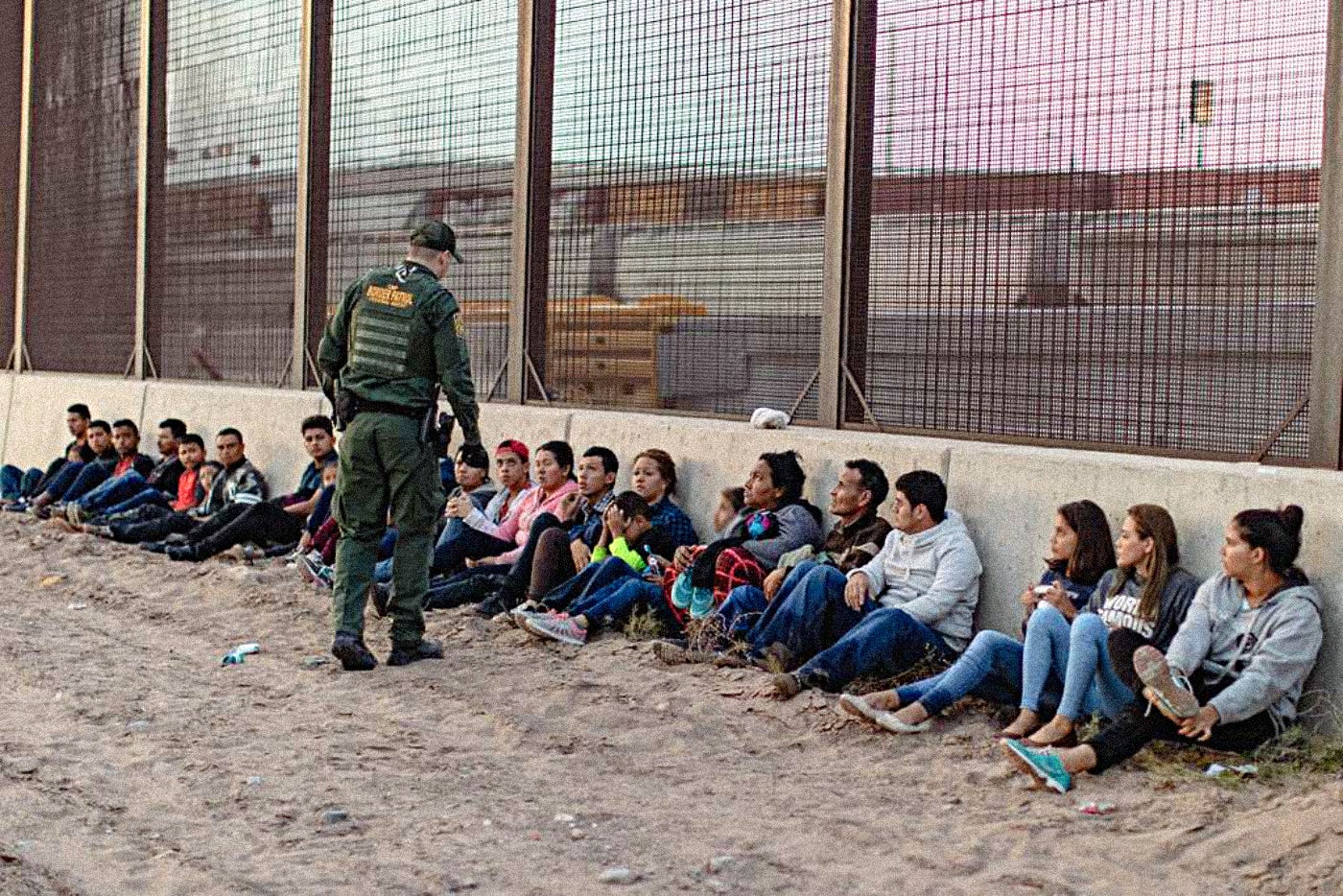
For decades, the United States has tried to stem the flow of migration across its southern border. Throughout the 1990s, a program known as “Prevention Through Deterrence” was implemented throughout the nine border sectors, increasing the presence of Border Patrol agents and surveillance infrastructure along entry points to urban centers like El Paso and San Diego. That deterrent policy was supposed to operate on a relatively simple logic: if we make the most popular entry points impossible to cross through, then migration would simply stop. As it turns out, that logic was too simple.

Instead, Prevention Through Deterrence had a funneling effect. It was meant to reduce migration, but all it did was redirect it. Because migrants could no longer cross through the highly monitored urban centers, they sought alternative routes—routes that often lead through especially hostile terrain like the Tucson Sector’s Sonoran Desert, which became the dominant crossing area throughout the 1990s and 2000s. This terrain is exceptionally dangerous—extreme temperatures, scarce water, and deep isolation from any help. Rather than eliminating migration, these policies simply pushed migrants onto deadlier routes.
Instead of reconsidering their ineffective approach, policymakers have continuously doubled down. In addition to constructing and expanding the border wall, the government has deployed military-grade technologies, including drones, surveillance technology, lasers, weapons, and armored vehicles. Each escalation follows the same pattern. The increased enforcement does not stop migrants from coming—it just incentivizes them to find new routes and new means to migrate undetected.
The recorded death toll reflects the danger of these policies. Data from Humane Borders show that at least 4,000 migrants have died in the border region since Prevention Through Deterrence was first implemented. This figure almost certainly undercounts the true toll, as many bodies are never recovered. Economists Abigail Hall-Blanco, Cynthia Bansak, and Michael Coon confirm the mechanism that drives these deaths, finding that after the passage of the Secure Fence Act, “fence construction induced migrants to cross in unfenced sectors. Meanwhile, the average death rate rose nearly threefold in the sectors where the fence was not built.” Samuel Chambers, Geoffrey Boyce, Sarah Launius, and Alicia Dinsmore likewise find evidence that surveillance towers push migrants onto deadlier terrain.
The Role of the Cartels
Closing down legal pathways for immigration does nothing to alter the underlying incentives for migrants, and border enforcement efforts have simply altered where migrants cross the border. But as those crossings are pushed into more dangerous routes, migrants need assistance from someone with specific knowledge of successful crossing routes, placement of surveillance technologies, and locations of Border Patrol agents. As such, the market for migrant smuggling has grown substantially.
To transport migrants across the border, smugglers must first cross the Mexican side of the border, which is divided into territories controlled by Mexican cartels. As they cross, smugglers must pay a fee, on behalf of migrants, to the cartels. The more legal pathways are closed off and safer crossing routes policed, the stronger the incentive migrants have to pay these fees for assistance in dangerous crossings. By implementing policies that increase demand for smugglers’ services, policymakers line cartels’ pockets.

Smuggling fees are not the cartels’ only revenue stream, of course—drug trafficking, extortion, and kidnapping all contribute significantly. But the territorial tax cartels collect from every smuggler crossing their territory is a direct income source, one that grows larger every time U.S. policy forecloses a legal alternative.
This practice of paying to cross cartel territory, however, should not be conflated with enthusiastic support of cartel activities. In reality, migrants are often victimized by the cartels, being extorted, kidnapped, raped, and killed by cartel members as they cross through their territory. The payment that migrants make to cartels should likewise be seen as a form of extortion, rather than a voluntary payment in exchange for services.
The U.S. should reckon with the role its own policies have played in creating the conditions cartels exploit. The Trump administration cannot reasonably complain about migrants funding cartel activities while simultaneously cutting off pathways for legal entry and militarizing the border in a manner that predictably funnels migrants through cartel territory. Miller might instead ask how his preferred policies have made cartels indispensable to the very migration process he claims to want to stop.
Through policy efforts to cut off migration at the border and restrict legal pathways in general, the United States has increased the demand for migrant smuggling and incentivized the cartels to profit off—and victimize—migrants. An administration serious about defunding the cartels would start by creating more legal pathways for entry. The path to degrading them runs not through the border wall but through the consulate window. Expand legal pathways, and migrants no longer need smugglers. Shrink them, and cartel coffers fill regardless of how many troops patrol the Rio Grande.

© The UnPopulist, 2026
Follow us on Bluesky, Threads, YouTube, TikTok, Facebook, Instagram, and X.
We welcome your reactions and replies. Please adhere to our comments policy.


So, defund the cartels by allowing all who wish to come to immigrate legally. No one will try to sneak in the back door if the front door is wide open. Sounds like no control at all.
AND what a political goldmine for Republicans!
It is wonderful that our administration has slammed shut the door to the flood of illegal aliens. Now the hard work of rounding up the millions of illegals that flooded our country during the Biden administration and throwing them out of the country must proceed at full speed.