


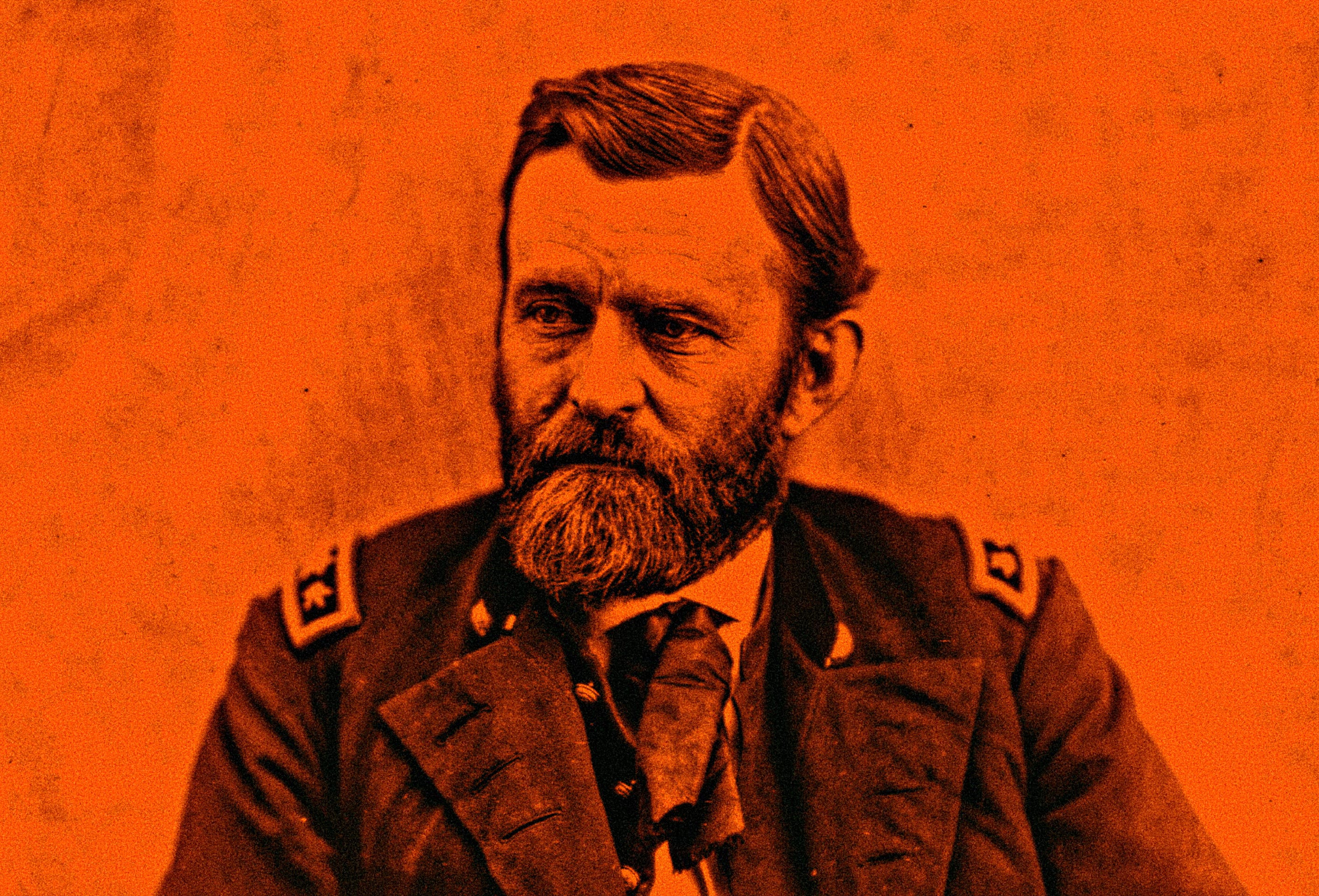
No American military officer has ever had to do what the constitutional crisis of 1866-1867 required of Ulysses S. Grant, then serving as the commanding general of the Army. President Andrew Johnson and Congress thrust him into adjudicating between their respective constitutional claims to civilian control of the military. This most fraught civil-military crisis did not occur in wartime; it was the result of both the president and Congress pulling the professional military into American domestic political disputes.
Grant’s judgment wasn’t perfect; he was wrong before he was right. But he was right enough to provide a powerful precedent for our troubled times. Those in uniform have an obligation to both remain strictly apolitical but also to follow the law, and as we’ve recently seen, those two principles can be in tension when, for example, senior officers must determine whether a presidential directive to attack an allied country or participate in domestic law enforcement would violate statutory or constitutional constraints.
The precedent established during that crisis was that, in peacetime, Congress has the superior claim to civilian control over the military. What we want—what we need—in a constitutional republic is for the military to remain inert in civilian political disputes. The military cannot save us from the politicians we elect. The solutions to political crises in America are wholly civilian in nature.
Lincoln’s Restraint
During the latter years of the Civil War, President Lincoln had enjoyed a relationship of trust and intimacy with his military leaders, convening with them in City Point, Virginia to outline his policies to be conducted in the war’s aftermath: “Let them go, officers and all. I want submission and no more bloodshed. … I want no one punished, treat them liberally all around. We want those people to return to their allegiance to the Union and submit to the laws.” He encouraged them to rush the denouement in anticipation of “radical Republicans” (advocates of full citizenship and economic rights for Black Americans and harsh punishment for secessionists) dominating Congress after the 1864 election and making more difficult the knitting back together of the Republic.

Lincoln’s political premonition came to pass in the 1866 congressional election, after his murder, which brought Radical Republicans to the majority in both houses of Congress. Vice President Johnson, ascended to the highest office in the land, vacillated in his approach to Reconstruction, initially attempting to revoke the pardons that had been issued to Confederate soldiers (which Grant threatened to resign over if enacted), but increasingly advocating for restoration of the pre-war political, economic, and social restrictions in the South. He opposed passage of the 13th, 14th, and 15th Amendments that were intended to ensure freedom and equality for Blacks and vetoed 21 laws designed to reinforce them, 15 of which were overridden by Congress.
By 1866, Gen. Grant was not only the senior military officer of the United States, his grim determination in the conduct of the Civil War also made him the most popular political figure in the country. The U.S. Army occupied the 11 formerly seceded states, in which an insurgency against Black emancipation had already gathered force. The insurgency did not target the military; it brought widespread violence to bear against freedmen and Republican officials (two categories which often overlapped as political empowerment for ex-slaves took hold).
Grant was not an opponent of the president. He not only appeared at partisan White House events, he went on a three-week political whistle stop tour supporting Johnson. Grant even provided political cover for the president’s desultory enactment of Reconstruction policies with a report downplaying the political violence occurring in southern states (Grant would eventually repudiate the report after military commanders in the states objected to it).
Andrew Johnson vs Ulysses S. Grant
But by February of 1866, the president and his military leadership were in direct and bitter confrontation. President Johnson, considering the military sympathetic to Congress and (rightly, as it turns out) likely to side with Congress in the executive-legislative confrontation precipitated by Reconstruction, attempted to take Grant off the chessboard by sending him to Mexico for political negotiations with that government likely to be of extended duration.
Grant declined, suggesting that Gen. Sherman or Gen. Sheridan go in his stead. Grant privately told Sherman he would disobey the order because it was patently political, “a plot to get rid of him.” President Johnson ordered Sherman to take command of the Army while Grant was absent in Mexico, at which point Sherman informed the president that Grant would not be going to Mexico.

Johnson convened the Cabinet to interrogate Grant about this refusal of a direct order. Grant made his case that the president’s authority over the military extended only to military activity, and as the diplomatic negotiations were political, he was under no obligation of military subordination to the president’s request. Attorney General James Speed, a Lincoln appointee, ruled in favor of Grant’s argument that the president’s authority as commander-in-chief was indeed limited to military actions. Speed was replaced as attorney general not long after.
Johnson vs. Congress
Relations between the president and Congress continued to be hostile, with Johnson castigating Rep. Thaddeus Stevens and Sen. Charles Sumner as traitors, and Congress overriding Johnson’s vetoes of the Reconstruction Acts. Congress also passed the Tenure of Office Act, denying the president ability to fire Cabinet secretaries and other officials, including Grant, who had been confirmed by the Senate, as well as legislation restricting the president from issuing any orders to military governors of southern states that did not pass through Grant’s approval. Johnson insisted those congressional acts violated the constitutional separation of powers.
In January of 1867, Congress opened an impeachment inquiry for Johnson’s failure to obey these laws. The effort gained momentum, the House Judiciary Committee recommending the president’s impeachment in November. The full House of Representatives declined to move forward with impeachment, but a second inquiry in 1868 would. It was during the first inquiry that the deepest civil-military crisis in American history occurred.
Taking Sides Between President and Congress
As the president became more erratic and confrontational, Grant wrote Sheridan he feared Johnson would attempt to disband Congress by declaring it “illegal, unconstitutional, and revolutionary.” Federal control over the southern states was still so tenuous that Grant had weapons removed from arsenals in southern states, fearing secessionists would capitalize on the crisis to resume fighting the Civil War.
The Second Reconstruction Act extended military authority in the southern states to include the supervision of elections for new civilian governments, still subject to the Army’s ultimate control. Grant wrote to Sheridan, who was overseeing Reconstruction in Texas and Louisiana, that
there is a decided hostility to the whole Congressional plan for reconstruction at the “White House,” and a disposition to remove you from the command you now hold. Both the Secretary of War and myself will oppose any such move, as will the mass of the people.
But when Sheridan removed the Louisiana governor, Attorney General Henry Stanberry ruled Sheridan had exceeded his authority. Grant acquiesced to removing Sheridan from his command, but also instructed commanders not to reinstate the governor and other politicians Sheridan had removed. The Third Insurrection Act, passed the same year, explicitly authorized military governors to remove elected officials. Johnson vetoed the bill, and Congress overrode the veto.
The confrontation between Johnson and Grant came to a head in the fall of 1867. In October, Johnson asked Grant point blank whether he would support Congress in having Johnson arrested or deposed from office; Grant cryptically answered that “he should expect to follow orders.” The House Judiciary Committee called Grant as a witness in December. In the heat of an unprecedented conflict over constitutional powers, the country’s senior military officer was being required by one constitutional authority over the military to be used as the means to indict the other constitutional authority over the military. Grant testified that he considered Congress to be the controlling authority, not the president.

Determined to protect his executive authority, Johnson violated the Tenure of Office Act by suspending Secretary of War Edwin Stanton. Grant had advised, in writing, against the move but agreed to temporarily accept the civilian position as the acting secretary of war to replace Stanton, concurrent with his military role. The Senate Committee on Military Affairs reinstated Stanton in January of 1868, threatening Grant with five years in prison and a $10,000 fine if he did not relinquish the job. Johnson offered to do the prison time and pay the fine if Grant would uphold his authority as superior to Congress. Instead, Grant complied with the law.
Grant had justified accepting the civilian role while on active duty as an expedient emollient, tamping down the crisis and preventing the president appointing someone hostile to Reconstruction. But Congress would have had to confirm the appointment, and Grant stepping in alleviated the necessity of Congress from carrying out the civilian political processes constitutionally established for adjudicating separation of powers disputes. The political process would surely have delayed enacting policies, but would also have likely produced a political compromise. Or perhaps it would have further embittered the political stalemate, resulting in a successful impeachment (it failed by a single vote in 1868). Since Johnson had no vice president, the Radical Republican speaker of the House of Representatives, Schuyler Colfax of Indiana, would have become president, eliminating the friction over Reconstruction.
If Grant had not attempted to intervene by accepting the concurrent civilian and military appointments during the constitutional crisis, Johnson might have fired him, too. There would have been a political price to pay for Johnson because of Grant’s popularity, but if Grant’s firing were an accomplished fact, Sherman (who was much less committed to Reconstruction and loathed Stanton) would likely have hewed more closely to Johnson’s policies. Grant would almost surely have still been elected president in 1868, though.
Grant’s Excruciating Choices
Grant’s choices in 1867-1868 were insubordinate to the president in refusing to participate in the Mexico negotiations, in his handling Sheridan’s dismissal of elected southern officials, in his congressional testimony, and in complying with congressional legislation when instructed otherwise by the commander in chief. But his circumstances were unprecedented: a president refusing the legislative authority of Congress, the first impeachment of an American president, and Congress asserting powers beyond the constitutional boundary of their authority. The Tenure of Office Act was repealed in 1887 and in 1926 the Supreme Court opined it to have been unconstitutional for the president to need congressional authority to remove an appointed executive branch official.

No American military leader in history has been forced to choose so starkly between the two constitutional sources of civilian oversight of the military. Grant was forced into arbitrating the Constitution, a politicized position in which he never ought to have been put by either the president or Congress. He made the most democratic choice on the most fundamental issue, which is that, in wartime, while Congress’ powers remain, the commander in chief’s power takes precedence when the two branches conflict. In peacetime, it is Congress’s authority that is supreme in matters of military policy.
Under the present administration, there is a real danger of military officers again facing a choice between presidential commands and congressionally enacted laws, on topics ranging from potential domestic deployments to the use of force overseas. These are not easy decisions and the Trump administration shouldn’t test the limits. But today’s military leaders could do worse than considering the example of Grant: avoiding confrontations and defusing crises whenever possible, but at the end of the day, recognizing that following the law is their higher obligation.

© The UnPopulist, 2026
Follow us on Bluesky, Threads, YouTube, TikTok, Facebook, Instagram, and X.
We welcome your reactions and replies. Please adhere to our comments policy.

Recently Mark Kelly was investigated for advising soldiers to disobey illegal orders. Hegseth and Trump called Kelly seditious. When I was in the army 60 years ago it was drilled into us during boot camp that you do not carry out illegal orders. I can understand Trump being unaware of this, but isn't Hegseth a veteran? Here Grant's refusal to obey an illegal order burnishes his reputation.
The reading of General Grant's autobiography should be required reading by our military leaders. Just my humble opinion.