


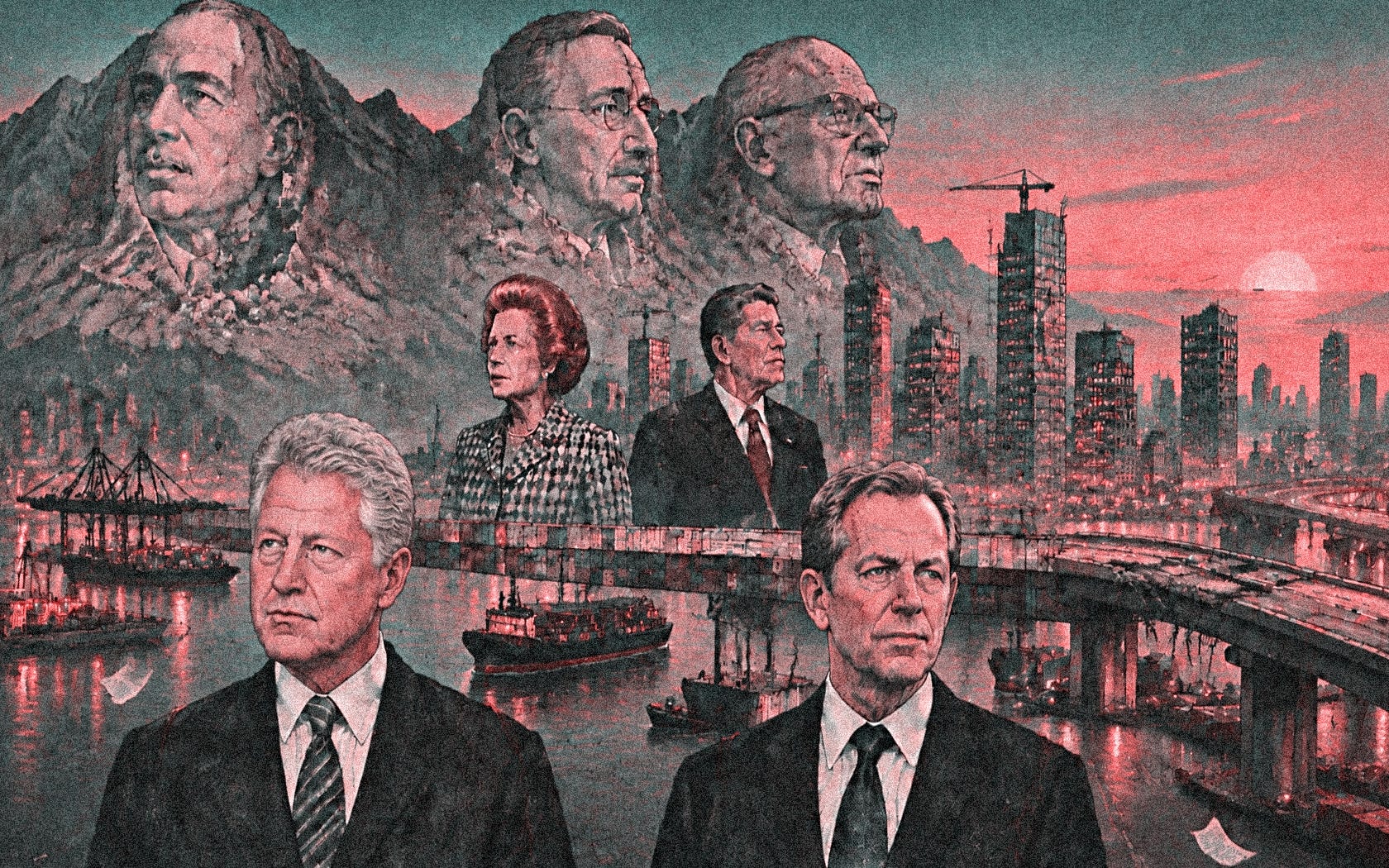
“Men make their own history, but they do not make it just as they please.”
— Karl Marx, The Eighteenth Brumaire of Louis Napoleon
“Every step and every movement of the multitude, even in what are termed enlightened ages, are made with equal blindness to the future; and nations stumble upon establishments, which are indeed the result of human action, but not the execution of any human design.”
— Adam Ferguson, An Essay on the History of Civil Society
Hopeful liberal intellectuals and commentators, particularly after the resounding defeat of Trumpism and MAGA, are beginning to sketch out plans and agendas for a liberal resurgence. This is important work. But the last time a worldwide group of liberals planned to come out from under authoritarianism, the disputes over the framework that emerged, neoliberalism, occupied most of my adult life—until the current crisis, that is.
The first two decades of this century were consumed by arguments over what neoliberalism was and who counted as a neoliberal. The heat has finally, and justifiably, gone out of those arguments. Some jousting continues over whether the new tariff mercantilism and personalist politics are the rejection of neoliberalism, the consequence of it, or both. The jousting, however, is half-hearted; if there was a neoliberal era, we are very clearly now in its wreckage. If there is a future for constitutional, democratic, market-oriented liberalism, it will not look precisely, maybe not even approximately, like any version of its past.
